Gerald M. Meier – författare
Visar alla böcker från författaren Gerald M. Meier. Handla med fri frakt och snabb leverans.
4 produkter
4 produkter
E-bok
Engelska, 2004584 kr
Läs direkt efter köp
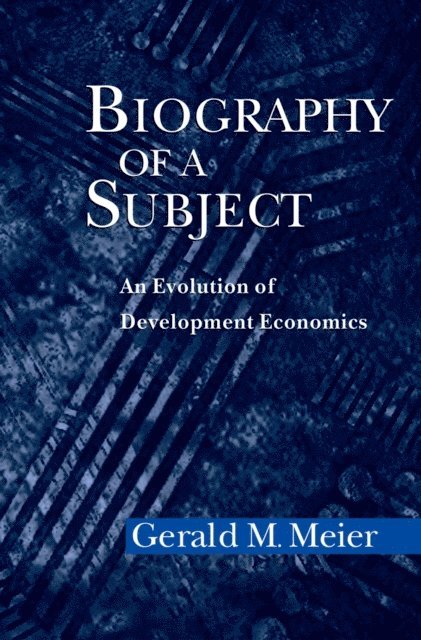
The study of economic development is one of the newest, most exciting, and most challenging branches of the broader discipline of economics and political economy. Although one could claim that Adam Smith was the first "development economist", the systematic study of the problems and processes of economic development in Africa, Asia, and Latin America has emerged only over the past five decades. This biography of the subject of economic development will focus on the essential ideas in the evolution of development thought and policy over the subject''s half-century of life. In concise form and avoiding undue technicality, it highlights the influence of development theory on policymaking and on the mixed record of successes and failures in promoting development efforts. The interpretation of theory, policy, and the lessons of experience are covered in three periods: early development economics of the 1950s-60s; orthodox reaction of the 1970s-80s; and the new development economics of the 1980s-90s. Gerald Meier-one of the world''s most prominent leading thinkers in the economics of development - interprets the past treatment of development problems with the present and future in mind. He re-interprets the past two generations of development economists in a contemporary voice. And in a forward-looking fashion, the book''s perspectives should make the next generation of development problems-and development economists-more intelligible. The reader is invited to consider whether development economists really know how to put matters right.
Häftad, Engelska, 1998
2 757 kr
Skickas inom 11-20 vardagar
Meier examines the rapidly changing global economy from an economist's point of view, with an emphasis on the principles of international economics, the conduct of international economic transations, and the policies of international economic institutions. The book provides the conceptual framework for the managerial tasks of diagnosing, predicting, and responding to changes in the world economy.
Häftad, Engelska, 2002
520 kr
Skickas inom 10-15 vardagar
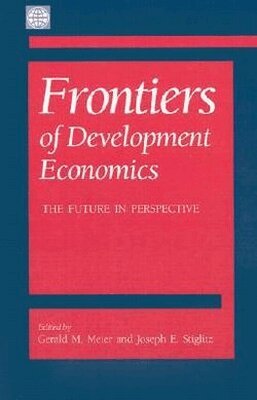
Thirty-three development economists contribute to this volume, which looks at the future of development economics in relation to thoughts and practice of the past half century. At the core is the issue of whether development economics is simply a branch of applied economics or whether its nature and scope constitute the need for a special development theory to supplement general economic theory.
E-bok
PDF, Engelska, 2004584 kr
Läs direkt efter köp
The study of economic development is one of the newest, most exciting, and most challenging branches of the broader discipline of economics and political economy. Although one could claim that Adam Smith was the first "development economist", the systematic study of the problems and processes of economic development in Africa, Asia, and Latin America has emerged only over the past five decades. This biography of the subject of economic development will focus on the essential ideas in the evolution of development thought and policy over the subject''s half-century of life. In concise form and avoiding undue technicality, it highlights the influence of development theory on policymaking and on the mixed record of successes and failures in promoting development efforts. The interpretation of theory, policy, and the lessons of experience are covered in three periods: early development economics of the 1950s-60s; orthodox reaction of the 1970s-80s; and the new development economics of the 1980s-90s. Gerald Meier-one of the world''s most prominent leading thinkers in the economics of development - interprets the past treatment of development problems with the present and future in mind. He re-interprets the past two generations of development economists in a contemporary voice. And in a forward-looking fashion, the book''s perspectives should make the next generation of development problems-and development economists-more intelligible. The reader is invited to consider whether development economists really know how to put matters right.