
Gerben Nooteboom – Författare
Visar alla böcker från författaren Gerben Nooteboom. Handla med fri frakt och snabb leverans.
2 produkter
2 produkter
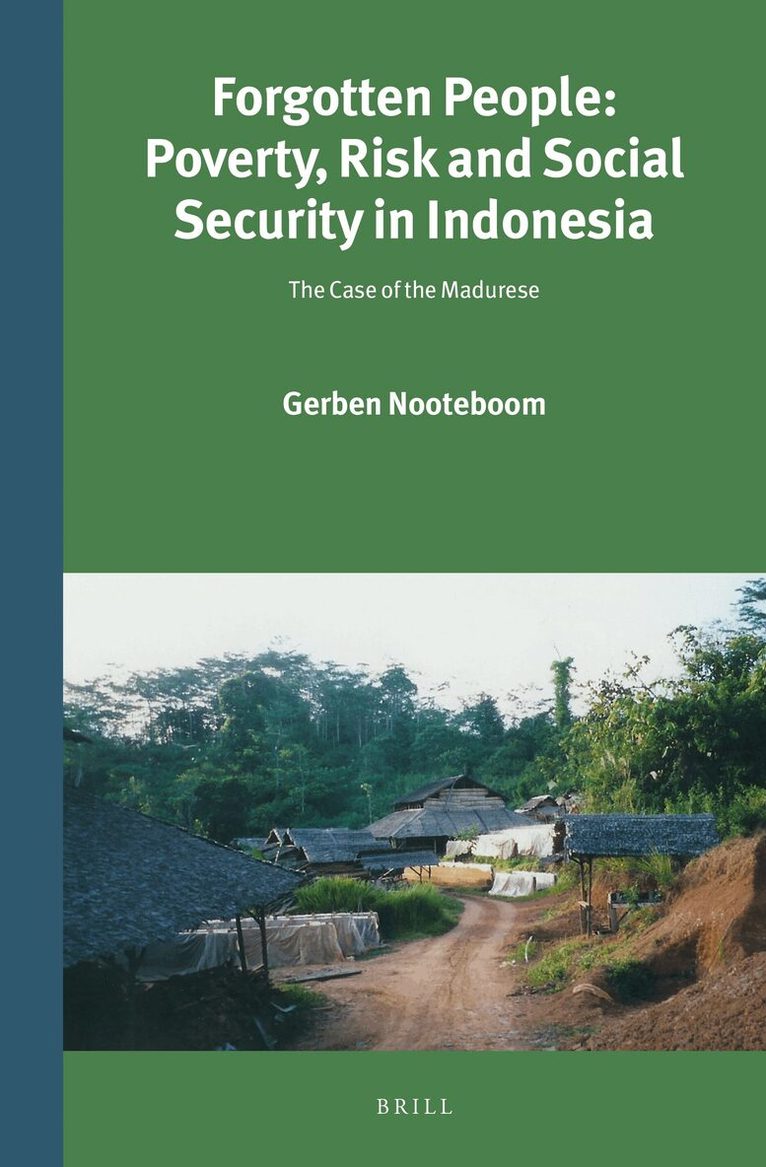
Forgotten People: Poverty, Risk and Social Security in Indonesia
The Case of the Madurese
Inbunden, Engelska, 2014
2 085 kr
Skickas inom 5-8 vardagar
Forgotten People deals with people living at the fringes of the Indonesian society. It describes and analyses their livelihoods and styles of making a living from an insider perspective. While Indonesia has experienced steady economic growth for more than a decade, the livelihoods and lifestyles of poor people and migrants confronted with poverty and insecurity have received less attention. This book describes and analyses diversity in livelihood strategies, risk-taking and local forms of social security (social welfare) of people living below or close to the Indonesian poverty line. It puts two categories of forgotten people at the centre. Peasants, living in remote areas in rural Java, and Madurese migrants craving for a better life in urban and rural East Kalimantan.
Paradox of Agrarian Change
Food Security and the Politics of Social Protection in Indonesia
Häftad, Engelska, 2023
389 kr
Skickas inom 7-10 vardagar
A detailed study of the failure of poverty reduction programs in Indonesia to reduce food insecurity.Economic growth in the middle-income countries of Southeast Asia over the past few decades has been widely praised for reducing poverty in both absolute and relative terms. Indonesia is a prime example. But while poverty has declined in Indonesia, patterns of food poverty persist across Indonesia. What explains this troubling paradox? How does it relate to Indonesia’s enthusiastic embrace of the “entitlements revolution,” the use of direct cash transfers as a tool for reducing poverty and building social inclusion?This book analyzes the nature and social consequences of economic development and agrarian change processes in rural Indonesia in relation to the scope and effectiveness of Indonesia’s social protection programs. The findings are based on a series of extensive ground-up case studies in Indonesian communities in a variety of eco-agrarian settings that seek to understand the drivers of food insecurity and vulnerability at a household level. The results show that while high-value farming, diversification, and migration may offer a means of economic progress for poor households, opportunities for accumulation are limited. This, the authors show, is due to the way class, gender, and power work in remote local contexts, and the fact that much surplus income is used for enhanced consumption and changing lifestyles. There are few signs of the classical structural transformation of the countryside which has historically been considered the most decisive pathway out of rural poverty.The authors conclude that social assistance is unlikely to counter the persistence of rural poverty, food insecurity, and precarity in the absence of other redistributive strategies that shift the structural drivers of inequality.