Gerhard H. Fischer – författare
Visar alla böcker från författaren Gerhard H. Fischer. Handla med fri frakt och snabb leverans.
5 produkter
Contributions to Mathematical Psychology, Psychometrics, and Methodology
Av D. R. J. Laming, European Mathematical Psychology Group m. fl.
Häftad, 1993
1594 kr
Lägg i varukorg
Contributions to Mathematical Psychology, Psycho§ metrics and Methodology presents the most esteemed research findings of the 22nd European Mathematical Psychology Group meeting in Vienna, Austria, September 1991. The selection of work appearing in this volume contains not only contributions to …
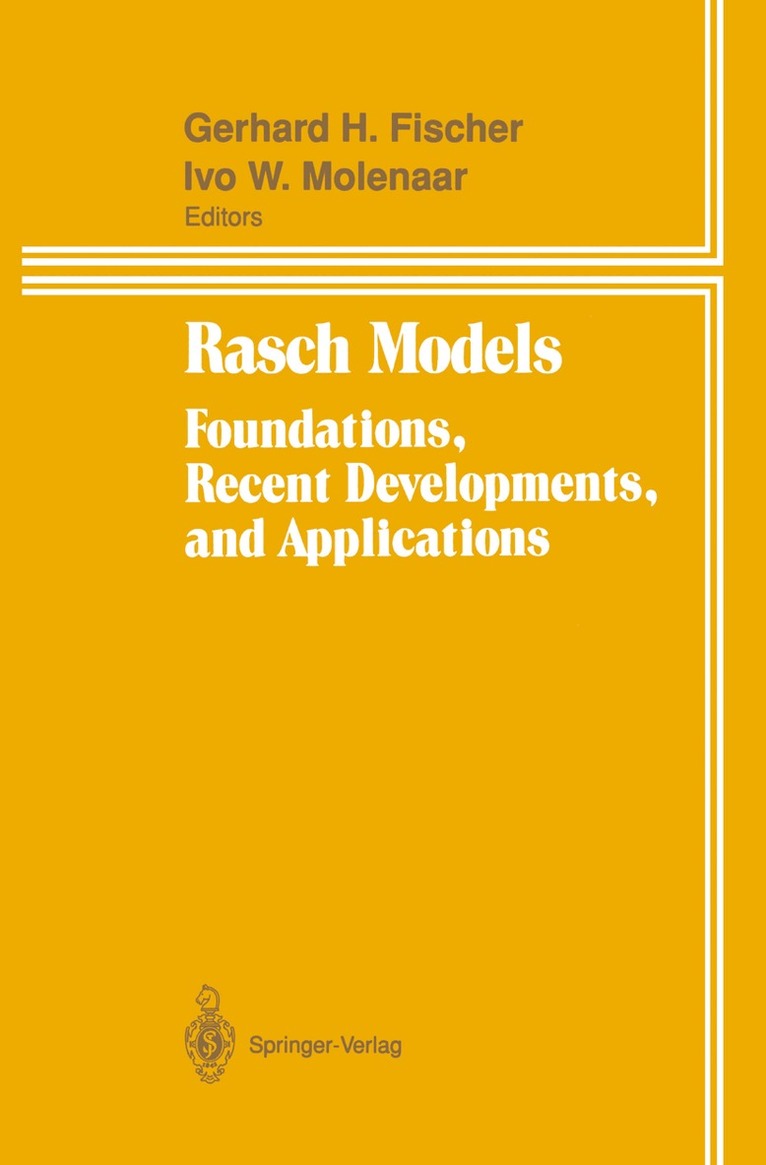
Rasch Models
Foundations, Recent Developments, and Applications
Av Gerhard H. Fischer, Ivo W. Molenaar
Inbunden, 1995
1912 kr
Lägg i varukorg
Thirty-two years after the publication of the legendary 'Rasch book' (Rasch, 1960), the rich literature on the Rasch model and its extensions was scattered in journals and many less accessible sources, including 'grey' literature. When asked by students or junior researchers for references to the …
Rasch Models
Foundations, Recent Developments, and Applications
Av Ivo W. Molenaar, Gerhard H. Fischer
E-bok, 2012
2599 kr
Lägg i varukorg
Thirty-two years after the publication of the legendary ''Rasch book'' (Rasch, 1960), the rich literature on the Rasch model and its extensions was scattered in journals and many less accessible sources, including ''grey'' literature. When asked by students or junior researchers for references to …
Contributions to Mathematical Psychology, Psychometrics, and Methodology
Av Donald Laming, Gerhard H. Fischer
E-bok, 2012
2111 kr
Lägg i varukorg
Contributions to Mathematical Psychology, Psycho§ metrics and Methodology presents the most esteemed research findings of the 22nd European Mathematical Psychology Group meeting in Vienna, Austria, September 1991. The selection of work appearing in this volume contains not only contributions to …
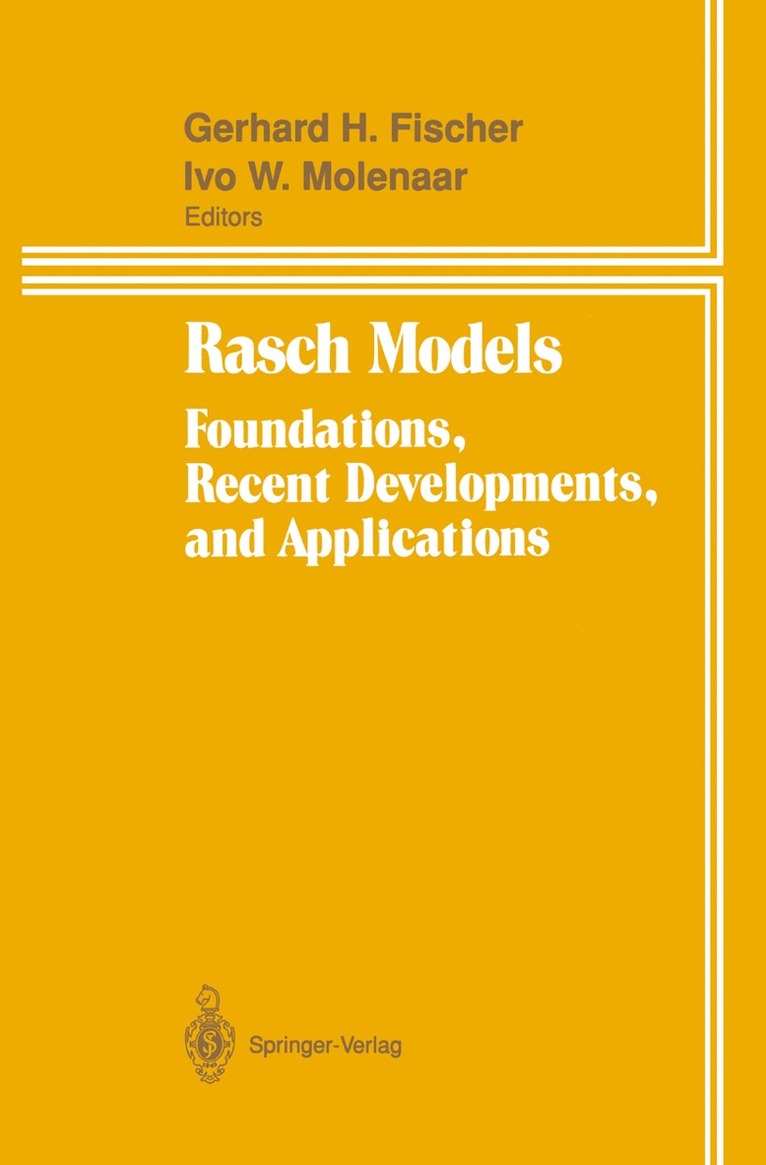
Rasch Models
Foundations, Recent Developments, and Applications
Av Gerhard H. Fischer, Ivo W. Molenaar
Häftad, 2011
1967 kr
Lägg i varukorg
Thirty-two years after the publication of the legendary 'Rasch book' (Rasch, 1960), the rich literature on the Rasch model and its extensions was scattered in journals and many less accessible sources, including 'grey' literature. When asked by students or junior researchers for references to the …