Gerhard Klebe – författare
Visar alla böcker från författaren Gerhard Klebe. Handla med fri frakt och snabb leverans.
9 produkter
Virtual Screening: An Alternative or Complement to High Throughput Screening?
Proceedings of the Workshop ‘New Approaches in Drug Design and Discovery’, special topic ‘Virtual Screening’, Schloß Rauischholzhausen, Germany, March 15–18, 1999
E-bok, 2007
2127 kr
Lägg i varukorg
In the next couple of years the human genome will be fully sequenced. This will provide us with the sequence and overall function of all human genes as well as the complete genome for many micro-organisms. Subsequently it is hoped, by means of powerful bioinformatic tools, to determine the gene …
Virtual Screening: An Alternative or Complement to High Throughput Screening?
Proceedings of the Workshop ‘New Approaches in Drug Design and Discovery’, special topic ‘Virtual Screening’, Schloß Rauischholzhausen, Germany, March 15–18, 1999
Av Gerhard Klebe, Gerhard Klebe
Inbunden, 2000
1685 kr
Lägg i varukorg
In the first few years of the 21st century, the human genome will be fully sequenced. This should provide us with the sequence and overall function of all human genes as well as the complete genome for many micro-organisms. Subsequently, it is hoped, by means of powerful bioinformatic tools, we …
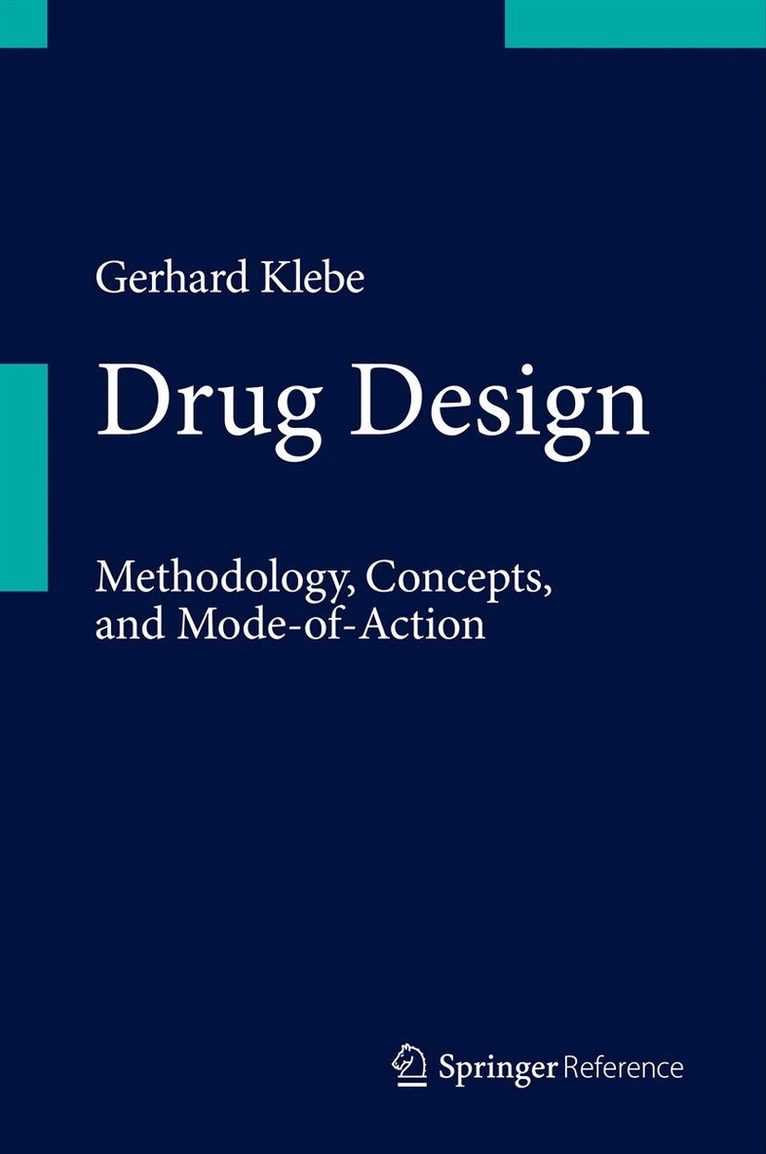
Drug Design
Methodology, Concepts, and Mode-of-Action
Inbunden, 2013
10073 kr
Lägg i varukorg
Unique work on structure-based drug design, covering multiple aspects of drug discovery and development. Fully colored, many images, computer animations of 3D structures (these only in electronic form). Makes the spatial aspects of interacting molecules clear to the reader, covers multiple …
Wirkstoffdesign
Entwurf und Wirkung von Arzneistoffen
Inbunden, 2024
843 kr
Lägg i varukorg
Die vorliegende 3. Auflage bringt das Thema Wirkstoffdesign wieder auf den aktuellen Stand der Forschung. Der Leser lernt neue Methoden in der Gentechnologie und die erweiterte Palette strukturbiologischer Verfahren kennen. Gerade die letzten 10 Jahre wurden durch Einsatz dieser Methoden viele …
Wirkstoffdesign
Entwurf und Wirkung von Arzneistoffen
E-bok, 2024
873 kr
Lägg i varukorg
Die vorliegende 3. Auflage bringt das Thema Wirkstoffdesign wieder auf den aktuellen Stand der Forschung. Der Leser lernt neue Methoden in der Gentechnologie und die erweiterte Palette strukturbiologischer Verfahren kennen. Gerade die letzten 10 Jahre wurden durch Einsatz dieser Methoden viele …
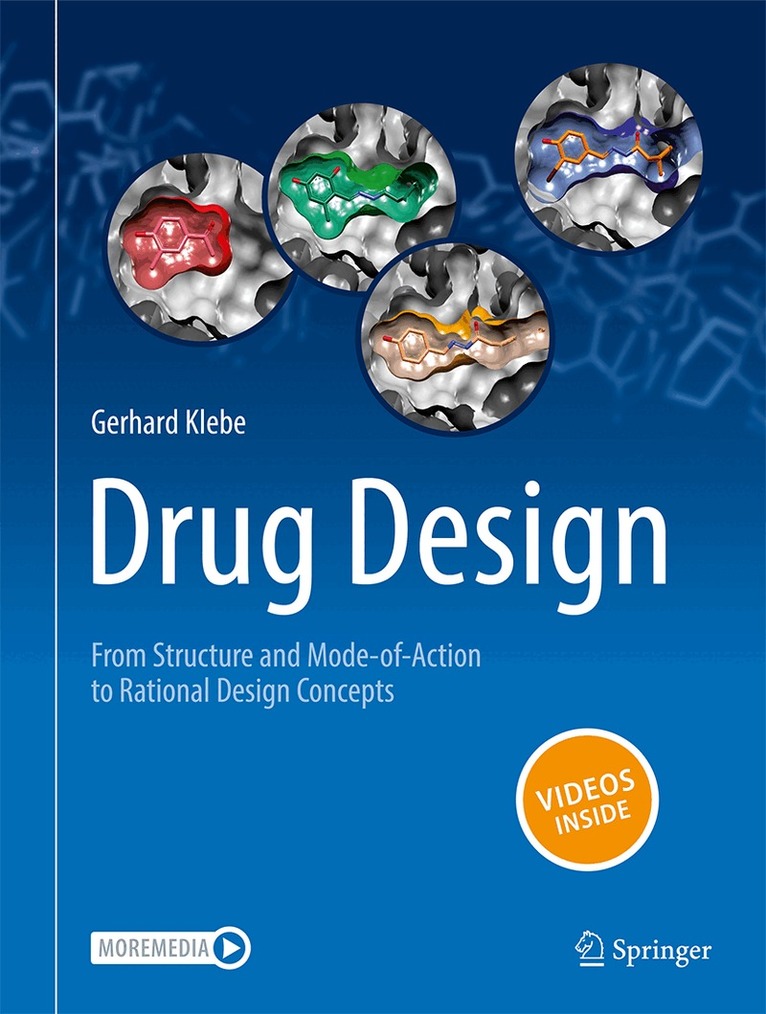
Drug Design
From Structure and Mode-of-Action to Rational Design Concepts
Inbunden, 2025
902 kr
Lägg i varukorg
This English-language textbook, based on the successful German edition 'Wirkstoffdesign', brings the subject of drug design back to the cutting edge of research. The reader learns about new methods in genetic engineering and the expanded range of structural biological methods. Especially in the …
Drug Design
From Structure and Mode-of-Action to Rational Design Concepts
E-bok, 2025
1175 kr
Lägg i varukorg
This English-language textbook, based on the successful German edition ''Wirkstoffdesign'', brings the subject of drug design back to the cutting edge of research. The reader learns about new methods in genetic engineering and the expanded range of structural biological methods. Especially in the …
Wirkstoffdesign
Entwurf und Wirkung von Arzneistoffen
E-bok, 2009
1074 kr
Lägg i varukorg
Dieses für den deutschen Raum einzigartige Lehrbuch richtet sich an Studenten der Pharmazie, Chemie und Biowissenschaften, aber auch an Quereinsteiger in Forschungs- und Entwicklungsabteilungen der Pharmazeutischen Industrie. Die zweite Auflage ist komplett überarbeitet. Zahlreiche aktuelle …
Virtual Screening: An Alternative or Complement to High Throughput Screening?
Proceedings of the Workshop ‘New Approaches in Drug Design and Discovery’, special topic ‘Virtual Screening’, Schloß Rauischholzhausen, Germany, March 15–18, 1999
Häftad, 2010
1685 kr
Lägg i varukorg
In the next couple of years the human genome will be fully sequenced. This will provide us with the sequence and overall function of all human genes as well as the complete genome for many micro-organisms. Subsequently it is hoped, by means of powerful bioinformatic tools, to determine the gene …