Gill Saunders - Böcker
Visar alla böcker från författaren Gill Saunders. Handla med fri frakt och snabb leverans.
6 produkter
6 produkter
147 kr
Skickas inom 7-10 vardagar
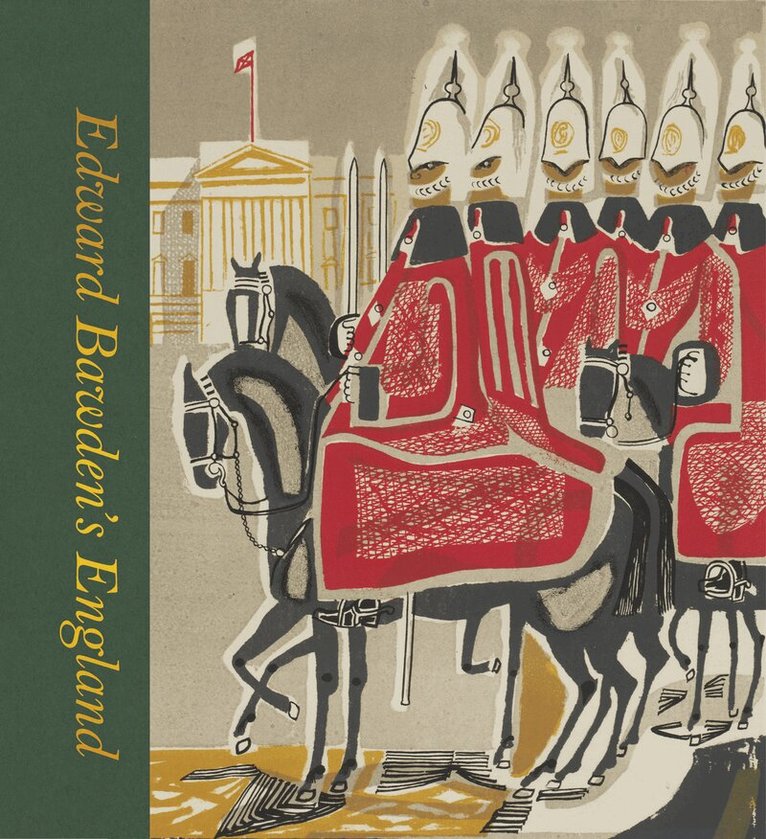
A beautiful and informative gift book devoted to Edward Bawden's representations of England. Edward Bawden (1903-1989) was a printmaker, painter, illustrator and designer. He studied and later taught at the Royal College of art, served as a war artist in WW2 and worked extensively as a commercial artist for companies including London Transport, Fortnum and Mason, Shell-Mex, the Folio Society and Chatto and Windus. Aside from the years he spent in France, the Middle East and North Africa while serving as a war artist, and later visits to Canada and Ireland, Bawden rarely travelled far from home, but found inspiration in the fields and farms of his native Essex, at the seaside, and in classic London scenes: Kew Gardens, the Royal Parks, the Tower of London and St Paul’s Cathedral, and the iron-and-glass monuments to Victorian engineering such as Liverpool Street station and the markets in Spitalfields and Smithfield. This book celebrates England as represented by Bawden in 85 works held in the V&A’s collection, including prints, posters, drawings, paintings, murals and advertising material. The illustrations include such early pieces as his poster Map of the British Empire for an exhibition in 1924; his mural English Garden Delights, designed for the Orient Line Navigation Company in 1946; illustrations for books including Good Food, The Gardener’s Diary and Life in an English Village; advertising work for London Transport, Shell and Fortnum & Mason; the poster Lifeguards, created to mark the coronation of Queen Elizabeth II in 1953; and a varied selection of linocuts and watercolours. As this book demonstrates, it was England, with its quiet landscapes, its pleasures and pastimes, its history and ceremonies, its traditions and recreations, that was the source of Bawden's finest and most engaging work.
334 kr
Skickas inom 7-10 vardagar
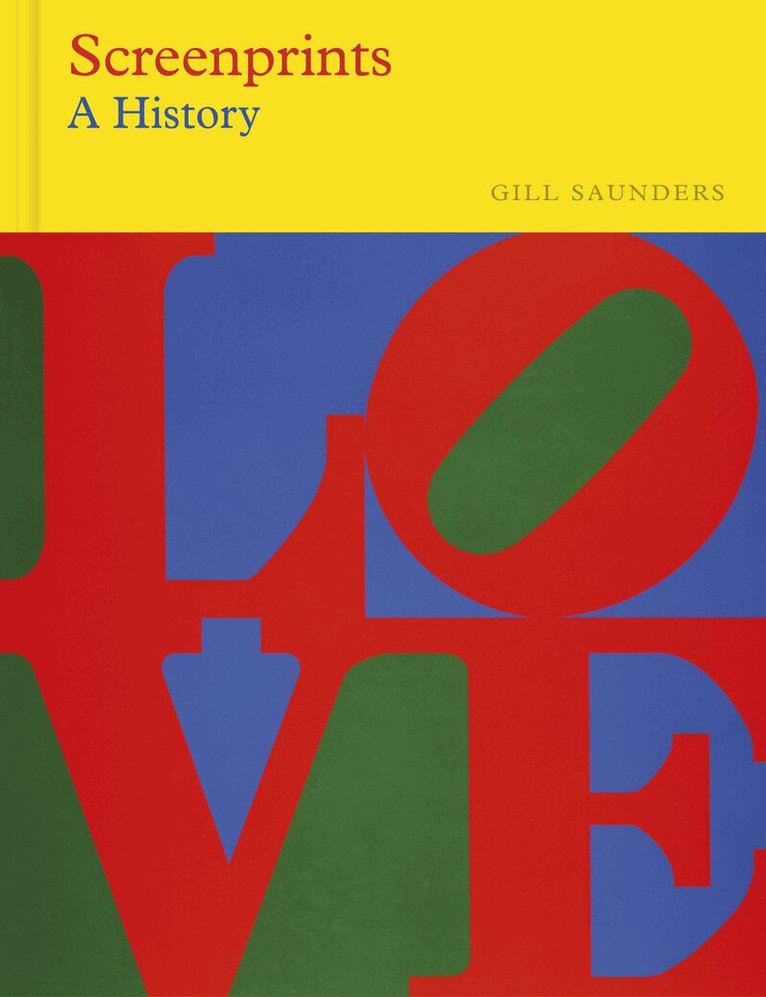
A celebration of the rich 20th- and 21st-century tradition of screenprinting as a means of artistic expression, from its commercial origins in 1920s America to the limited-edition screenprints of the post-war period and today, by artists such as Andy Warhol, Bridget Riley and Damien Hirst. Screenprints: A History, the first title in the V&A's new series on the history and practice of printmaking, is a celebration of the fine-art applications of this versatile medium, from the commercial origins of the screenprinting process in 1920s America, its pivotal role in 1960s Pop and Op Art among artists such as Andy Warhol and Bridget Riley, through to its adoption by Damien Hirst and the YBAs of the 1990s, and its enduring presence in contemporary art. This beautifully designed, strikingly illustrated introduction will appeal to art lovers and practising artists everywhere. The origins of the screenprinting process are introduced through early artistic precursors, such as the stencil and pochoir printing in the making of Henri Matisse’s Jazz, and other artists’ books. Screenprinting became one of the most important techniques in the rise of artists’ limited-edition fine art prints from the 1960s onwards, seen here in the work of notable figures such as Roy Lichtenstein and Eduardo Paolozzi, and contemporary artists such as Damien Hirst, who have variously engaged with the medium’s commercial origins and, conversely, its capacity for a hand-made aesthetic. Special focus is given to lesser-known names who pioneered the use of the screenprint in fine art in the UK, the USA and Europe, including Francis Carr and Ben Shahn, while tracing its global spread through Africa, the Caribbean and Australasia. An illustrated, step-by-step guide to the practical process further enriches this multifaceted account. The democratic medium has further lent itself to spontaneous graphic protest, notably in the Atelier Populaire posters made in Paris in 1968, featured here and embodying screenprinting’s unique qualities, rich colours and graphic impact.
354 kr
Tillfälligt slut
Recording Britain was an artistic documentary project compiled as the country was facing the potentially devastating impact of the Second World War. The resulting collection of more than 1500 watercolours and drawings, by artists such as John Piper, Michael Rothenstein, Barbara Jones and Stanley Badmin, is a rich visual record of buildings, landscapes and livelihoods under threat. Recording Britain brings together highlights from this extraordinary collection. The vivid images of national and regional identity often portray an idealized account of the country its audience was fighting for. The pictures are also discussed in relation to contemporary British artists and photographers such as John Virtue, Conrad Atkinson, Richard Long and Laura Oldfield Ford, whose work also reflects on a sense of place.
199 kr
Skickas inom 7-10 vardagar
Print has always been an art form for everyone - relatively cheap to produce and easy to distribute, and intended to be accessible to all. It links to painting, and creative autographic expression, as well as to a tradition of satire and protest, both social and political. Above all, prints are a means of communication and cultural exchange and, in the context of Africa and the African diaspora, these qualities have had a particular resonance. The book covers the period from 1960, presenting and interpreting a variety of visual images from the V&A collections in terms of their political and social context, while also addressing their identity as art and design. It includes prints by Uzo Egonu, Carrie Mae Weems and Chris Ofili among others, as well as overtly political work, such as posters attacking the Apartheid policies of South Africa and material produced by American Black Power organizations.
366 kr
Skickas
In 1925 the artists Edward Bawden and Eric Ravilious moved to the Essex village of Great Bardfield, at first sharing lodgings. Over the course of several years and encouraged by Bawden and Ravilious' work, other artists came to live in the village, forming a community of artists and designers that has continued to the present.Among the first to join them were the Rowntrees, Kenneth and Diana, and Michael Rothenstein and his wife Duffy Ayers. They were followed by John Aldridge, painter and designer of wallpapers (printed, like Bawden's papers, by the Curwen Press); Walter Hoyle, printmaker and also a wallpaper designer; Marianne Straub, textile designer and weaver; illustrators and printmakers Bernard Cheese and his wife Sheila Robinson. Though the careers of Bawden and Ravilious are well-documented, many of the other artists are less well-known but equally talented, such as George Chapman, Stanley Clifford-Smith and Laurence Scarfe.This book tells the story of Great Bardfield and its artists, and their famous 'open house' exhibitions, showing how the village and neighbouring landscape nurtured a distinctive style of art, design and illustration from the 1930s to the 1970s and beyond.'..their shared artistic legacy is immediately obvious from this beautiful book.' --Country Life 16th 23rd December 2015'..Beautifully designed.' --Evening Standard 24th December 2015'..splendidly illustrated' -- The Spectator, 28th November 2015
277 kr
Skickas inom 7-10 vardagar
The Julie and Robert Breckman Print Fund has enabled purchases by such art world stars as Damien Hirst, Julian Opie, Chris Ofili, Grayson Perry and Rachel Whiteread to name but a few. The collection is also home of a wide range of other print acquisitions that encompass everything from topographical prints, fashion plates, wallpapers and caricatures to posters, packaging and playing cards, as well as prints by street artists, and often challenging contemporary prints and multiples. This book includes an illustrated introduction that gives the background of the collection and describes the rationale behind the collecting - as well as highlighting the important contributions that the Breckman Fund acquisitions have made to the V&A's programme of exhibitions, displays and galleries.