Glaire D. Anderson - Böcker
Visar alla böcker från författaren Glaire D. Anderson. Handla med fri frakt och snabb leverans.
5 produkter
5 produkter
1 442 kr
Skickas inom 3-6 vardagar
In times of widespread Islamophobia, there is an understandable motivation for constructing scientific achievement as a counternarrative in popular discourse about Islam. Yet doing so has tended to impose an anachronistic conception of "science" onto pre-modern practices while also obscuring wider views of the intellectual, philosophical, and particularly the material context of medieval scientific achievement. An exemplary case study for this phenomenon is the figure of 'Abbas Ibn Firnas (d. 887), a celebrated early scientist, Córdoban courtier, and polymath. Ibn Firnas is best known today for conducting an early aeronautics experiment, which was commemorated by NASA. Some historians have called it the first successful human flight. The earliest and fullest account of Ibn Firnas' career in the Umayyad court includes the aeronautics experiment, and a great deal more on his achievements in the arts and design but has yet to receive sustained scholarly attention. That account, as preserved in a volume of the Muqtabas of Ibn Hayyan (d. 1076), the Cordoban court chronicle, presents Ibn Firnas as both the leading intellectual of early Islamic Iberia and as a pioneering figure in the design and construction of the court's first fine scientific instruments and space of scientific visualization. A Bridge to the Sky reconstructs the account of Ibn Firnas' career to explore the exact sciences, design, and making as interconnected intellectual practices during the first flowering of the Islamic scientific revolution. Glaire D. Anderson deftly weaves analyses of the Arabic texts alongside the striking contemporaneous visual evidence, including some of the earliest surviving Islamic scientific instruments and illustrated treatises that are, as argued here, also works of art. A Bridge to the Sky thus offers both an intellectual biography of the intriguing figure of Ibn Firnas alongside an exploration of the culture of scientific learning in Umayyad al-Andalus. As a novel examination of the social significance of science, design and craftsmanship in medieval Iberia and the Islamic lands during the "classical" period of Islamic civilization, A Bridge to the Sky opens new avenues of study in the fields of medieval Islamic studies and art history, visual and material culture studies, and history of science.
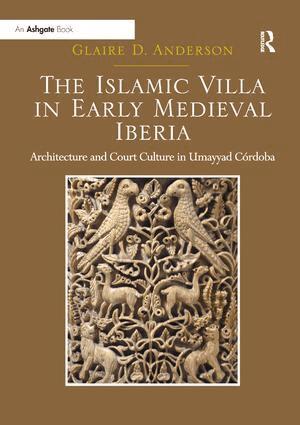
Islamic Villa in Early Medieval Iberia
Architecture and Court Culture in Umayyad Córdoba
Häftad, Engelska, 2018
747 kr
Skickas inom 10-15 vardagar
Exploring the aristocratic villas and court culture of Córdoba, during its 'golden age' under the reign of the Umayyad dynasty (r. 756-1031 AD), this study illuminates a key facet of the secular architecture of the court and its relationship to the well-known Umayyad luxury arts. Based on textual and archaeological evidence, it offers a detailed analysis of the estates' architecture and gardens within a synthetic socio-historical framework. Author Glaire Anderson focuses closely on the Córdoban case study, synthesizing the archaeological evidence for the villas that has been unearthed from the 1980s up to 2009, with extant works of Andalusi art and architecture, as well as evidence from the Arabic texts. While the author brings her expertise on medieval Islamic architecture, art, and urbanism to the topic, the book contributes to wider art historical discourse as well: it is also a synthetic project that incorporates material and insights from experts in other fields (agricultural, economic, and social and political history). In this way, it offers a fuller picture of the topic and its relevance to Andalusi architecture and art, and to broader issues of architecture and social history in the caliphal lands and the Mediterranean. An important contribution of the book is that it illuminates the social history of the Córdoban villas, drawing on the medieval Arabic texts to explain patterns of patronage among the court elite. An overarching theme of the book is that the Córdoban estates fit within the larger historical constellation of Mediterranean villas and villa cultures, in contrast to long-standing art historical discourse that holds villas did not exist in the medieval period.
Islamic Villa in Early Medieval Iberia
Architecture and Court Culture in Umayyad Córdoba
Inbunden, Engelska, 2013
1 638 kr
Tillfälligt slut
Exploring the aristocratic villas and court culture of Córdoba, during its 'golden age' under the reign of the Umayyad dynasty (r. 756-1031 AD), this study illuminates a key facet of the secular architecture of the court and its relationship to the well-known Umayyad luxury arts. Based on textual and archaeological evidence, it offers a detailed analysis of the estates' architecture and gardens within a synthetic socio-historical framework. Author Glaire Anderson focuses closely on the Córdoban case study, synthesizing the archaeological evidence for the villas that has been unearthed from the 1980s up to 2009, with extant works of Andalusi art and architecture, as well as evidence from the Arabic texts. While the author brings her expertise on medieval Islamic architecture, art, and urbanism to the topic, the book contributes to wider art historical discourse as well: it is also a synthetic project that incorporates material and insights from experts in other fields (agricultural, economic, and social and political history). In this way, it offers a fuller picture of the topic and its relevance to Andalusi architecture and art, and to broader issues of architecture and social history in the caliphal lands and the Mediterranean. An important contribution of the book is that it illuminates the social history of the Córdoban villas, drawing on the medieval Arabic texts to explain patterns of patronage among the court elite. An overarching theme of the book is that the Córdoban estates fit within the larger historical constellation of Mediterranean villas and villa cultures, in contrast to long-standing art historical discourse that holds villas did not exist in the medieval period.
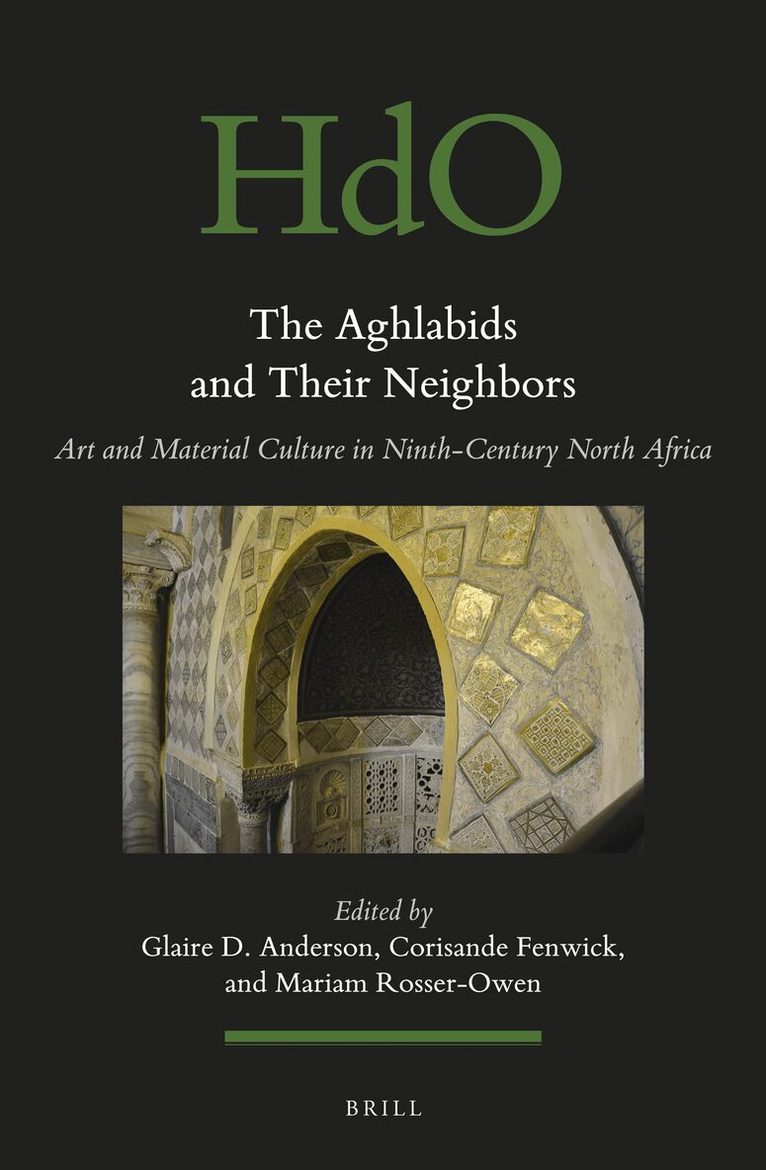
Del 122 - Handbook of Oriental Studies. Section 1 The Near and Middle East
Aghlabids and their Neighbors
Art and Material Culture in Ninth-Century North Africa
Inbunden, Arabiska, 2017
3 384 kr
Skickas inom 5-8 vardagar
The first dynasty to mint gold dinars outside of the Abbasid heartlands, the Aghlabid (r. 800-909) reign in North Africa has largely been neglected in the scholarship of recent decades, despite the canonical status of its monuments and artworks in early Islamic art history. The Aghlabids and their Neighbors focuses new attention on this key dynasty. The essays in this volume, produced by an international group of specialists in history, art and architectural history, archaeology, and numismatics, illuminate the Aghlabid dynasty’s interactions with neighbors in the western Mediterranean and its rivals and allies elsewhere, providing a state of the question on early medieval North Africa and revealing the centrality of the dynasty and the region to global economic and political networks. Contributors: Lotfi Abdeljaouad, Glaire D. Anderson, Lucia Arcifa, Fabiola Ardizzone, Alessandra Bagnera, Jonathan M. Bloom, Lorenzo Bondioli, Chloé Capel, Patrice Cressier, Mounira Chapoutot-Remadi, Abdelaziz Daoulatli, Claire Déléry, Ahmed El Bahi, Kaoutar Elbaljan, Ahmed Ettahiri, Abdelhamid Fenina, Elizabeth Fentress, Abdallah Fili, Mohamed Ghodhbane, Caroline Goodson, Soundes Gragueb Chatti, Khadija Hamdi, Renata Holod, Jeremy Johns, Tarek Kahlaoui, Hugh Kennedy, Sihem Lamine, Faouzi Mahfoudh, David Mattingly, Irene Montilla, Annliese Nef, Elena Pezzini, Nadège Picotin, Cheryl Porter, Dwight Reynolds, Viva Sacco, Elena Salinas, Martin Sterry.
Aghlabids and their Neighbors
Art and Material Culture in Ninth-Century North Africa
Häftad, Arabiska, 2024
934 kr
Skickas inom 5-8 vardagar
The first dynasty to mint gold dinars outside of the Abbasid heartlands, the Aghlabid (r. 800-909) reign in North Africa has largely been neglected in the scholarship of recent decades, despite the canonical status of its monuments and artworks in early Islamic art history. The Aghlabids and their Neighbors focuses new attention on this key dynasty. The essays in this volume, produced by an international group of specialists in history, art and architectural history, archaeology, and numismatics, illuminate the Aghlabid dynasty’s interactions with neighbors in the western Mediterranean and its rivals and allies elsewhere, providing a state of the question on early medieval North Africa and revealing the centrality of the dynasty and the region to global economic and political networks. Contributors: Lotfi Abdeljaouad, Glaire D. Anderson, Lucia Arcifa, Fabiola Ardizzone, Alessandra Bagnera, Jonathan M. Bloom, Lorenzo Bondioli, Chloé Capel, Patrice Cressier, Mounira Chapoutot-Remadi, Abdelaziz Daoulatli, Claire Déléry, Ahmed El Bahi, Kaoutar Elbaljan, Ahmed Ettahiri, Abdelhamid Fenina, Elizabeth Fentress, Abdallah Fili, Mohamed Ghodhbane, Caroline Goodson, Soundes Gragueb Chatti, Khadija Hamdi, Renata Holod, Jeremy Johns, Tarek Kahlaoui, Hugh Kennedy, Sihem Lamine, Faouzi Mahfoudh, David Mattingly, Irene Montilla, Annliese Nef, Elena Pezzini, Nadège Picotin, Cheryl Porter, Dwight Reynolds, Viva Sacco, Elena Salinas, Martin Sterry.