Glenn M. Schwartz - Böcker
Visar alla böcker från författaren Glenn M. Schwartz. Handla med fri frakt och snabb leverans.
6 produkter
6 produkter
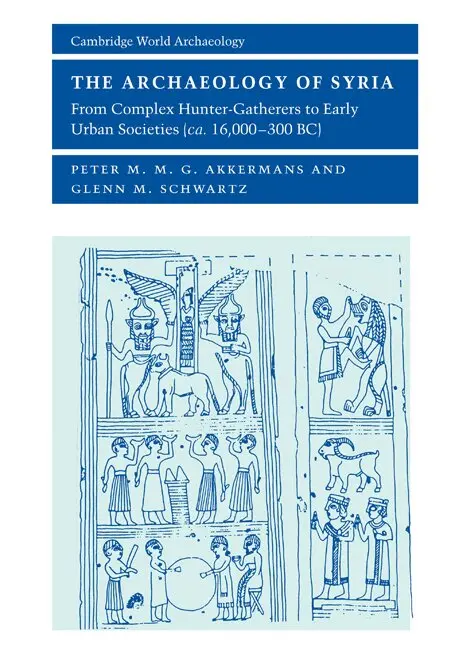
The Archaeology of Syria
From Complex Hunter-Gatherers to Early Urban Societies (c.16,000-300 BC)
Inbunden, Engelska, 2004
1 350 kr
Skickas inom 7-10 vardagar
This was the first book to present a comprehensive review of the archaeology of Syria from the end of the Paleolithic period to 300 BC. Syria has become a prime focus of field archaeology in the Middle East in the past thirty years, and Peter Akkermans and Glenn Schwartz discuss the results of this intensive fieldwork, integrating them with earlier research. Alongside the major material culture types of each period, they examine important contributions of Syrian archaeology to issues like the onset of agriculture, the emergence of private property and social inequality, the rise and collapse of urban life, and the archaeology of early empires. All competing interpretations are set out and considered, alongside the authors' own perspectives and conclusions.
The Archaeology of Syria
From Complex Hunter-Gatherers to Early Urban Societies (c.16,000-300 BC)
Häftad, Engelska, 2004
474 kr
Skickas inom 7-10 vardagar
This was the first book to present a comprehensive review of the archaeology of Syria from the end of the Paleolithic period to 300 BC. Syria has become a prime focus of field archaeology in the Middle East in the past thirty years, and Peter Akkermans and Glenn Schwartz discuss the results of this intensive fieldwork, integrating them with earlier research. Alongside the major material culture types of each period, they examine important contributions of Syrian archaeology to issues like the onset of agriculture, the emergence of private property and social inequality, the rise and collapse of urban life, and the archaeology of early empires. All competing interpretations are set out and considered, alongside the authors' own perspectives and conclusions.
386 kr
Skickas inom 7-10 vardagar
From the Euphrates Valley to the southern Peruvian Andes, early complex societies have risen and fallen, but in some cases they have also been reborn. Prior archaeological investigation of these societies has focused primarily on emergence and collapse. This is the first book-length work to examine the question of how and why early complex urban societies have reappeared after periods of decentralization and collapse.Ranging widely across the Near East, the Aegean, East Asia, Mesoamerica, and the Andes, these cross-cultural studies expand our understanding of social evolution by examining how societies were transformed during the period of radical change now termed “collapse.” They seek to discover how societal complexity reemerged, how second-generation states formed, and how these re-emergent states resembled or differed from the complex societies that preceded them.The contributors draw on material culture as well as textual and ethnohistoric data to consider such factors as preexistent institutions, structures, and ideologies that are influential in regeneration; economic and political resilience; the role of social mobility, marginal groups, and peripheries; and ethnic change. In addition to presenting a number of theoretical viewpoints, the contributors also propose reasons why regeneration sometimes does not occur after collapse. A concluding contribution by Norman Yoffee provides a critical exegesis of “collapse” and highlights important patterns found in the case histories related to peripheral regions and secondary elites, and to the ideology of statecraft.After Collapse blazes new research trails in both archaeology and the study of social change, demonstrating that the archaeological record often offers more clues to the “dark ages” that precede regeneration than do text-based studies. It opens up a new window on the past by shifting the focus away from the rise and fall of ancient civilizations to their often more telling fall and rise.
Study of the Ancient Near East in the Twenty-First Century
The William Foxwell Albright Centennial Conference
Inbunden, Engelska, 1996
1 056 kr
Skickas inom 5-8 vardagar
Sixteen essays from the Albright conference held at the Johns Hopkins University charting the course of ancient Near Eastern studies in the twenty-first century. This landmark volume is essential reading for both students and scholars.
Del 36 - Monumenta Archaeologica
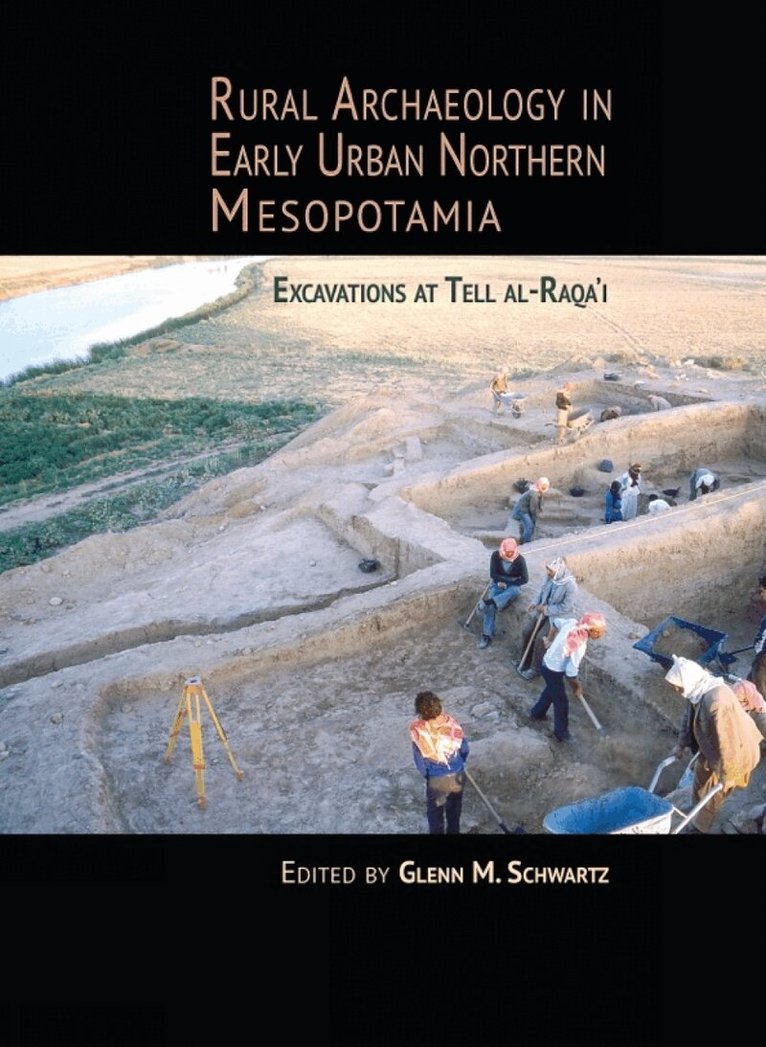
Rural Archaeology in Early Urban Northern Mesopotamia
Excavations at Tell al-Raqa'i
Inbunden, Engelska, 2015
1 346 kr
Skickas inom 5-8 vardagar
This book presents the results of the extensive excavation of a small, rural village from the period of emerging cities in upper Mesopotamia (modern northeast Syria) in the early to middle third millennium BC. Prior studies of early Near Eastern urban societies generally focused on the cities and elites, neglecting the rural component of urbanization. This research represents part of a move to rectify that imbalance. Reports on the architecture, pottery, animal bones, plant remains, and other varieties of artifacts and ecofacts enhance our understanding of the role of villages in the formation of urban societies, the economic relationship between small rural sites and urban centers, and status and economic differentiation in villages. Among the significant results are the extensive exposure of a large segment of the village area, revealing details of spatial and social organization and household economics. The predominance of large-scale grain storage and processing leads to questions of staple finance, economic relations with pastoralists, and connections to developing urban centers.
Del 50 - Monumenta Archaeologica
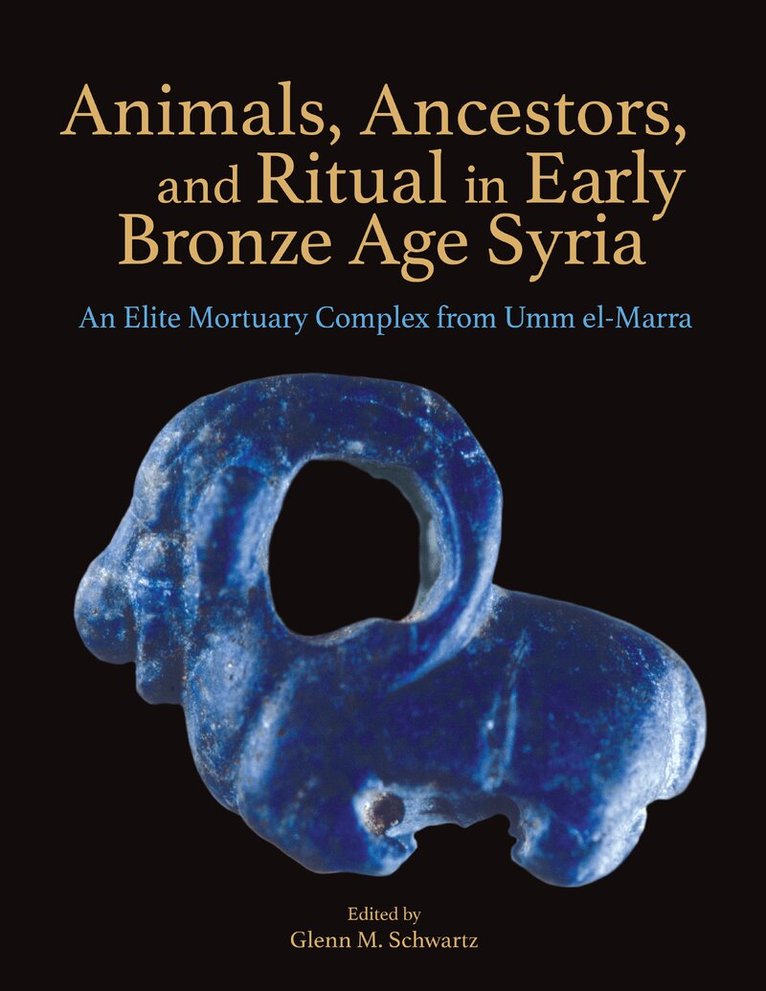
Animals, Ancestors, and Ritual in Early Bronze Age Syria
An Elite Mortuary Complex from Umm el-Marra
Inbunden, Engelska, 2024
2 171 kr
Skickas inom 5-8 vardagar
This is a final report of the excavation of Tell Umm el-Marra in northern Syria, conducted in 1994--2010. It is likely the site of ancient Tuba, capital of a small kingdom in the Early and Middle Bronze periods, in the Jabbul plain between Aleppo and northern Mesopotamia. Its study advances our understanding of early Syrian complex society beyond the big cities of Antiquity. Of particular importance in the Early Bronze excavations from Umm el-Marra are the results from the site acropolis. The architecture, location, and contents of the tombs, including objects of gold, silver, and lapis lazuli, indicated that this necropolis contained the remains of high-ranking persons. The tomb area was in use for some three centuries or more, and included separate installations where equids were interred (kungas, donkey x onager hybrids), sometimes along with human infants. The kungas were expensive and prestigious animals associated with royalty and divinity and thus are apt inclusions in an elite necropolis. Their burial in separate tombs reveals their particular importance, and this site provides the first archaeological attestation of the kunga equids, unique in the archaeology of third-millennium Syria and Mesopotamia.