Götz Aly - Böcker
Visar alla böcker från författaren Götz Aly. Handla med fri frakt och snabb leverans.
20 produkter
20 produkter
380 kr
Skickas inom 3-6 vardagar
193 kr
Skickas inom 3-6 vardagar
251 kr
Skickas inom 7-10 vardagar
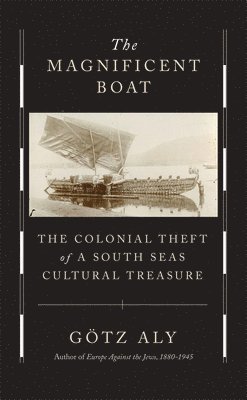
From an eminent and provocative historian, a wrenching parable of the ravages of colonialism in the South Pacific.Countless museums in the West have been criticized for their looted treasures, but few as trenchantly as the Humboldt Forum, which displays predominantly non-Western art and artifacts in a modern reconstruction of the former Royal Palace in Berlin. The Forum’s premier attraction, an ornately decorated fifteen-meter boat from the island of Luf in modern-day Papua New Guinea, was acquired under the most dubious circumstances by Max Thiel, a German trader, in 1902 after two decades of bloody German colonial expeditions in Oceania.Götz Aly tells the story of the German pillaging of Luf and surrounding islands, a campaign of violence in which Berlin ethnologists were brazenly complicit. In the aftermath, the majestic vessel was sold to the Ethnological Museum in the imperial capital, where it has remained ever since. In Aly’s vivid telling, the looted boat is a portal to a forgotten chapter in the history of empire—the conquest of the Bismarck Archipelago. One of these islands was even called Aly, in honor of the author’s great-granduncle, Gottlob Johannes Aly, a naval chaplain who served aboard ships that helped subjugate the South Sea islands Germany colonized.While acknowledging the complexity of cultural ownership debates, Götz Aly boldly questions the legitimacy of allowing so many treasures from faraway, conquered places to remain located in the West. Through the story of one emblematic object, The Magnificent Boat artfully illuminates a sphere of colonial brutality of which too few are aware today.
496 kr
Skickas inom 7-10 vardagar
386 kr
Skickas inom 7-10 vardagar
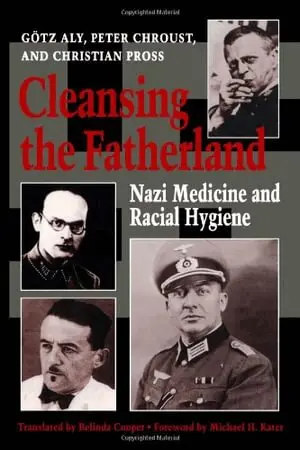
"The chapters in this volume painfully drive home the point that certainly as far as Germany is concerned, the lessons of the Third Reich have not yet been learned...These significant attempts by younger recruits to the larger medical establishment to change things through eye-opening reflection and analysis, however uncomfortable, need support."-Michael H. Kater, author of Doctors under Hitler, in the foreword. The infamous Nuremberg Doctors' Trials of 1946-47 revealed horrifying crimes -ranging from grotesque medical experiments on humans to mass murder-committed by physicians and other health care workers in Nazi Germany. But far more common, argue the authors of Cleansing the Fatherland, were the doctors who profited professionally and financially from the killings but were never called to task-and, indeed, were actively shielded by colleagues in postwar German medical organizations. The authors examine the role of German physicians in such infamous operations as the "T 4" euthanasia program (code-named for the Berlin address of its headquarters at Number 4 Tiergartenstrasse).They also reveal details of countless lesser known killings-all ordered by doctors and all in the name of public health. Maladjusted adolescents, the handicapped, foreign laborers too illto work, even German civilians who suffered mental breakdowns after air raids were "selected for treatment." (One physician who persisted in speaking of "killings" was officially reprimanded for his "negative attitude.") The book also includes original documents-never before published in English-that give unique and chilling insight into the everyday workings of Nazi medicine. Among them: * Minutes from a 1940 meeting of the Conference of German Mayors, at which a Nazi official gives the assembled politicians detailed instructions for the secret burial of murdered mental patients. * A pre-Nazi era questionnaire sent by the head of a state mental institution to parents of disabled children. (Sample question: "Would you agree to a painless shortening of your child's life after an expert had determined him incurably imbecilic?" Sample answer: "Yes, but I would prefer not to know.") * The diary of Dr.Hermann Voss, chief anatomist at the Reichs University of Posen (and later a highly respected physician in postwar Germany), who delights in the flowers blooming outside his window and worries that the overstock of Polish cadavers from his Gestapo suppliers might cause his crematory oven to break down. * Letters of Dr. Friedrich Mennecke, director of the notorious Eichberg Clinic, who writes with cloying sentimentality to the wife he calls "mommy" and comments offhandedly about visiting concentration camps to select "patients" for death. Today, as reports of mass death in Europe are once again cast in terms of public hygiene, and as euthanasia is advocated-even applauded-on U.S. television, the relevance of what Michael H.Kater here calls "the lessons of the Third Reich" is perhaps greater than ever. Against this background, Cleansing the Fatherland sends a stark message that is difficult to ignore.
354 kr
Skickas inom 3-6 vardagar
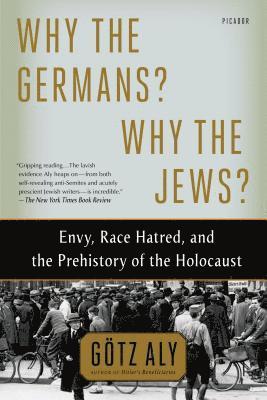
Why the Germans? Why the Jews?
Envy, Race Hatred, and the Prehistory of the Holocaust
Häftad, Engelska, 2015
191 kr
Skickas inom 5-8 vardagar
Countless people have grappled with these questions, but few have come up with answers as original and perceptive as those of German historian Gotz Aly. Tracing the prehistory of the Holocaust, from the 1800s to the Nazis' assumption of power in 1933, Aly shows that German anti-Semitism did not originate with racist ideology or religious animosity, as is often supposed. Instead, through striking statistics and economic analysis, he demonstrates that it was rooted in a more basic emotion: material envy. Resenting the success of the urban, well-educated Jewish minority in the rapidly modernizing world, Germans embraced compensatory theories of Jewish racial inferiority. And the growing resentment, pervading society, provided fertile ground for Hitler and his genocidal politics.
211 kr
Skickas inom 3-6 vardagar
178 kr
Skickas inom 3-6 vardagar
162 kr
Skickas inom 3-6 vardagar
240 kr
Skickas inom 3-6 vardagar
240 kr
Skickas inom 3-6 vardagar
151 kr
Skickas inom 3-6 vardagar
207 kr
Skickas inom 3-6 vardagar
240 kr
Skickas inom 3-6 vardagar
296 kr
Skickas inom 3-6 vardagar
240 kr
Skickas inom 3-6 vardagar
235 kr
Skickas inom 3-6 vardagar
167 kr
Skickas inom 3-6 vardagar
258 kr
Skickas
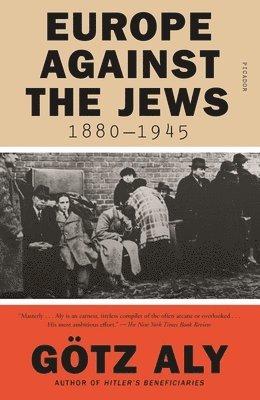
Den tyske historiken Götz Alys bok "Europa mot judarna" handlar om Förintelsens europeiska förhistorier och de förfärande konsekvenser vardaglig pragmatism, gruppegoism och självrättfärdighet kan få. Det var, menar Aly, decennier av tilltagande antisemitism runt om i Europa som gjorde det möjligt för de nazistiska mördarna att finna stöd för sitt projekt – ”den slutliga lösningen” – i nästan alla europiska länder. Denna antisemitism var inte någon medeltida kvarleva från kontinentens efterblivna avkrokar utan en modern företeelse som från 1880-talet och framåt underblåstes av en rad sociala omvälvningar och politiska omständigheter, inte minst nationalistiska politikers vilja att isolera och stigmatisera misshagliga grupper. Men antisemitismen tog sig olika uttryck i olika länder och grep olika djupt, vilket Aly visar med exempel från hela Europa – från Ryssland i norr till Grekland i söder. "Europa mot judarna" är också en bok av starka berättelser. Skildringen av de vedermödor som drabbade de judar som återvände – eller i varje fall försökte återvända – till Österrike efter krigsslutet kan föra tankarna till en Franz Kafka eller en Thomas Bernhard. Men boken reser därtill en rad principiellt viktiga frågor om historiska orsakssamband och antisemitismen som ett modernt fenomen. Frågor med en hög grad av relevans i en ny främlingsfientlig och gruppegoistisk tid. Götz Aly, född 1947, utbildade sig till journalist och studerade sedan historia och statsvetenskap i Berlin. Aly har publicerat en rad uppmärksammade böcker om den nationalsocialistiska regimen och Förintelsen för vilka han belönats med gästprofessurer och en rad priser. Daidalos har tidigare publicerat hans "Hitlers folkstat. Rån, raskrig och nationell socialism" (2009).