Grace Hamman - Böcker
Visar alla böcker från författaren Grace Hamman. Handla med fri frakt och snabb leverans.
5 produkter
5 produkter
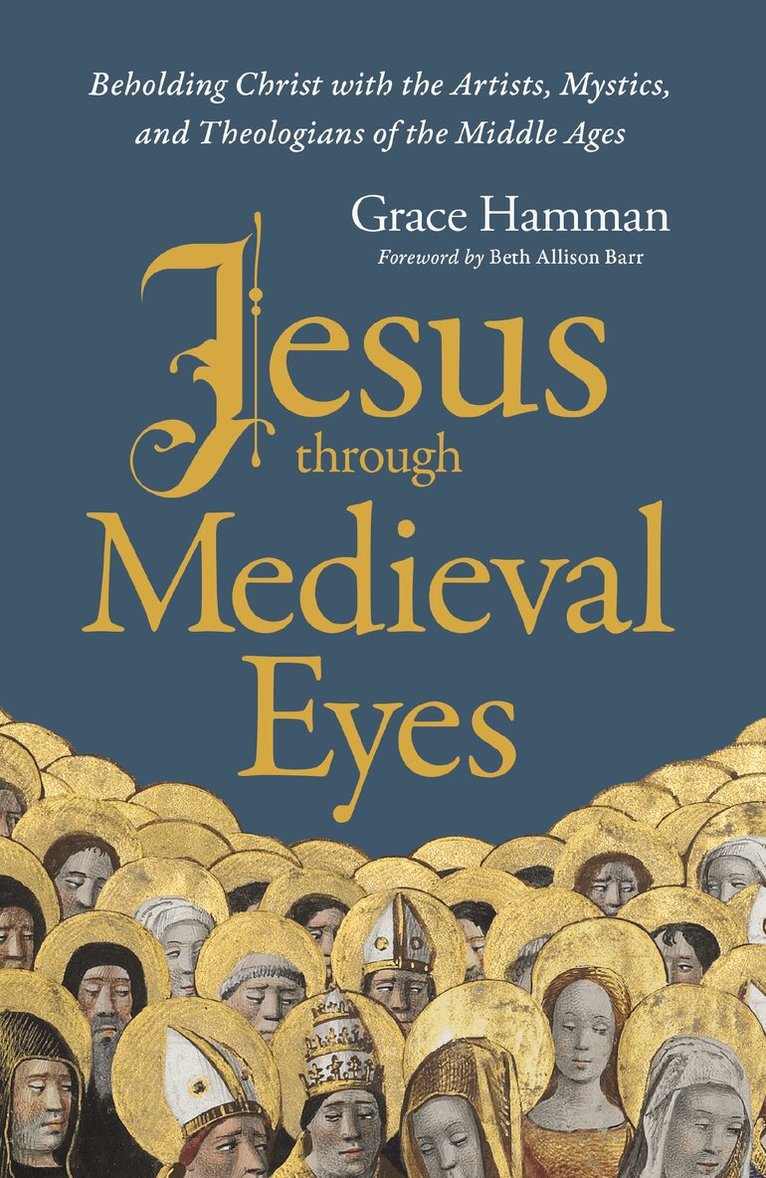
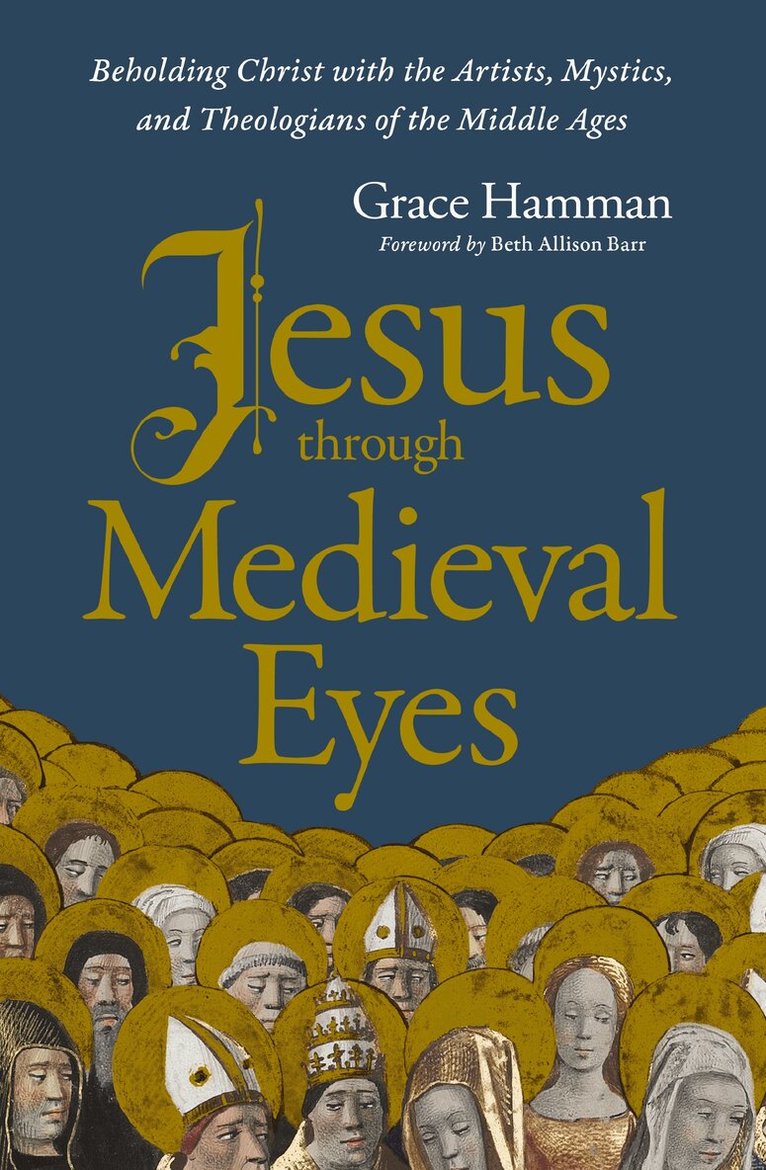
Jesus through Medieval Eyes
Beholding Christ with the Artists, Mystics, and Theologians of the Middle Ages
Inbunden, Engelska, 2023
224 kr
Skickas
Jesus through Medieval Eyes will take you on an exploration of medieval representations of Jesus in theology and literature.Who is Jesus? What is he like? And who am I, encountering Jesus? These questions were just as important to Christians in the Middle Ages as they are today.And yet—as C.S. Lewis noted—the modern church tends to forget that people of different cultures and times also thought carefully about who Jesus was; and sometimes their ideas and emphases were different.Medievalist scholar Grace Hamman believes that we can deepen our understanding and adoration of Christ by looking to the Christians of the Middle Ages. Medieval Europeans were also suffering through pandemics, dealing with political and ecclesial corruption and instability, and reckoning with gender, money, and power. But their concerns and imaginations are unlike ours. Their ideas, narratives, and art about Jesus open up paradoxically fresh and ancient ways to approach and adore Christ—and to reveal where our own cultural ideals about the Messiah fall short.Medieval representations of Jesus span from the familiar—like Jesus as the Judge at the End of Days, or Jesus as the Lover of the Song of Songs—to the more unusual, like Jesus as Our Mother. Through the words of medieval people like Julian of Norwich, St. Bernard of Clairvaux, Margery Kempe, and St. Thomas Aquinas, we meet these faces of Jesus and find renewed ways to love the Savior, in the words of St. Augustine, that "beauty so ancient and so new."
258 kr
Skickas
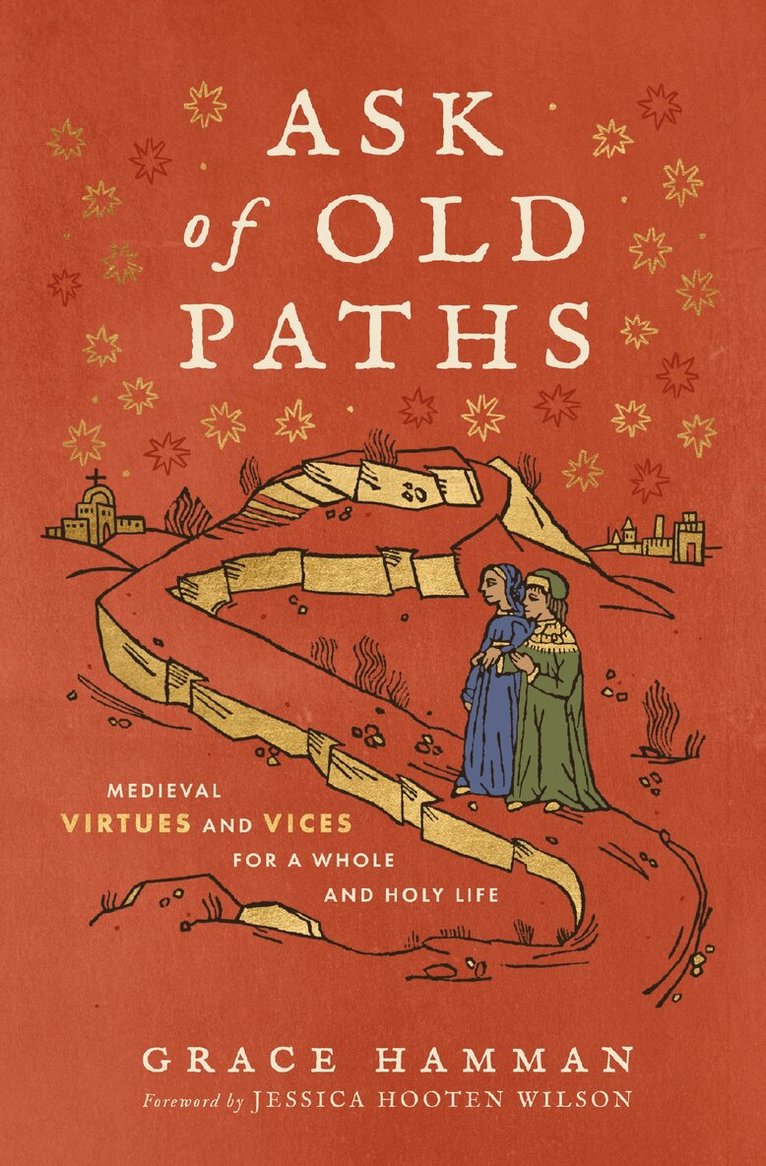
Traditional Christian virtue and vices like abstinence, gluttony, and sloth make many of us bored or uncomfortable. At their best, these words sound dead or confusing, like incomplete fossils that belong to a distant past awkwardly enshrined in a museum. At worst, they signify a prejudiced past, when these words were wielded like weapons.Yet in medieval writing, the language of the virtues and vices was powerful, lively, and delightfully weird. Patience is described as a peppercorn. Unicorns preach chastity. Knightly virtues fend off devious vices by throwing roses at them. In medieval books, words like avarice and meekness meant different things and carried different weight than they do today. And great medieval preachers and poets taught the virtues as crucial to what it meant to live a life of holiness, right alongside the Lord's Prayer and the Creed.Ask of Old Paths by Grace Hamman meditates upon those strange and wonderful word-pictures and explanations of virtues and vices found in medieval traditions of poetry, sermons, and treatises long confined to dusty corners of the library. It focuses on the ancient tradition of virtue language called the Seven Capital Virtue Remedies: pride and humility, envy and love, wrath and meekness, avarice and mercy, sloth and fortitude, gluttony and abstinence, lust and chastity.In accessible and thoughtful chapters, scholar and writer Grace Hamman shows how learning about these pairs of medieval virtues and vices can help us reevaluate our own washed out and insipid moral vocabulary in modernity. Our imaginations for the good life are expanded; our longing for sanctification sharpens. Old ideas can give us new fire in our practice of the virtue--and in that practice, we imitate Jesus and become more human.
Jesus through Medieval Eyes
Beholding Christ with the Artists, Mystics, and Theologians of the Middle Ages
Häftad, Engelska, 2024
178 kr
Skickas
Jesus through Medieval Eyes will take you on an exploration of medieval representations of Jesus in theology and literature.Who is Jesus? What is he like? And who am I, encountering Jesus? These questions were just as important to Christians in the Middle Ages as they are today.And yet--as C.S. Lewis noted--the modern church tends to forget that people of different cultures and times also thought carefully about who Jesus was; and sometimes their ideas and emphases were different.Medievalist scholar Grace Hamman believes that we can deepen our understanding and adoration of Christ by looking to the Christians of the Middle Ages. Medieval Europeans were also suffering through pandemics, dealing with political and ecclesial corruption and instability, and reckoning with gender, money, and power. But their concerns and imaginations are unlike ours. Their ideas, narratives, and art about Jesus open up paradoxically fresh and ancient ways to approach and adore Christ--and to reveal where our own cultural ideals about the Messiah fall short.Medieval representations of Jesus span from the familiar--like Jesus as the Judge at the End of Days, or Jesus as the Lover of the Song of Songs--to the more unusual, like Jesus as Our Mother. Through the words of medieval people like Julian of Norwich, St. Bernard of Clairvaux, Margery Kempe, and St. Thomas Aquinas, we meet these faces of Jesus and find renewed ways to love the Savior, in the words of St. Augustine, that "beauty so ancient and so new."
111 kr
Tillfälligt slut
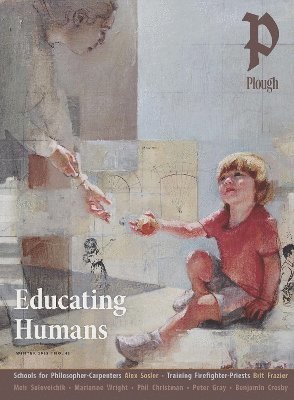
Education has become too narrowly focused on academic success and future earning potential. But creative schools and individual teachers are finding ways, new and old, to reverse this trend. From kindergarten to university, writers in this issue of Plough step back to look at education as the holistic task of forming healthy, responsible, passionate humans, and share success stories from the front lines.On this theme: Alex Sosler on innovative schools where students learn a trade and study the humanities.Brit Frazier on becoming a local volunteer firefighter.Peter Gray on why free play is essential.Anthony Garces-Foley on why he chose to teach in a public school.Stephanie Ebert on reading children scary fairy tales.Patrick Tomassi on Lernvergnugenstag, when teachers get to teach what inspires them.Tim Maendel on a public high school that raises deer and fish.Phil Christmas on why everyone still needs literature.Benjamin Crosby on how Christian teaching gets passed on.Frederick K. S. Leung on why math is not merely instrumental.Also in this issue:Rabbi Meir Soloveichik on hearing God in the subway.Grace Hamman on Sister Penelope, mentor to C. S. Lewis.Paul Coleman on religious persecution in Nicaragua and Finland.Reviews of Edwidge Danticat’s We’re Alone, John Inazu’s Learning toDisagree, and H. G. Parry’s The Magician’s Daughter.New poems by Claude Wilkinson. Plough Quarterly features stories, ideas, and culture for people eager to apply their faith to the challenges we face. Each issue includes in-depth articles, interviews, poetry, book reviews, and art.
108 kr
Tillfälligt slut
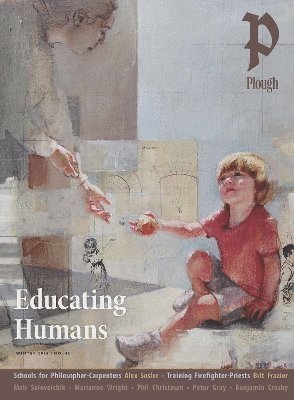
Education has become too narrowly focused on academic success and future earning potential. But creative schools and individual teachers are finding ways, new and old, to reverse this trend. From kindergarten to university, writers in this issue of Plough step back to look at education as the holistic task of forming healthy, responsible, passionate humans, and share success stories from the front lines.On this theme: Alex Sosler on innovative schools where students learn a trade and study the humanities.Brit Frazier on becoming a local volunteer firefighter.Peter Gray on why free play is essential.Anthony Garces-Foley on why he chose to teach in a public school.Stephanie Ebert on reading children scary fairy tales.Patrick Tomassi on Lernvergnugenstag, when teachers get to teach what inspires them.Tim Maendel on a public high school that raises deer and fish.Phil Christmas on why everyone still needs literature.Benjamin Crosby on how Christian teaching gets passed on.Frederick K. S. Leung on why math is not merely instrumental.Also in this issue:Rabbi Meir Soloveichik on hearing God in the subway.Grace Hamman on Sister Penelope, mentor to C. S. Lewis.Paul Coleman on religious persecution in Nicaragua and Finland.Reviews of Edwidge Danticat’s We’re Alone, John Inazu’s Learning toDisagree, and H. G. Parry’s The Magician’s Daughter.New poems by Claude Wilkinson. Plough Quarterly features stories, ideas, and culture for people eager to apply their faith to the challenges we face. Each issue includes in-depth articles, interviews, poetry, book reviews, and art.