Graeme Nicholson – författare
Visar alla böcker från författaren Graeme Nicholson. Handla med fri frakt och snabb leverans.
9 produkter
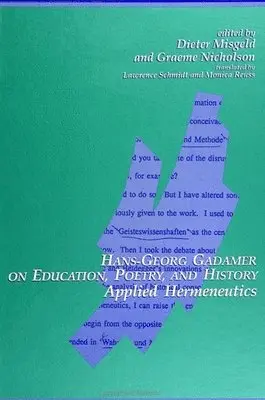
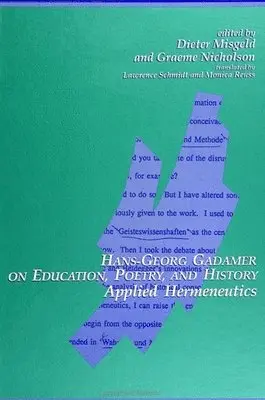
Hans-Georg Gadamer on Education, Poetry, and History
Applied Hermeneutics
Av Dieter Misgeld, Graeme Nicholson
Inbunden, 1992
1286 kr
Lägg i varukorg
In these essays, appearing for the first time in English, Gadamer addresses practical questions about recent politics in Europe, about education and university reform, and about the role of poetry in the modern world. This book also includes a series of interviews that the editors conducted in …
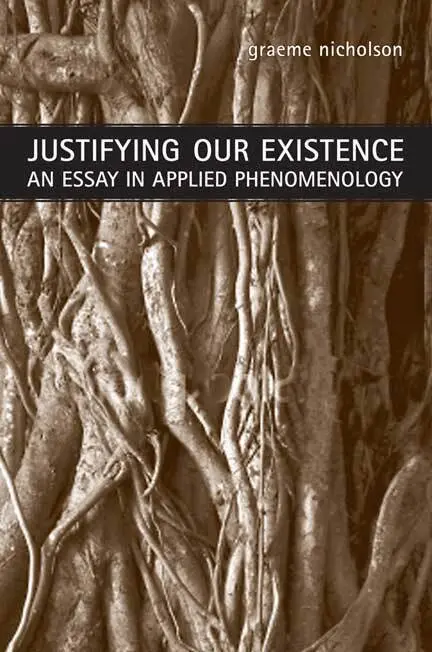
Justifying Our Existence
An Essay in Applied Phenomenology
Häftad, 2009
357 kr
Lägg i varukorg
In his magnum opus Being in Time (1927), Martin Heidegger (1889-1976) argued that individuals have assumed that their existence is "a given," when in actual fact they simply have the ability to be. Justifying Our Existence examines the ways in which human beings attempt to calm their existential …
Justifying Our Existence
An Essay in Applied Phenomenology
E-bok, 2009
408 kr
Lägg i varukorg
In his magnum opus Being in Time (1927), Martin Heidegger (1889-1976) argued that individuals have assumed that their existence is "a given," when in actual fact they simply have the ability to be. Justifying Our Existence examines the ways in which human beings attempt to calm their existential …
Justifying Our Existence
An Essay in Applied Phenomenology
E-bok, 2009
457 kr
Lägg i varukorg
In his magnum opus Being in Time (1927), Martin Heidegger (1889-1976) argued that individuals have assumed that their existence is "a given," when in actual fact they simply have the ability to be. Justifying Our Existence examines the ways in which human beings attempt to calm their existential …
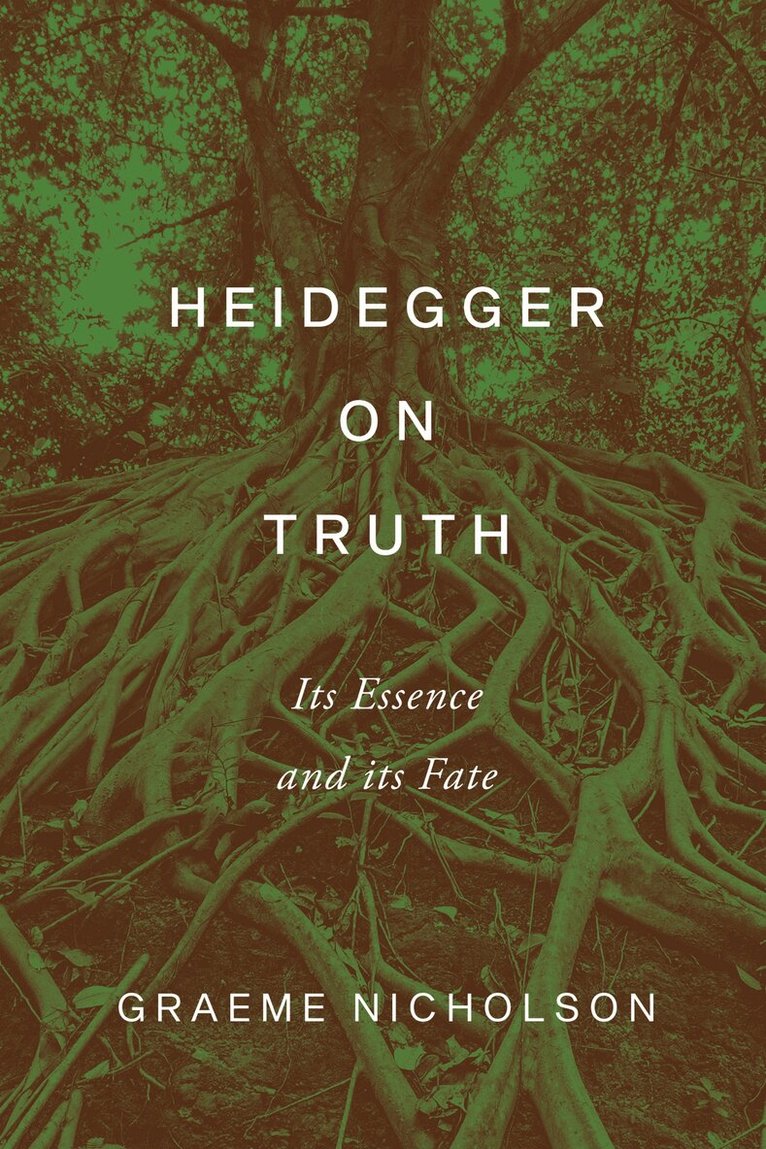
Heidegger on Truth
Its Essence and Its Fate
Inbunden, 2019
610 kr
Lägg i varukorg
"What is truth?" This much-pondered question received a novel answer from Martin Heidegger, who was guided by the methods of phenomenology. Heidegger’s 1930 address "On the Essence of Truth" takes us on a pathway of thinking that starts from the standard "correspondence theory of truth" and moves …
Heidegger on Truth
Its Essence and Its Fate
E-bok, 2019
782 kr
Lägg i varukorg
“What is truth?” This much-pondered question received a novel answer from Martin Heidegger, who was guided by the methods of phenomenology. Heidegger’s 1930 address “On the Essence of Truth” takes us on a pathway of thinking that starts from the standard “correspondence theory of truth” and moves …
Heidegger on Truth
Its Essence and Its Fate
E-bok, 2019
766 kr
Lägg i varukorg
“What is truth?” This much-pondered question received a novel answer from Martin Heidegger, who was guided by the methods of phenomenology. Heidegger’s 1930 address “On the Essence of Truth” takes us on a pathway of thinking that starts from the standard “correspondence theory of truth” and moves …
Hans-Georg Gadamer on Education, Poetry, and History
Applied Hermeneutics
Av Dieter Misgeld, Graeme Nicholson
Häftad, 1992
393 kr
Tillfälligt slut
In these essays, appearing for the first time in English, Gadamer addresses practical questions about recent politics in Europe, about education and university reform, and about the role of poetry in the modern world. This book also includes a series of interviews that the editors conducted in …
Justifying Our Existence
An Essay in Applied Phenomenology
Inbunden, 2009
666 kr
Tillfälligt slut
In his magnum opus Being in Time (1927), Martin Heidegger (1889-1976) argued that individuals have assumed that their existence is "a given," when in actual fact they simply have the ability to be. Justifying Our Existence examines the ways in which human beings attempt to calm their existential …