Greg Wilson – författare
Visar alla böcker från författaren Greg Wilson. Handla med fri frakt och snabb leverans.
18 produkter
18 produkter
Häftad, Engelska, 2019
383 kr
Skickas inom 10-15 vardagar
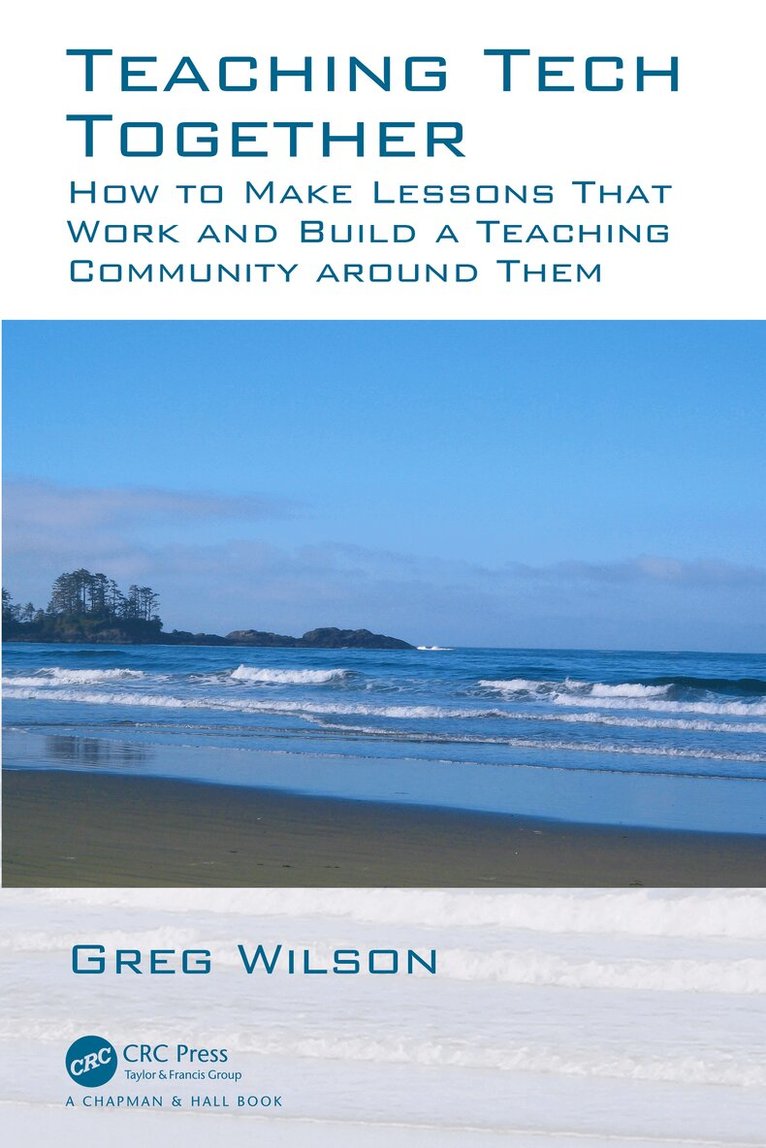
Hundreds of grassroots groups have sprung up around the world to teach programming, web design, robotics, and other skills outside traditional classrooms. These groups exist so that people don't have to learn these things on their own, but ironically, their founders and instructors are often teaching themselves how to teach.There's a better way. This book presents evidence-based practices that will help you create and deliver lessons that work and build a teaching community around them. Topics include the differences between different kinds of learners, diagnosing and correcting misunderstandings, teaching as a performance art, what motivates and demotivates adult learners, how to be a good ally, fostering a healthy community, getting the word out, and building alliances with like-minded groups. The book includes over a hundred exercises that can be done individually or in groups, over 350 references, and a glossary to help you navigate educational jargon.
Inbunden, Engelska, 2019
893 kr
Skickas inom 10-15 vardagar
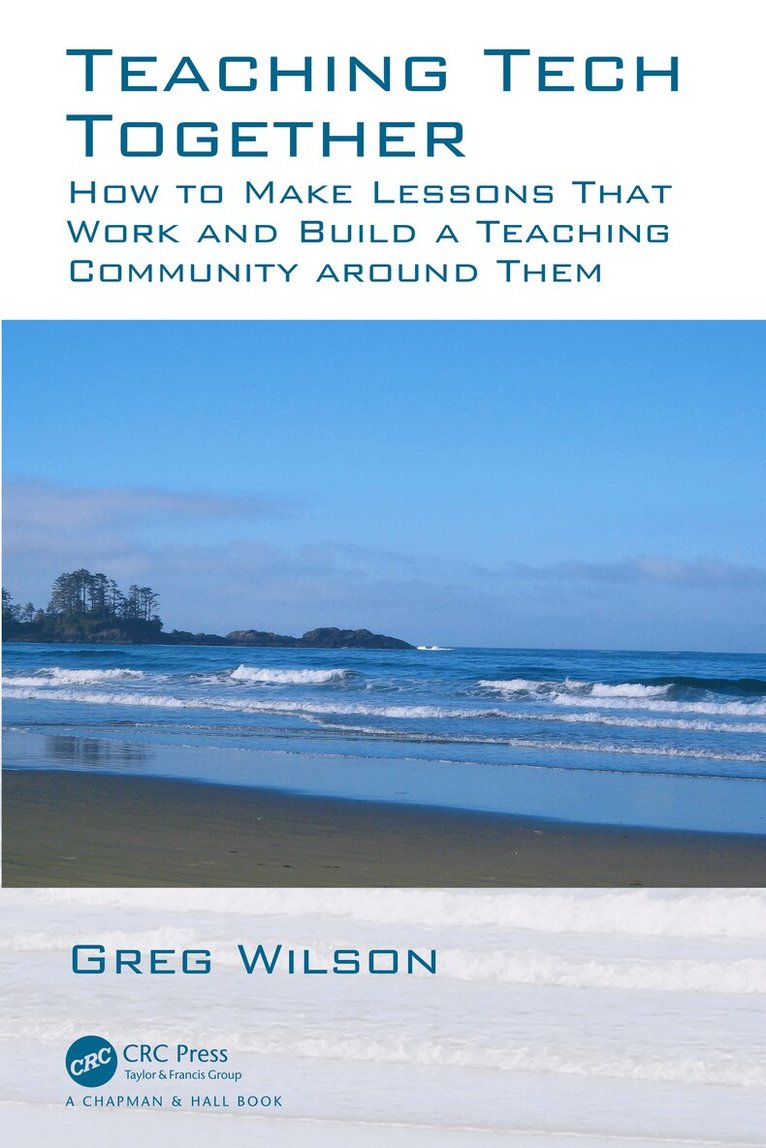
Hundreds of grassroots groups have sprung up around the world to teach programming, web design, robotics, and other skills outside traditional classrooms. These groups exist so that people don't have to learn these things on their own, but ironically, their founders and instructors are often teaching themselves how to teach.There's a better way. This book presents evidence-based practices that will help you create and deliver lessons that work and build a teaching community around them. Topics include the differences between different kinds of learners, diagnosing and correcting misunderstandings, teaching as a performance art, what motivates and demotivates adult learners, how to be a good ally, fostering a healthy community, getting the word out, and building alliances with like-minded groups. The book includes over a hundred exercises that can be done individually or in groups, over 350 references, and a glossary to help you navigate educational jargon.
Häftad, Engelska, 2020
761 kr
Skickas inom 10-15 vardagar
JavaScript is the native language of the Internet. Originally created to make web pages more dynamic, it is now used for software projects of all kinds, including scientific visualization and data services. However, most data scientists have little or no experience with JavaScript, and most introductions to the language are written for people who want to build shopping carts rather than share maps of coral reefs.This book will introduce you to JavaScript's power and idiosyncrasies and guide you through the key features of the language and its tools and libraries. The book places equal focus on client- and server-side programming, and shows readers how to create interactive web content, build and test data services, and visualize data in the browser. Topics include: The core features of modern JavaScript Creating templated web pages Making those pages interactive using React Data visualization using Vega-Lite Using Data-Forge to wrangle tabular data Building a data service with Express Unit testing with MochaAll of the material is covered by the Creative Commons Attribution-Noncommercial 4.0 International license (CC-BY-NC-4.0) and is included in the book's companion website..Maya Gans is a freelance data scientist and front-end developer by way of quantitative biology. Toby Hodges is a bioinformatician turned community coordinator who works at the European Molecular Biology Laboratory. Greg Wilson co-founded Software Carpentry, and is now part of the education team at RStudio
Inbunden, Engelska, 2020
2 070 kr
Skickas inom 10-15 vardagar
JavaScript is the native language of the Internet. Originally created to make web pages more dynamic, it is now used for software projects of all kinds, including scientific visualization and data services. However, most data scientists have little or no experience with JavaScript, and most introductions to the language are written for people who want to build shopping carts rather than share maps of coral reefs.This book will introduce you to JavaScript's power and idiosyncrasies and guide you through the key features of the language and its tools and libraries. The book places equal focus on client- and server-side programming, and shows readers how to create interactive web content, build and test data services, and visualize data in the browser. Topics include: The core features of modern JavaScript Creating templated web pages Making those pages interactive using React Data visualization using Vega-Lite Using Data-Forge to wrangle tabular data Building a data service with Express Unit testing with MochaAll of the material is covered by the Creative Commons Attribution-Noncommercial 4.0 International license (CC-BY-NC-4.0) and is included in the book's companion website..Maya Gans is a freelance data scientist and front-end developer by way of quantitative biology. Toby Hodges is a bioinformatician turned community coordinator who works at the European Molecular Biology Laboratory. Greg Wilson co-founded Software Carpentry, and is now part of the education team at RStudio
Häftad, Engelska, 2021
861 kr
Skickas inom 10-15 vardagar
Writing and running software is now as much a part of science as telescopes and test tubes, but most researchers are never taught how to do either well. As a result, it takes them longer to accomplish simple tasks than it should, and it is harder for them to share their work with others than it needs to be.This book introduces the concepts, tools, and skills that researchers need to get more done in less time and with less pain. Based on the practical experiences of its authors, who collectively have spent several decades teaching software skills to scientists, it covers everything graduate-level researchers need to automate their workflows, collaborate with colleagues, ensure that their results are trustworthy, and publish what they have built so that others can build on it. The book assumes only a basic knowledge of Python as a starting point, and shows readers how it, the Unix shell, Git, Make, and related tools can give them more time to focus on the research they actually want to do.Research Software Engineering with Python can be used as the main text in a one-semester course or for self-guided study. A running example shows how to organize a small research project step by step; over a hundred exercises give readers a chance to practice these skills themselves, while a glossary defining over two hundred terms will help readers find their way through the terminology. All of the material can be re-used under a Creative Commons license, and all royalties from sales of the book will be donated to The Carpentries, an organization that teaches foundational coding and data science skills to researchers worldwide.
Inbunden, Engelska, 2021
2 141 kr
Skickas inom 10-15 vardagar
Writing and running software is now as much a part of science as telescopes and test tubes, but most researchers are never taught how to do either well. As a result, it takes them longer to accomplish simple tasks than it should, and it is harder for them to share their work with others than it needs to be.This book introduces the concepts, tools, and skills that researchers need to get more done in less time and with less pain. Based on the practical experiences of its authors, who collectively have spent several decades teaching software skills to scientists, it covers everything graduate-level researchers need to automate their workflows, collaborate with colleagues, ensure that their results are trustworthy, and publish what they have built so that others can build on it. The book assumes only a basic knowledge of Python as a starting point, and shows readers how it, the Unix shell, Git, Make, and related tools can give them more time to focus on the research they actually want to do.Research Software Engineering with Python can be used as the main text in a one-semester course or for self-guided study. A running example shows how to organize a small research project step by step; over a hundred exercises give readers a chance to practice these skills themselves, while a glossary defining over two hundred terms will help readers find their way through the terminology. All of the material can be re-used under a Creative Commons license, and all royalties from sales of the book will be donated to The Carpentries, an organization that teaches foundational coding and data science skills to researchers worldwide.
Häftad, Engelska, 2007
335 kr
Skickas inom 5-8 vardagar
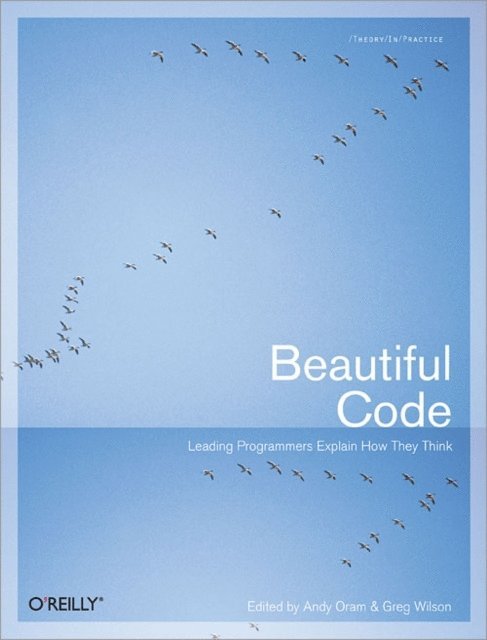
How do the experts solve difficult problems in software development? In this unique and insightful book, leading computer scientists offer case studies that reveal how they found unusual, carefully designed solutions to high-profile projects. You will be able to look over the shoulder of major coding and design experts to see problems through their eyes. This is not simply another design patterns book, or another software engineering treatise on the right and wrong way to do things. The authors think aloud as they work through their project's architecture, the tradeoffs made in its construction, and when it was important to break rules. "Beautiful Code" is an opportunity for master coders to tell their story. All author royalties will be donated to Amnesty International. The book includes the following contributions: "Beautiful Brevity: Rob Pike's Regular Expression Matcher" by Brian Kernighan, Department of Computer Science, Princeton University; "Subversion's Delta Editor: Interface as Ontology" by Karl Fogel, editor of "QuestionCopyright.org", Co-founder of Cyclic Software, the first company offering commercial CVS support; "The Most Beautiful Code I Never Wrote" by Jon Bentley, Avaya Labs Research; "Finding Things" by Tim Bray, Director of Web Technologies at Sun Microsystems, co-inventor of XML 1.0; "Correct, Beautiful, Fast (In That Order): Lessons From Designing XML Validators" by Elliotte Rusty Harold, Computer Science Department at Polytechnic University, author of "Java I/O, Java Network Programming", and "XML in a Nutshell" (O'Reilly); and, "The Framework for Integrated Test: Beauty through Fragility" by Michael Feathers, consultant at Object Mentor, author of "Working Effectively with Legacy Code" (Prentice Hall). It also includes: "Beautiful Tests" by Alberto Savoia, Chief Technology Officer, Agitar Software Inc; "On-the-Fly Code Generation for Image Processing" by Charles Petzold, author "Programming Windows and Code: The Hidden Language of Computer Hardware and Software" (both Microsoft Press); "Top Down Operator Precedence" by Douglas Crockford, architect at Yahoo!Inc, Founder and CTO of State Software, where he discovered JSON; "Accelerating Population Count" by Henry Warren, currently works on the Blue Gene petaflop computer project Worked for IBM for 41 years; "Secure Communication: The Technology of Freedom" by Ashish Gulhati, Chief Developer of Neomailbox, an Internet privacy service Developer of Cryptonite, an OpenPGP-compatible secure webmail system; and, "Growing Beautiful Code in BioPerl" by Lincoln Stein, investigator at Cold Spring Harbor Laboratory - develops databases and user interfaces for the Human Genome Project using the Apache server and its module API.It also includes: "The Design of the Gene Sorter" by Jim Kent, Genome Bioinformatics Group, University of California Santa Cruz; "How Elegant Code Evolves With Hardware: The Case Of Gaussian Elimination" by Jack Dongarra, University Distinguished Professor of Computer Science in the Computer Science Department at the University of Tennessee, also distinguished Research Staff member in the Computer Science and Mathematics Division at Oak Ridge National Laboratory (ORNL) and Piotr Luszczek, Research Professor at the University of Tennessee; "Beautiful Numerics" by Adam Kolawa, co-founder and CEO of Parasoft; and, "The Linux Kernel Driver Model" by Greg Kroah-Hartman, SuSE Labs/Novell, Linux kernel maintainer for driver subsystems, author of "Linux Kernel in a Nutshell", co-author of "Linux Device Drivers, 3rd Edition" (O'Reilly).It also includes: "Another Level of Indirection" by Diomidis Spinellis, Associate Professor at the Department of Management Science and Technology at the Athens University of Economics and Business, Greece; "An Examination of Python's Dictionary Implementation" by Andrew Kuchling, longtime member of the Python development community, and a director of the Python Software Foundation; "Multi-Dimensional Iterators in NumPy" by Travis Oliphant, Assistant Professor in the Electrical and Computer Engineering Department at Brigham Young University; and, "A Highly Reliable Enterprise System for NASAs Mars Rover Mission" by Ronald Mak, co-founder and CTO of Willard & Lowe Systems, Inc, formerly a senior scientist at the Research Institute for Advanced Computer Science on contract to NASA Ames.It also includes: "ERP5: Designing for Maximum Adaptability" by Rogerio de Carvalho, researcher at the Federal Center for Technological Education of Campos (CEFET Campos), Brazil and Rafael Monnerat, IT Analyst at CEFET Campos, and an offshore consultant for Nexedi SARL; "A Spoonful of Sewage" by Bryan Cantrill, Distinguished Engineer at Sun Microsystems, where he has spent most of his career working on the Solaris kernel; "Distributed Programming with MapReduce" by Jeff Dean and Sanjay Ghemawat, Google Fellows in Google's Systems Infrastructure Group; "Beautiful Concurrency" by Simon Peyton Jones, Microsoft Research, key contributor to the design of the functional language Haskell, and lead designer of the Glasgow Haskell Compiler (GHC); and, "Syntactic Abstraction: The syntax-case expander" by Kent Dybvig, Developer of Chez Scheme and author of the Scheme Programming Language. It also includes: "Object-Oriented Patterns and a Framework for Networked Software" by William Otte, a Ph.D. student in the Department of Electrical Engineering and Computer Science (EECS) at Vanderbilt University and Doug Schmidt, Full Professor in the Electrical Engineering and Computer Science (EECS) Department, Associate Chair of the Computer Science and Engineering program, and a Senior Research Scientist at the Institute for Software Integrated Systems (ISIS) at Vanderbilt University; "Integrating Business Partners the RESTful Way" by Andrew Patzer, Director of the Bioinformatics Program at the Medical College of Wisconsin; and, "Beautiful Debugging" by Andreas Zeller, computer science professor at Saarland University, author of "Why Programs Fail: A Guide to Systematic Debugging" (Morgan Kaufman).It also includes: "Code That's Like an Essay" by Yukihiro Matsumoto, inventor of the Ruby language; "Designing Interfaces Under Extreme Constraints: the Stephen Hawking editor" by Arun Mehta, professor and chairman of the Computer Engineering department of JMIT, Radaur, Haryana, India; "Emacspeak: The Complete Audio Desktop" by TV Raman, Research Scientist at Google where he focuses on web applications; "Code in Motion" by Christopher Seiwald, founder and CTO of Perforce Software and Laura Wingerd, vice president of product technology at Perforce Software, author of "Practical Perforce" (O'Reilly); and, "Writing Programs for 'The Book'" by Brian Hayes who writes the Computing Science column in American Scientist magazine, author of "Infrastructure: A Field Guide to the Industrial Landscape"(W.W. Norton).
Häftad, Engelska, 2022
690 kr
Skickas inom 10-15 vardagar
The best way to learn design in any field is to study examples, and some of the best examples of software design come from the tools programmers use in their own work. Software Design by Example: A Tool-Based Introduction with JavaScript therefore builds small versions of the things programmers use in order to demystify them and give some insights into how experienced programmers think. From a file backup system and a testing framework to a regular expression matcher, a browser layout engine, and a very small compiler, we explore common design patterns, show how making code easier to test also makes it easier to reuse, and help readers understand how debuggers, profilers, package managers, and version control systems work so that they can use them more effectively. This material can be used for self-paced study, in an undergraduate course on software design, or as the core of an intensive weeklong workshop for working programmers. Each chapter has a set of exercises ranging in size and difficulty from half a dozen lines to a full day’s work. Readers should be familiar with the basics of modern JavaScript, but the more advanced features of the language are explained and illustrated as they are introduced. All the written material in this project can be freely reused under the terms of the Creative Commons - Attribution license, while all of the software is made available under the terms of the Hippocratic License. All proceeds from sale of this book will go to support the Red Door Family Shelter in Toronto.Features• Teaches software design by showing programmers how to build the tools they use every day• Each chapter includes exercises to help readers check and deepen their understanding• All the example code can be downloaded, re-used, and modified under an open license
Inbunden, Engelska, 2022
1 786 kr
Skickas inom 10-15 vardagar
The best way to learn design in any field is to study examples, and some of the best examples of software design come from the tools programmers use in their own work. Software Design by Example: A Tool-Based Introduction with JavaScript therefore builds small versions of the things programmers use in order to demystify them and give some insights into how experienced programmers think. From a file backup system and a testing framework to a regular expression matcher, a browser layout engine, and a very small compiler, we explore common design patterns, show how making code easier to test also makes it easier to reuse, and help readers understand how debuggers, profilers, package managers, and version control systems work so that they can use them more effectively. This material can be used for self-paced study, in an undergraduate course on software design, or as the core of an intensive weeklong workshop for working programmers. Each chapter has a set of exercises ranging in size and difficulty from half a dozen lines to a full day’s work. Readers should be familiar with the basics of modern JavaScript, but the more advanced features of the language are explained and illustrated as they are introduced. All the written material in this project can be freely reused under the terms of the Creative Commons - Attribution license, while all of the software is made available under the terms of the Hippocratic License. All proceeds from sale of this book will go to support the Red Door Family Shelter in Toronto.Features• Teaches software design by showing programmers how to build the tools they use every day• Each chapter includes exercises to help readers check and deepen their understanding• All the example code can be downloaded, re-used, and modified under an open license
Häftad, Engelska, 2024
711 kr
Skickas inom 10-15 vardagar
The best way to learn design in any field is to study examples, and some of the best examples of software design come from the tools programmers use in their own work. Software Design by Example: A Tool-Based Introduction with Python therefore builds small versions of the things programmers use in order to demystify them and give some insights into how experienced programmers think. From a file backup system and a testing framework to a regular expression matcher, a browser layout engine, and a very small compiler, we explore common design patterns, show how making code easier to test also makes it easier to reuse, and help readers understand how debuggers, profilers, package managers, and version control systems work so that they can use them more effectively.This material can be used for self-paced study, in an undergraduate course on software design, or as the core of an intensive weeklong workshop for working programmers. Each chapter has a set of exercises ranging in size and difficulty from half a dozen lines to a full day’s work. Readers should be familiar with the basics of modern Python, but the more advanced features of the language are explained and illustrated as they are introduced.All the written material in this project can be freely reused under the terms of the Creative Commons - Attribution license, while all of the software is made available under the terms of the Hippocratic License. All proceeds from sale of this book will go to support the Red Door Family Shelter in Toronto.Features:Teaches software design by showing programmers how to build the tools they use every dayEach chapter includes exercises to help readers check and deepen their understandingAll the example code can be downloaded, re-used, and modified under an open license
Inbunden, Engelska, 2024
1 803 kr
Skickas inom 10-15 vardagar
The best way to learn design in any field is to study examples, and some of the best examples of software design come from the tools programmers use in their own work. Software Design by Example: A Tool-Based Introduction with Python therefore builds small versions of the things programmers use in order to demystify them and give some insights into how experienced programmers think. From a file backup system and a testing framework to a regular expression matcher, a browser layout engine, and a very small compiler, we explore common design patterns, show how making code easier to test also makes it easier to reuse, and help readers understand how debuggers, profilers, package managers, and version control systems work so that they can use them more effectively.This material can be used for self-paced study, in an undergraduate course on software design, or as the core of an intensive weeklong workshop for working programmers. Each chapter has a set of exercises ranging in size and difficulty from half a dozen lines to a full day’s work. Readers should be familiar with the basics of modern Python, but the more advanced features of the language are explained and illustrated as they are introduced.All the written material in this project can be freely reused under the terms of the Creative Commons - Attribution license, while all of the software is made available under the terms of the Hippocratic License. All proceeds from sale of this book will go to support the Red Door Family Shelter in Toronto.Features:Teaches software design by showing programmers how to build the tools they use every dayEach chapter includes exercises to help readers check and deepen their understandingAll the example code can be downloaded, re-used, and modified under an open license
Häftad, Engelska, 2021
136 kr
Skickas
A pastoral guide to dealing wisely with domestic abuse in the local church. This book is intended to equip pastors, church leaders and church members to respond with the heart of God to situations of domestic abuse that occur in their local church. Prioritising the safety of the victim at all times, Jeremy Pierre and Greg Wilson seek to help you be the kind of church leader, church member, friend,parent, sibling, or neighbour who responds wisely. We want the church to be a new normal for those grown accustomed to abuse. A home that doesn’t hurt those inside, but instead welcomes them into the tender care of the Lord. Split into three sections, When Home Hurts begins with an overview to provide a framework for understanding abuse and the people caught up in it, before moving on to advice on how to help in the short and long terms. This very practical, pastoral book acknowledges the reality and the horror of domestic abuse, but also the reality and power of God to heal. It will be a helpful guide to anyone who suspects abuse within their church family but is unsure how to help without making things worse. The five appendices at the end of the book offer helpful answers to difficult questions as well as additional resources. Section 1 – How to Understand AbuseUnderstanding Your Role as Agent of God’s LoveUnderstanding Abuse DynamicsDiscerning Abuse DynamicsSection 2 – How to Help in the Short TermCaring for the VictimConfronting the AbuserConsidering Collateral DamageSection 3 – How to Help in the Long TermHelping the Move from Victim to OvercomerHelping the Move from Abuser to ServantLeading Your Church to Respond with Wisdom and CompassionAdditional Resources:Appendix A – FAQs in the Initial StagesAppendix B – FAQs on Separation, Divorce, and Reunification After AbuseAppendix C – The Authority of Scripture and Abuse ResearchAppendix D – ResourcesAppendix E – Care Advocate Role Description
Häftad, Engelska, 2023
200 kr
Skickas inom 3-6 vardagar
Inbunden, Engelska, 2020
385 kr
Skickas inom 5-8 vardagar
Häftad, Engelska, 2025
270 kr
Skickas inom 5-8 vardagar
Häftad, Engelska, 2025
270 kr
Skickas inom 5-8 vardagar
Häftad, Engelska, 1991
558 kr
Skickas inom 10-15 vardagar
"Past, Present, Parallel" is a survey of the current state of the parallel processing industry. In the early 1980s, parallel computers were regarded as academic curiosities whose natural environment was the research laboratory. Today, parallelism is being used by every major computer manufacturer, although in very different ways, to produce increasingly powerful and cost-effective machines. The first chapter of this book introduces the basic concepts of parallel computing; the subsequent chapters cover different forms of parallelism, including descriptions of vector supercomputers, SIMD computers, shared memory multiprocessors, hypercubes and transputer-based machines. Each section concentrates on a different manufacturer, detailing its history and company profile, the machines it currently produces, the software environments it supports, the market segment it is targeting and its future plans. Supplementary chapters describe some of the companies which have been unsuccessful and discuss a number of the common software systems which have been developed to make parallel computers more usable. The appendices describe the technologies which underpin parallelism.
Häftad, Engelska, 2025
469 kr
Skickas inom 3-6 vardagar