Gregory Currie - Böcker
Visar alla böcker från författaren Gregory Currie. Handla med fri frakt och snabb leverans.
16 produkter
16 produkter
353 kr
Skickas inom 5-8 vardagar
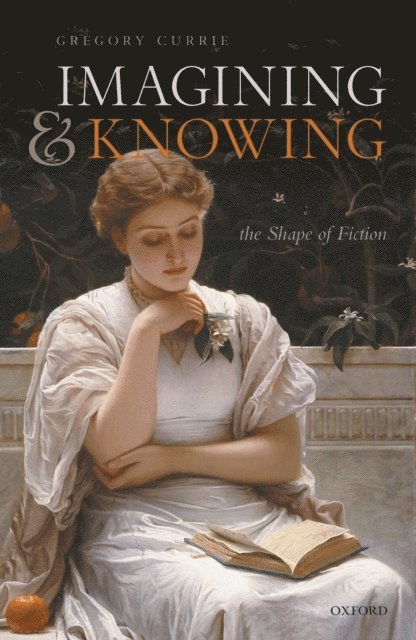
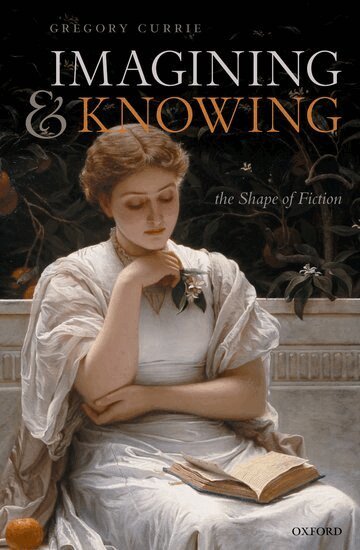
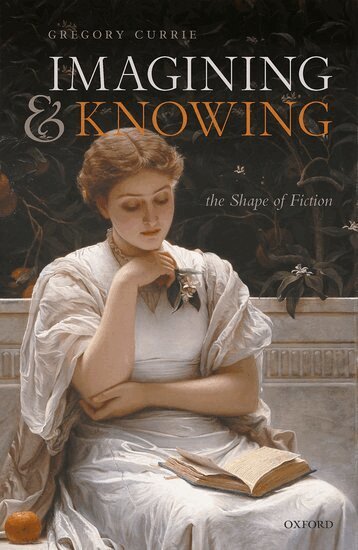
Works of fiction are works of the imagination and for the imagination. Gregory Currie energetically defends the familiar idea that fictions are guides to the imagination, a view which has come under attack in recent years. Responding to a number of challenges to this standpoint, he argues that within the domain of the imagination there lies a number of distinct and not well-recognized capacities which make the connection between fiction and imagination work. Currie then considers the question of whether in guiding the imagination fictions may also guide our beliefs, our outlook, and our habits in directions of learning. It is widely held that fictions very often provide opportunities for the acquisition of knowledge and of skills. Without denying that this sometimes happens, this book explores the difficulties and dangers of too optimistic a picture of learning from fiction. It is easy to exaggerate the connection between fiction and learning, to ignore countervailing tendencies in fiction to create error and ignorance, and to suppose that claims about learning from fiction require no serious empirical support. Currie makes a case for modesty about learning from fiction -- reasoning that a lot of what we take to be learning in this area is itself a kind of pretence, that we are too optimistic about the psychological and moral insights of authors, that the case for fiction as a Darwinian adaptation is weak, and that empathy is both hard to acquire and not always morally advantageous.
1 844 kr
Skickas inom 5-8 vardagar
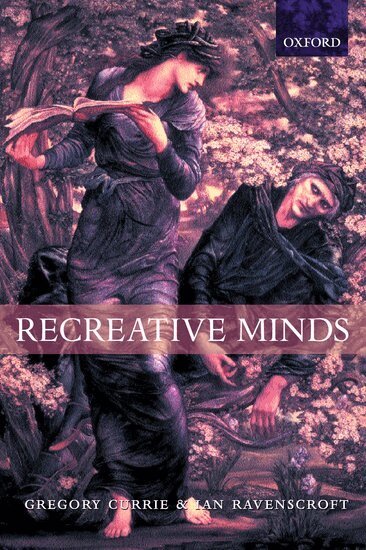
This text develops a philosophical theory of imagination that draws upon the latest work in psychology. This theory illuminates the use of imagination in coming to terms with art, its role in enabling us to live as social beings, and the psychological consequences of disordered imagination. Currie and Ravenscroft offer a lucid exploration of the subject for readers in philosophy, psychology and aesthetics.
659 kr
Skickas inom 5-8 vardagar
Recreative Minds develops a philosophical theory of imagination that draws upon recent theories and results in psychology. Ideas about how we read the minds of others have put the concept of imagination firmly back on the agenda for philosophy and psychology. Currie and Ravenscroft present a theory of what they call imaginative projection; they show how it fits into a philosophically motivated picture of the mind and of mental states, and how it illuminates and is illuminated by recent developments in cognitive psychology. They argue that we need to recognize a category of desire-in-imagination, and that supposition and fantasy should be classed as forms of imagination. They accommodate some of the peculiarities of perceptual forms of imagining such as visual and motor imagery, and suggest that they are important for mind-reading. They argue for a novel view about the relations between imagination and pretence, and suggest that imagining can be, but need not be, the cause of pretending. They show how the theory accommodates but goes beyond the idea of mental simulation, and argue that the contrast between simulation and theory is neither exclusive nor exhaustive. They argue that we can understand certain developmental and psychiatric disorders as arising from faulty imagination. Throughout, they link their discussion to the uses of imagination in our encounters with art, and they conclude with a chapter on responses to tragedy. The final chapter also offers a theory of the emotions that suggests that these states have much in common with perceptual states.Currie and Ravenscroft offer a lucid exploration of a fascinating subject, for readers in philosophy, psychology, and aesthetics.
773 kr
Skickas inom 5-8 vardagar
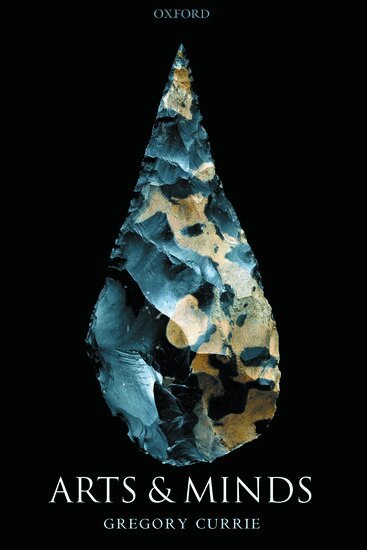
Philosophical questions about the arts go naturally with other kinds of questions about them. Art is sometimes said to be an historical concept. But where in our cultural and biological history did art begin? If art is related to play and imagination, do we find any signs of these things in our nonhuman relatives? Sometimes the other questions look like ones the philosopher of art has to answer. Anyone who thinks that interpretation in the arts is an activity that leaves the intentions of the author behind needs to explain how and why this differs so fundamentally from ordinary conversational interpretation, where the only decent models we have are ones that depend crucially on the recovery of intention. Anyone who thinks that imaginative literature has anything to tell us about time had better have a position on how earlier and later relate to past and future. Anyone who thinks that empathy plays a role in literary engagement had better have a psychologically plausible account of what empathy is. Philosophical questions about the arts also go naturally with other kinds of philosophical questions: we can't think constructively about representation in art without thinking about representation; text, meaning, reference and existence get similarly drawn into the conversation. Some ideas that philosophers of art deal with emerge from other disciplines. In literary theory an enormous amount of attention has been lavished on tracing the sources of unreliability in narrative. Is the result adequate to the details of the particular works we call unreliable? Contemporary film theory is generally hostile to the fiction/documentary distinction. Are there in fact any grounds for this?This book of thirteen connected essays examines questions of all these kinds. It ranges from the semantics of proper names, through the pragmatics of literary and filmic interpretation, to the aesthetic function of stone age implements. Some of the essays have not been published before; some that have are here substantially revised.
1 059 kr
Skickas inom 5-8 vardagar
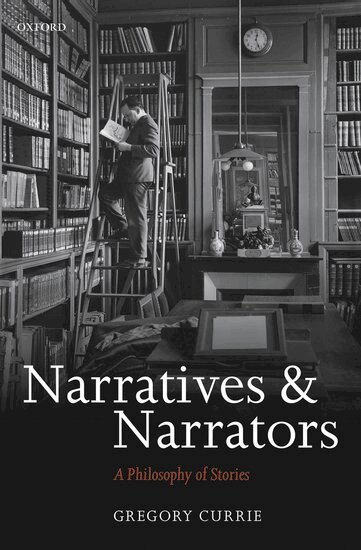
Narratives are artefacts of a special kind: they are intentionally crafted devices which fulfil their story-telling function by manifesting the intentions of their makers. But narrative itself is too inclusive a category for much more to be said about it than this; we should focus attention instead on the vaguely defined but interesting category of things rich in narrative structure. Such devices offer significant possibilities, not merely for the representation of stories, but for the expression of point of view; they have also played an important role in the evolution of reliable communication. Narratives and narrators argues that much of the pleasure of narrative communication depends on deep-seated and early developing tendencies in human beings to imitation and to joint attention, and imitation turns out to be the key to understanding such important literary techniques as free indirect discourse and character-focused narration. The book also examines irony in narrative, with an emphasis on the idea of the expression of ironic points of view. It looks closely at the idea of character, or robust, situation-independent ways of acting and thinking, as it is represented in narrative. It asks whether scepticism about the notion of character should have us reassess the dramatic and literary tradition which places such emphasis on character.
548 kr
Skickas inom 5-8 vardagar
Narratives are artefacts of a special kind: they are intentionally crafted devices which fulfil their story-telling function by manifesting the intentions of their makers. But narrative itself is too inclusive a category for much more to be said about it than this; we should focus attention instead on the vaguely defined but interesting category of things rich in narrative structure. Such devices offer significant possibilities, not merely for the representation of stories, but for the expression of point of view; they have also played an important role in the evolution of reliable communication. Narratives and narrators argues that much of the pleasure of narrative communication depends on deep-seated and early developing tendencies in human beings to imitation and to joint attention, and imitation turns out to be the key to understanding such important literary techniques as free indirect discourse and character-focused narration. The book also examines irony in narrative, with an emphasis on the idea of the expression of ironic points of view. It looks closely at the idea of character, or robust, situation-independent ways of acting and thinking, as it is represented in narrative. It asks whether scepticism about the notion of character should have us reassess the dramatic and literary tradition which places such emphasis on character.
1 025 kr
Skickas inom 5-8 vardagar
Works of fiction are works of the imagination and for the imagination. Gregory Currie energetically defends the familiar idea that fictions are guides to the imagination, a view which has come under attack in recent years. Responding to a number of challenges to this standpoint, he argues that within the domain of the imagination there lies a number of distinct and not well-recognized capacities which make the connection between fiction and imagination work. Currie then considers the question of whether in guiding the imagination fictions may also guide our beliefs, our outlook, and our habits in directions of learning. It is widely held that fictions very often provide opportunities for the acquisition of knowledge and of skills. Without denying that this sometimes happens, this book explores the difficulties and dangers of too optimistic a picture of learning from fiction. It is easy to exaggerate the connection between fiction and learning, to ignore countervailing tendencies in fiction to create error and ignorance, and to suppose that claims about learning from fiction require no serious empirical support. Currie makes a case for modesty about learning from fiction--reasoning that a lot of what we take to be learning in this area is itself a kind of pretence, that we are too optimistic about the psychological and moral insights of authors, that the case for fiction as a Darwinian adaptation is weak, and that empathy is both hard to acquire and not always morally advantageous.
560 kr
Skickas inom 7-10 vardagar
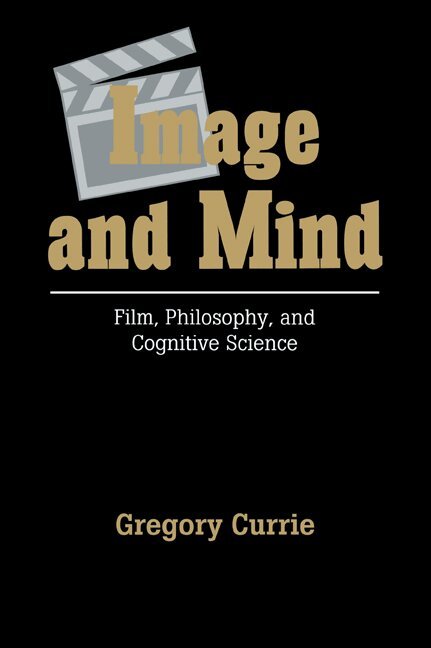
This is a book about the nature of film: about the nature of moving images, about the viewer's relation to film, and about the kinds of narrative that film is capable of presenting. It represents a very decisive break with the semiotic and psychoanalytic theories of film which have dominated discussion. The central thesis is that film is essentially a pictorial medium and that the movement of film images is real rather than illusory. A general theory of pictorial representation is presented, which insists on the realism of pictures and the impossibility of assimilating them to language. It criticizes attempts to explain the psychology of film viewing in terms of the viewer's imaginary occupation of a position within the world of film. On the contrary, film viewing is nearly always impersonal.
644 kr
Skickas inom 7-10 vardagar
This important book provides a theory about the nature of fiction, and about the relation between the author, the reader and the fictional text. The approach is philosophical: that is to say, the author offers an account of key concepts such as fictional truth, fictional characters, and fiction itself. The book argues that the concept of fiction can be explained partly in terms of communicative intentions, partly in terms of a condition which excludes relations of counterfactual dependence between the world and the text. This communicative model is then applied to the following problems: how can something be 'true in the story' without being explicitly stated in the text? In what ways does interpreting a fictional story depend upon grasping its author's intentions? Is there always a unique best interpretation of a fictional text? What is the correct semantics for fictional names? What is the nature of our emotional response to a fictional work? In answering these questions the author explores the complex interaction between author, reader, and text. This interaction requires the reader to construct a 'fictional author' - a character in the story whose personality, beliefs and emotional states must be interpreted if the reader is to grasp the meaning of the work.
347 kr
Skickas inom 7-10 vardagar
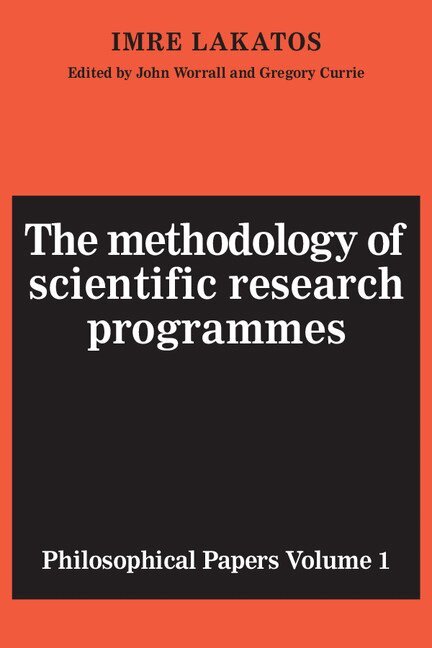
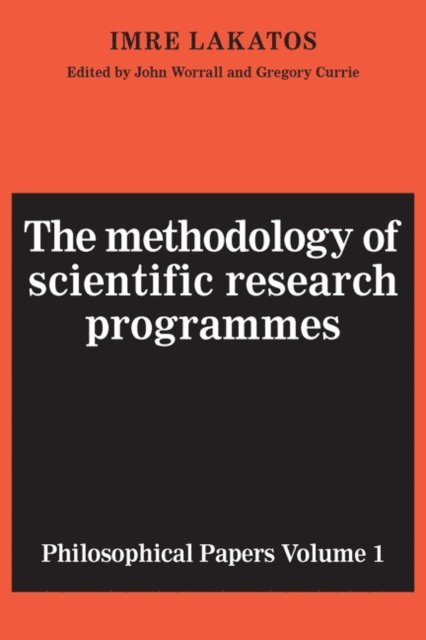
Imre Lakatos' philosophical and scientific papers are published here in two volumes. Volume I brings together his very influential but scattered papers on the philosophy of the physical sciences, and includes one important unpublished essay on the effect of Newton's scientific achievement. Volume 2 presents his work on the philosophy of mathematics (much of it unpublished), together with some critical essays on contemporary philosophers of science and some famous polemical writings on political and educational issues.
The Methodology of Scientific Research Programmes: Volume 1
Philosophical Papers
Häftad, Engelska, 1980
347 kr
Skickas inom 7-10 vardagar
Imre Lakatos' philosophical and scientific papers are published here in two volumes. Volume I brings together his very influential but scattered papers on the philosophy of the physical sciences, and includes one important unpublished essay on the effect of Newton's scientific achievement. Volume II presents his work on the philosophy of mathematics (much of it unpublished), together with some critical essays on contemporary philosophers of science and some famous polemical writings on political and educational issues. Imre Lakatos had an influence out of all proportion to the length of his philosophical career. This collection exhibits and confirms the originality, range and the essential unity of his work. It demonstrates too the force and spirit he brought to every issue with which he engaged, from his most abstract mathematical work to his passionate 'Letter to the director of the LSE'. Lakatos' ideas are now the focus of widespread and increasing interest, and these volumes should make possible for the first time their study as a whole and their proper assessment.
1 245 kr
Skickas inom 7-10 vardagar
This is a book about the nature of film: about the nature of moving images, about the viewer's relation to film, and about the kinds of narrative that film is capable of presenting. It represents a very decisive break with the semiotic and psychoanalytic theories of film which have dominated discussion. The central thesis is that film is essentially a pictorial medium and that the movement of film images is real rather than illusory. A general theory of pictorial representation is presented, which insists on the realism of pictures and the impossibility of assimilating them to language. It criticizes attempts to explain the psychology of film viewing in terms of the viewer's imaginary occupation of a position within the world of film. On the contrary, film viewing is nearly always impersonal.
Del 75 - Royal Institute of Philosophy Supplements
Philosophical Aesthetics and the Sciences of Art
Häftad, Engelska, 2014
363 kr
Skickas inom 7-10 vardagar
Musical listening, looking at paintings and literary creation are activities that involve perceptual and cognitive activity and so are of interest to psychologists and other scientists of the mind. What sorts of interest should philosophers of the arts take in scientific approaches to such issues? Opinion currently ranges across a spectrum, with 'take no notice' at one end and 'abandon traditional philosophical methods' at the other. This collection of essays, originating in a Royal Institute of Philosophy conference at the Leeds Art Gallery in 2012, represents many of the most interesting positions along that spectrum. Contributions address issues concerning aesthetic testimony, the processing and appreciation of poetry, the aesthetics of disgust, imagination, genre, evolutionary constraints on art appreciation, creativity, musical cognition and the limitations or productiveness of empirical enquiry for philosophical aesthetics.
885 kr
Skickas inom 10-15 vardagar
266 kr
Skickas inom 5-8 vardagar
555 kr
Skickas inom 10-15 vardagar
Royal Society, betrachtet die Hexentheorie als das Musterbeispiel empirischen Denkens. Wir müssen das empirische Denken definieren, ehe wir mit Hume anfangen, Bücher zu verbren nen. Das wissenschaftliche Denken konfrontiert die Theorien mit den Tatsachen; und eine der Hauptbedingungen dabei ist, daß die Theorien von den Tatsachen gestützt sein müs sen. Wie ist das nun des genaueren möglich? Darauf sind mehrere verschiedene Antworten vorgeschlagen worden. Newton selbst glaubte, seine Gesetze aufgrundder Tatsachen bewiesen zu haben. Er war stolz darauf, keine bloßen Hypothesen anzubieten; er veröffentlichte nur Theorien, die aufgrundder Tatsa chen bewiesen waren. Und zwar behauptete er, seine Gesetze aus den Keplerschen 'Erschei nungen' abgeleitet zu haben. Doch das war Unsinn, denn nach Kepler bewegten sich die Plane ten in Ellipsen, nach Newton aber wäre das nur richtig, wenn die Planeten nicht gegenseitig ihre Bewegung stören würden, und eben dies tun sie. Daher mußte Newton eine Störungstheo rie entwickeln, nach der sich kein Planet auf einer Ellipse bewegt. Heute kann man leicht zeigen, daß sich kein Naturgesetz aus endlich vielen Tatsa chen schlüssig ableiten läßt; doch man liest immer noch, wissenschaftliche Theorien würden aufgrundder Tatsachen bewiesen. Woher kommt diese hartnäckige Sperre gegen die elemen tare Logik? Das läßt sich sehr einleuchtend erklären. Die Wissenschaftler möchten ihren Theorien Achtung verschaffen, sie sollen die Bezeichnung 'Wissenschaft' verdienen, also echte Erkenntnis sein. Nun bezog sich im 17. Jahrhundert, als die Wissenschaft entstand, die wichtigste Erkenntnis auf Gott und den Teufel, auf Himmel und Hölle.