Gregory Fullelove – författare
3 015 kr
Läs direkt efter köp
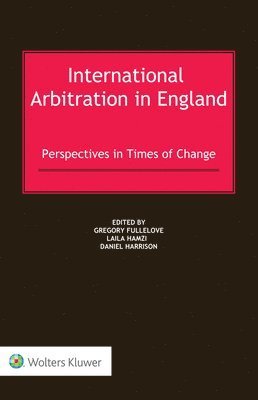
England is a leading centre for arbitration, both international and domestic, arising out of all manner of contractual disputes and industry sectors. This book comprises contributions from well-known arbitration practitioners and scholars who present, in a straightforward and readable fashion, the rich and varied nature of arbitration in England today. The early chapters describe the development of the arbitral system in England and its traditional leading institutions, the London Court of International Arbitration (LCIA) and the Chartered Institute of Arbitrators (CIArb). They also provide a unique focus on the specialist areas of commodity, maritime, construction and sports arbitration. The remainder of the book deals with the law and practice of arbitration in England and concludes with two additional overview chapters relating to arbitration in Scotland and the Republic of Ireland respectively. Insightful and practical guidance is given in relation to a number of key areas, including:
• appointing and challenging arbitrators;• applicable law and the influence of EU law;• the role of the court, including anti-suit and anti-arbitration injunctions and interim relief;• arbitration procedure and practice in ad hoc and institutional arbitrations;• factual and expert evidence, including privilege and electronic document production;• challenges to, and appeals from, awards;• recognition and enforcement of awards; and• multilateral and bilateral investment treaty arbitration.Anyone whose pursuits or responsibilities require knowledge of arbitration in England – including practitioners, in-house counsel, business persons, academics, and students around the world – will benefit enormously from this thorough study and analysis of contemporary arbitration practice in the jurisdiction.
2 542 kr
Skickas inom 5-8 vardagar
2 163 kr
Läs direkt efter köp
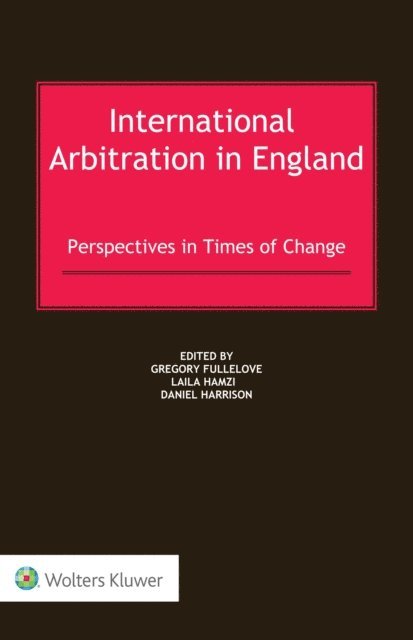
There is no question that in recent years, the case law, practice and legal environment in which international arbitration in England is practised have all evolved and adapted to a changing world and continue to do so. In this book, a diverse range of practitioners chart this development with detailed consideration of the challenges and opportunities for the future of international arbitration in England.
The topics chosen often reflect and explore preoccupations of our times, including such aspects of arbitral practice as the following:
challenges to arbitrators, with particular attention to the Supreme Court’s findings in Halliburton v. Chubb;
virtual hearings;
diversity in international arbitration;
climate change arbitration;
‘green arbitration’ practices;
developing jurisprudence regarding enjoining foreign states in English proceedings;
recovery of in-house costs in English-seated international arbitrations;
overlapping sanctions regimes and their application to arbitral disputes in England; and
the role and future of third-party funding.
The fact that the essays were all written during the COVID-19 pandemic is reflected in the procedural issues which form the focus of some chapters, reminding us that when it comes, change can come quickly. For this reason, the deeply informed insights in this volume, intended as they are to ensure the continued evolution and success of international arbitration in England, will prove of immeasurable value for any practitioner making submissions before an arbitral tribunal. Jurists, academics and students will gain invaluable perspectives on the future trajectory of the field.
2 163 kr
Läs direkt efter köp
There is no question that in recent years, the case law, practice and legal environment in which international arbitration in England is practised have all evolved and adapted to a changing world and continue to do so. In this book, a diverse range of practitioners chart this development with detailed consideration of the challenges and opportunities for the future of international arbitration in England.
The topics chosen often reflect and explore preoccupations of our times, including such aspects of arbitral practice as the following:
challenges to arbitrators, with particular attention to the Supreme Court’s findings in Halliburton v. Chubb;
virtual hearings;
diversity in international arbitration;
climate change arbitration;
‘green arbitration’ practices;
developing jurisprudence regarding enjoining foreign states in English proceedings;
recovery of in-house costs in English-seated international arbitrations;
overlapping sanctions regimes and their application to arbitral disputes in England; and
the role and future of third-party funding.
The fact that the essays were all written during the COVID-19 pandemic is reflected in the procedural issues which form the focus of some chapters, reminding us that when it comes, change can come quickly. For this reason, the deeply informed insights in this volume, intended as they are to ensure the continued evolution and success of international arbitration in England, will prove of immeasurable value for any practitioner making submissions before an arbitral tribunal. Jurists, academics and students will gain invaluable perspectives on the future trajectory of the field.