Julian D M Lew – författare
4 778 kr
Läs direkt efter köp
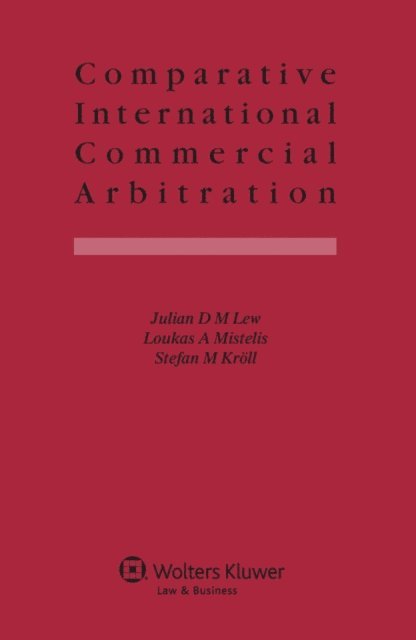
International arbitration is the preferred method for the settlement of international business disputes. As a private, autonomous and international dispute resolution mechanism arbitration has become independent from national laws in practice.
This new and comprehensive treatise addresses all significant issues pertaining to international arbitration. The perspective is international and comparative and reference is made to all major international treaties and instruments, arbitration rules and national laws.
The authors trace the realities of international arbitration practice, i.e. what parties and arbitrators do, how arbitration is conducted, and the principles pertaining to the arbitration agreement, the formation, role and functions of the arbitration tribunal, and the importance and effect of the arbitration award. These are illustrated by published awards, international instruments and arbitration rules, and national court decisions recognising and giving effect to these autonomous international arbitration practices.
At every stage of the arbitration process there remains a conceptual legal conflict between the inherent international and autonomous character of arbitration and the national laws of the parties, the place of arbitration, and the place where the award is to be enforced. These issues are reviewed with particular reference to national constitutional and regulatory systems, the effect of mandatory laws of connected states, and European and international law including international human rights instruments. The book describes participation in international arbitration of states and state entities, and the interaction between commercial and investment arbitrations.
No two international arbitrations are the same. This book analyses the various structures, practical arrangements, procedures and legal implications for arbitrations wherever the arbitration takes place. It also provides a guide for lawyers involved in the international arbitration process whatever the nationality of the parties and the composition of the tribunal. The book is an indispensable tool for practising and academic lawyers concerned with international trade law, international litigation and commercial arbitration. It is also an essential guide for those seeking to understand a particular issue in international arbitration.
3 015 kr
Läs direkt efter köp
England is a leading centre for arbitration, both international and domestic, arising out of all manner of contractual disputes and industry sectors. This book comprises contributions from well-known arbitration practitioners and scholars who present, in a straightforward and readable fashion, the rich and varied nature of arbitration in England today. The early chapters describe the development of the arbitral system in England and its traditional leading institutions, the London Court of International Arbitration (LCIA) and the Chartered Institute of Arbitrators (CIArb). They also provide a unique focus on the specialist areas of commodity, maritime, construction and sports arbitration. The remainder of the book deals with the law and practice of arbitration in England and concludes with two additional overview chapters relating to arbitration in Scotland and the Republic of Ireland respectively. Insightful and practical guidance is given in relation to a number of key areas, including:
• appointing and challenging arbitrators;• applicable law and the influence of EU law;• the role of the court, including anti-suit and anti-arbitration injunctions and interim relief;• arbitration procedure and practice in ad hoc and institutional arbitrations;• factual and expert evidence, including privilege and electronic document production;• challenges to, and appeals from, awards;• recognition and enforcement of awards; and• multilateral and bilateral investment treaty arbitration.Anyone whose pursuits or responsibilities require knowledge of arbitration in England – including practitioners, in-house counsel, business persons, academics, and students around the world – will benefit enormously from this thorough study and analysis of contemporary arbitration practice in the jurisdiction.