Gregory S. Aldrete - Böcker
Visar alla böcker från författaren Gregory S. Aldrete. Handla med fri frakt och snabb leverans.
8 produkter
8 produkter
764 kr
Skickas inom 10-15 vardagar
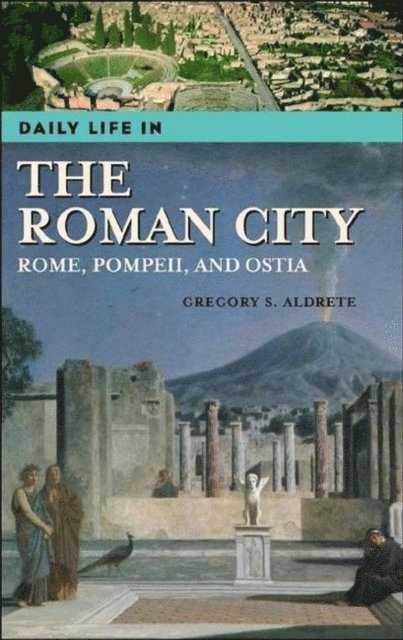
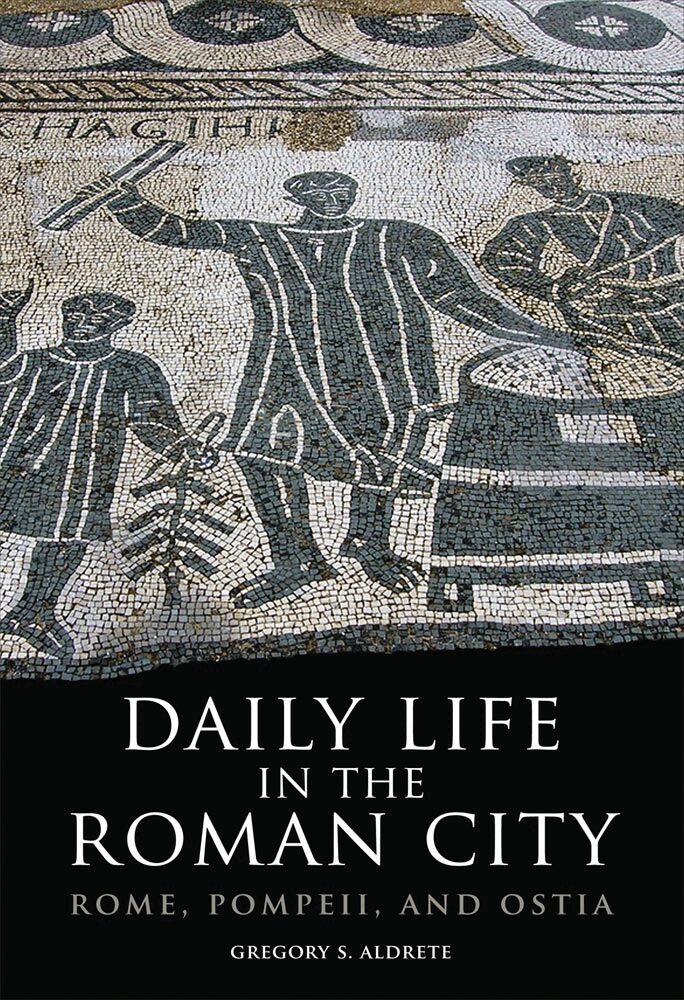
Despite the fact that the majority of the inhabitants of the Roman Empire lived an agricultural existence and thus resided outside of urban centers, there is no denying the fact that the core of Roman civilization—its essential culture and politics—was based in cities. Even at the furthest boundaries of the Empire, Roman cities shared a remarkable and consistent similarity in terms of architecture, art, infrastructure, and organization which was modeled after the greatest city of all, Rome itself. In Gregory Aldrete's exhaustive account, readers will have the opportunity to peer into the inner workings of daily life in ancient Rome, to witness the full range of glory, cruelty, sophistication, and deprivation that characterized Roman cities, and will perhaps even gain new insight into the nature and history of urban existence in America today.Included are accounts of Rome's history, infrastructure, government, and inhabitants, as well as chapters on life and death, the dangers and pleasures of urban living, entertainment, religion, the emperors, and the economy. Additional sections explore two other important Roman cities: Ostia, an industrial port town, and Pompeii, the doomed playground of the rich. This volume is ideal for high school and college students, as well as for anyone interested in examining the realities of life in ancient Rome. A chronology of the time period, maps, illustrations, a bibliography, and an index are also included.
397 kr
Skickas inom 7-10 vardagar
Life in Rome was relentlessly public, and oratory was at its heart. Orations were dramatic spectacles in which the speaker deployed an arsenal of rhetorical tricks and strategies aimed at arousing the emotions of the audience, and spectators responded vigorously and vocally with massed chants of praise or condemnation. Unfortunately, many aspects of these performances have been lost. In the first in-depth study of oratorical gestures and crowd acclamations as methods of communication at public spectacles, Gregory Aldrete sets out to recreate these vital missing components and to recapture the original context of ancient spectacles as interactive, dramatic, and contentious public performances. At the most basic level, this work is a study of communication-how Roman speakers communicated with their audiences, and how audiences in turn were able to reply and convey their reactions to the speakers. Aldrete begins by investigating how orators employed an extraordinarily sophisticated system of hand and body gestures in order to enhance the persuasive power of their speeches.He then turns to the target of these orations-the audience-and examines how they responded through the mechanism of acclamations, that is, rhythmically shouted comments. Aldrete finds much in these ancient spectacles that is relevant to modern questions of political propaganda, manipulation of public image, crowd behavior, and speechmaking. Readers with an interest in rhetoric, urban culture, or communications in any period will find the book informative, as will those working in art history, archaeology, history, and philology.
853 kr
Skickas inom 7-10 vardagar
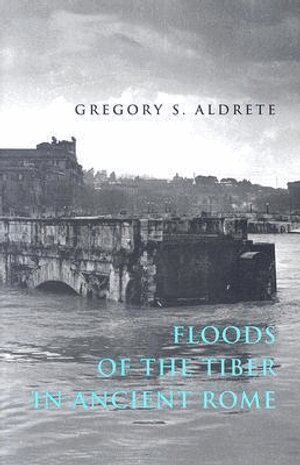
While the remains of its massive aqueducts serve as tangible reminders of Rome's efforts to control its supply of drinking water, there are scant physical reminders that other waters sometimes raged out of control. In fact, floods were simply a part of life in ancient Rome, where proximity to the Tiber left a substantial part of the city vulnerable to the river's occasional transgressions. Here, in the first book-length treatment of the impact of floods on an ancient city, Gregory S. Aldrete draws upon a diverse range of scientific and cultural data to develop a rich and detailed account of flooding in Rome throughout the classical period. Aldrete explores in detail the overflowing river's destructive effects, drawing from ancient and modern written records and literary accounts, analyses of the topography and hydrology of the Tiber drainage basin, visible evidence on surviving structures, and the known engineering methods devised to limit the reach of rising water.He discusses the strategies the Romans employed to alleviate or prevent flooding, their social and religious attitudes toward floods, and how the threat of inundation influenced the development of the city's physical and economic landscapes.
266 kr
Skickas inom 7-10 vardagar
Although most Romans lived outside urban centers, the core of Roman civilization lay in its cities. Throughout the empire these cities--modeled as they were after Rome--were strikingly alike. In Gregory Aldrete's exhaustive account, readers can peer into the inner workings of daily life in ancient Rome and examine the history, infrastructure, government, and economy of Rome; its emperors; and its inhabitants--their life and death, dangers and pleasures, entertainment, and religion.Aldrete also shows how Roman cities differed. To accomplish this comparison, in addition to Rome, he explores Ostia, an industrial port town, and Pompeii, the doomed playground of the rich. Daily Life in the Roman City includes a chronology, maps, numerous illustrations, useful appendices (on names, the Roman calendar, clothing and appearance, and construction techniques), a bibliography, and an index.This volume is ideal for high school and college students and for others wishing to examine the realities of life in ancient Rome.
361 kr
Skickas inom 10-15 vardagar
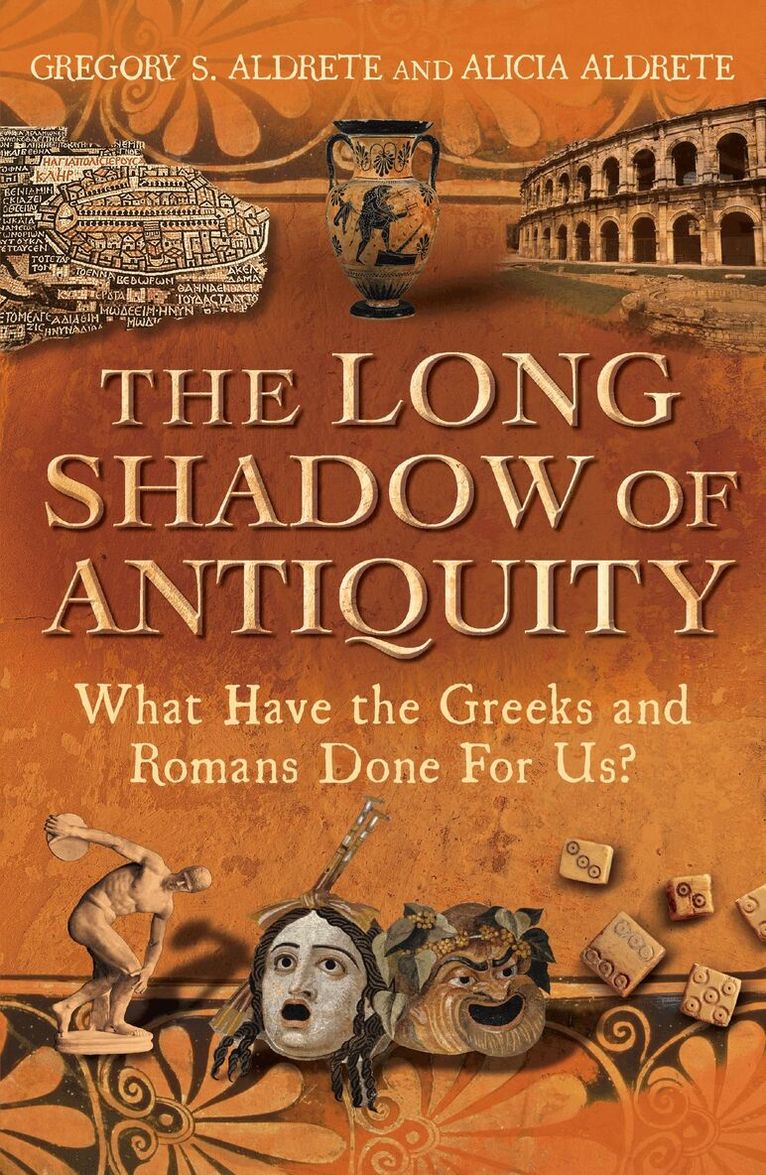
A vivid exploration of the many ways the classical world remains relevant today, this is a passionate justification of why we continue to read about and study the lives and works of the ancient Greeks and Romans.Challenging the way the phrase 'That's just ancient history' is used to dismiss something as being irrelevant, Greg and Alicia Aldrete demonstrate just how much ancient Greece and Rome have influenced and shaped our world today in ways both large and small. From the more commonly known influences on politics, law, literature and timekeeping through to the everyday rituals and routines we take for granted when we exercise, dine, marry and dress, we are rooted in the ancient world. Even the political upheaval, celebrity obsession and blurring of public and private boundaries that we see in current news betray ancient characteristics - now brought to the fore here in a new final chapter.If you have ever wondered how far exactly we still walk in the footsteps of the ancients or wanted to understand how study of the classical world can inform and explain our lives today, this is the book for you.
336 kr
Tillfälligt slut
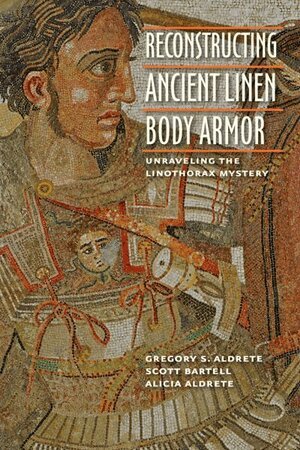
Alexander the Great led one of the most successful armies in history and conquered nearly the entirety of the known world while wearing armor made of cloth. How is that possible? In "Reconstructing Ancient Linen Body Armor", Gregory S. Aldrete, Scott Bartell, and Alicia Aldrete provide the answer. An extensive multiyear project in experimental archaeology, this pioneering study presents a thorough investigation of the linothorax, linen armor worn by the Greeks, Macedonians, and other ancient Mediterranean warriors. Because the linothorax was made of cloth, no examples of it have survived. As a result, even though there are dozens of references to the linothorax in ancient literature and nearly a thousand images of it in ancient art, this linen armor remains relatively ignored and misunderstood by scholars. Combining traditional textual and archaeological analysis with hands-on reconstruction and experimentation, the authors unravel the mysteries surrounding the linothorax.They have collected and examined all of the literary, visual, historical, and archaeological evidence for the armor and detail their efforts to replicate the armor using materials and techniques that are as close as possible to those employed in antiquity. By reconstructing actual examples using authentic materials, the authors were able to scientifically assess the true qualities of linen armor for the first time in 1,500 years. The tests reveal that the linothorax provided surprisingly effective protection for ancient warriors, that it had several advantages over bronze armor, and that it even shared qualities with modern-day Kevlar. Previously featured in documentaries on the Discovery Channel and the Canadian History Channel, as well as in U.S. News and World Report, MSNBC Online, and other international venues, this groundbreaking work will be a landmark in the study of ancient warfare.
833 kr
Skickas inom 10-15 vardagar
Democracy? Mathematics? The Calendar? Hospitals? This book is an enlightening look at the myriad ways that the civilizations of ancient Greece and Rome have fundamentally influenced and shaped our modern world. Familiar institutions, rituals, and aspects of everyday modern life are examined to reveal their often surprising classical roots, while the authors explore a selection of the innovations of ancient Greek and Roman civilization to trace how these have developed through history and still affect the world of the twenty-first century. The style is fast-paced and, while drawing on authoritative and current scholarship, the factual information is enlivened with anecdotal details. This book will open the reader's eyes to a new understanding of the world that we live in today.
447 kr
Skickas inom 10-15 vardagar
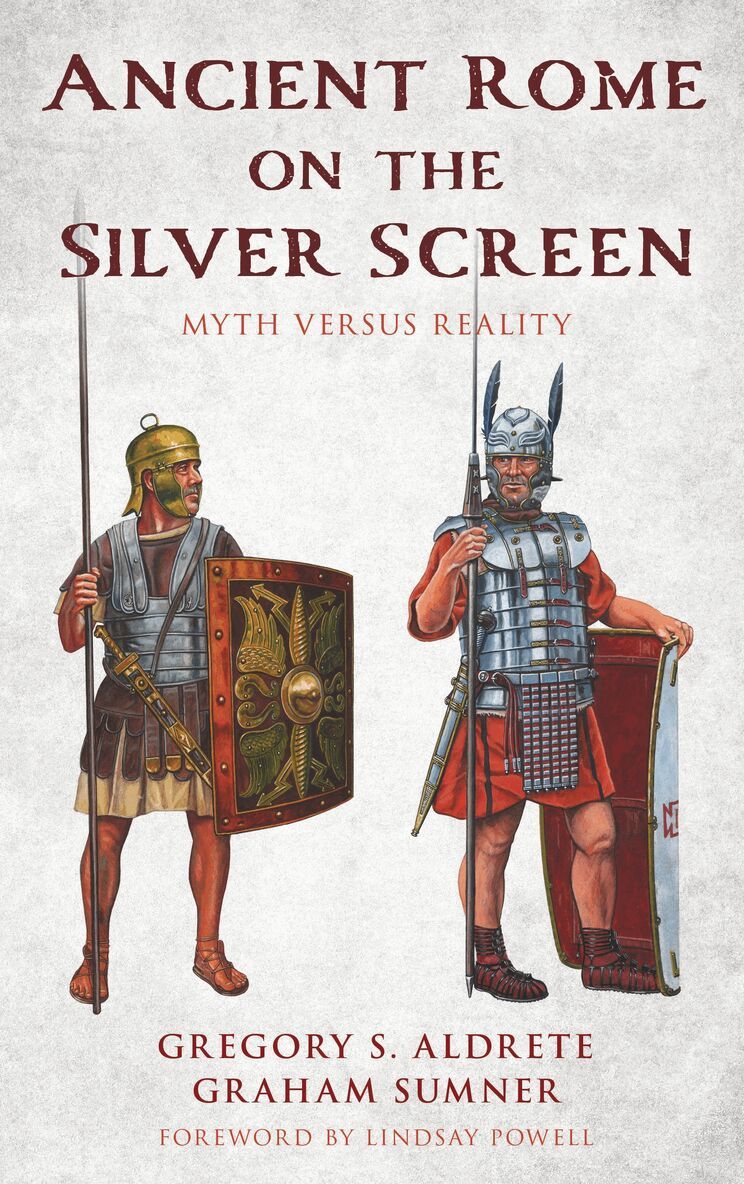
An unparalleled exploration of films set in Ancient Rome, from the silent Cleopatra to the modern rendition of Ben-Hur.No sooner had the dazzling new technology of cinema been invented near the end of the 19th century than filmmakers immediately turned to ancient history for inspiration. Nero, Cleopatra, Caesar, and more all found their way to the silver screen and would return again and again in the decades that followed. But just how accurate were these depictions of Ancient Rome?In Ancient Rome on the Silver Screen: Myth versus Reality, Gregory S. Aldrete and Graham Sumner provide a fascinating examination of 50 films set in Ancient Rome, analyzing each for its historical accuracy of plot, characters, costumes and sets. They also divulge insights into the process of making each movie and the challenges the filmmakers faced in bringing the Roman world to vivid cinematic life. Beginning with the classics from the dawn of cinema, through the great golden age of sword-and-sandals flicks in the 1950s, to the dramatic epics of the modern day, Aldrete and Sumner test the authenticity of Hollywood’s version of history. Featuring remarkable custom-made paintings depicting characters as they appeared in film and how they should have appeared if they were historically correct, Ancient Rome on the Silver Screen delivers an invaluable perspective of film and history. This unique collaboration between professional illustrator and award-winning Roman historian offers a deeper understanding of modern cinema and brings Roman history to life.