Guan H. Tang – författare
Visar alla böcker från författaren Guan H. Tang. Handla med fri frakt och snabb leverans.
4 produkter
Copyright and the Public Interest in China
Av Guan H. Tang
Inbunden, 2011
1911 kr
Lägg i varukorg
Guan Hong Tang expertly highlights how the multidimensional concept of public interest has influenced the development and limitations of Chinese copyright. Since 1990 China has awarded copyright - individual rights - but also provides for public, non-criminal enforcement. The author reveals that …
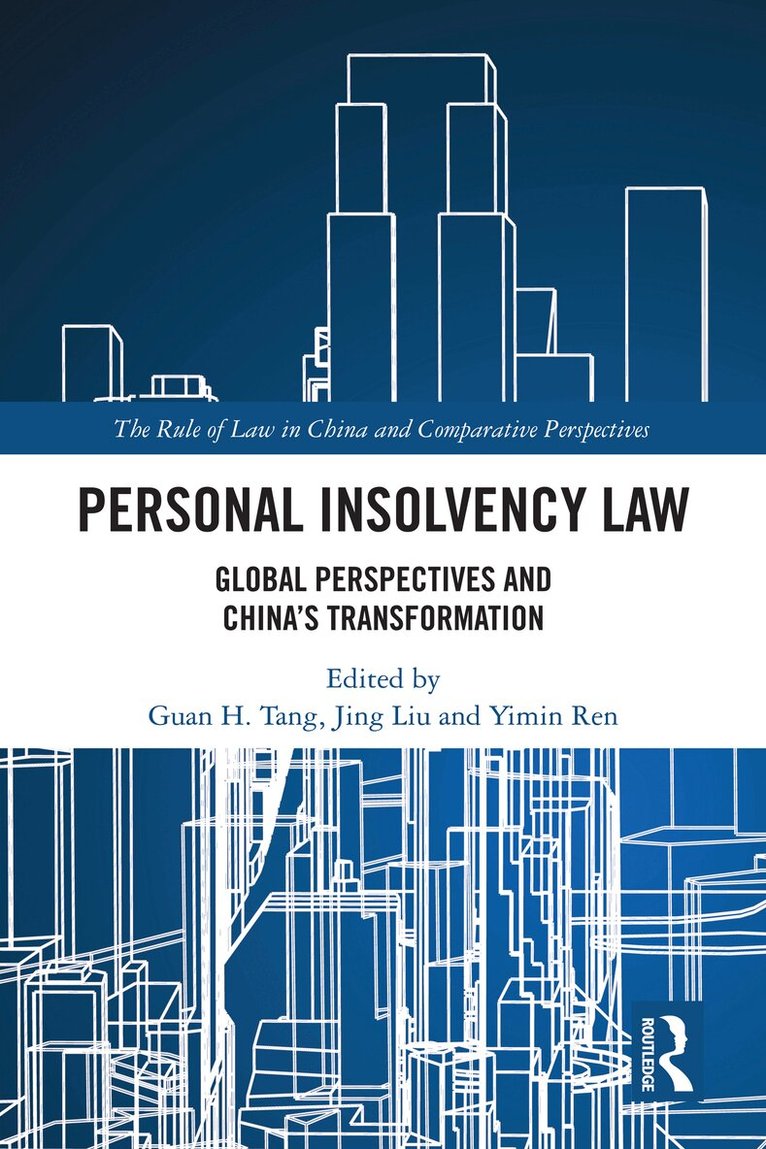
Personal Insolvency Law
Global Perspectives and China's Transformation
E-bok, 2026
765 kr
Lägg i varukorg
In an era marked by economic uncertainty and rising living costs, the need for compassionate and effective personal insolvency systems has never been more urgent. This edited volume offers a timely and incisive exploration of the complexities of personal insolvency regimes.Drawing on insights from …
Personal Insolvency Law
Global Perspectives and China's Transformation
E-bok, 2026
765 kr
Lägg i varukorg
In an era marked by economic uncertainty and rising living costs, the need for compassionate and effective personal insolvency systems has never been more urgent. This edited volume offers a timely and incisive exploration of the complexities of personal insolvency regimes.Drawing on insights from …
Personal Insolvency Law
Global Perspectives and China's Transformation
Av Guan H. Tang, Jing Liu m. fl.
Inbunden, 2026
2314 kr
Lägg i varukorg
In an era marked by economic uncertainty and rising living costs, the need for compassionate and effective personal insolvency systems has never been more urgent. This edited volume offers a timely and incisive exploration of the complexities of personal insolvency regimes.Drawing on insights from …