Guenter B. Risse - Böcker
Visar alla böcker från författaren Guenter B. Risse. Handla med fri frakt och snabb leverans.
5 produkter
5 produkter
1 236 kr
Skickas inom 5-8 vardagar
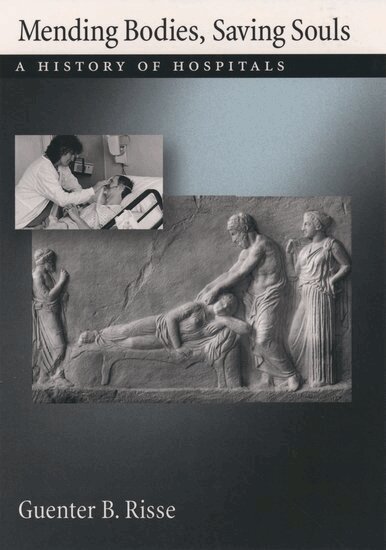
By chronicling the transformations of hospitals from houses of mercy to tools for confinement, from dwellings of rehabilitation to spaces for clinical teaching and research, from rooms for birthing and dying to institutions of science and technology, this book provides a historical approach to understanding of today's hospitals. The story is told in a dozen episodes which illustrate hospitals in particular times and places, covering important themes and developments in the history of medicine and therapeutics, from ancient Greece to the era of AIDS. This book furnishes a unique insight into the world of meanings and emotions associated with hospital life and patienthood by including narratives by both patients and care givers. By conceiving of hospitals as houses of order capable of taming the chaos associated with suffering, illness, and death, we can better understand the significance of their ritualized routines and rules. From their beginnings, hospitals were places of spiritual and physical recovery. They should continue to respond to all human needs. As traditional testimonials to human empathy and benevolence, hospitals must endure as spaces of healing.
Driven by Fear
Epidemics and Isolation in San Francisco's House of Pestilence
Inbunden, Engelska, 2015
1 361 kr
Skickas inom 7-10 vardagar
From the late nineteenth century until the 1920s, authorities required San Francisco's Pesthouse to segregate the diseased from the rest of the city. Although the Pesthouse stood out of sight and largely out of mind, it existed at a vital nexus of civic life where issues of medicine, race, class, environment, morality, and citizenship entwined and played out. Guenter B. Risse places this forgotten institution within an emotional climate dominated by widespread public dread and disgust. In Driven by Fear, he analyzes the unique form of stigma generated by San Franciscans. Emotional states like xenophobia and racism played a part. Yet the phenomenon also included competing medical paradigms and unique economic needs that encouraged authorities to protect the city's reputation as a haven of health restoration. As Risse argues, public health history requires an understanding of irrational as well as rational motives. To that end he delves into the spectrum of emotions that drove extreme measures like segregation and isolation and fed psychological, ideological, and pragmatic urges to scapegoat and stereotype victims--particularly Chinese victims--of smallpox, leprosy, plague, and syphilis. Filling a significant gap in contemporary scholarship, Driven by Fear looks at the past to offer critical lessons for our age of bioterror threats and emerging infectious diseases.
319 kr
Skickas inom 7-10 vardagar
From the late nineteenth century until the 1920s, authorities required San Francisco's Pesthouse to segregate the diseased from the rest of the city. Although the Pesthouse stood out of sight and largely out of mind, it existed at a vital nexus of civic life where issues of medicine, race, class, environment, morality, and citizenship entwined and played out. Guenter B. Risse places this forgotten institution within an emotional climate dominated by widespread public dread and disgust. In Driven by Fear, he analyzes the unique form of stigma generated by San Franciscans. Emotional states like xenophobia and racism played a part. Yet the phenomenon also included competing medical paradigms and unique economic needs that encouraged authorities to protect the city's reputation as a haven of health restoration. As Risse argues, public health history requires an understanding of irrational as well as rational motives. To that end he delves into the spectrum of emotions that drove extreme measures like segregation and isolation and fed psychological, ideological, and pragmatic urges to scapegoat and stereotype victims--particularly Chinese victims--of smallpox, leprosy, plague, and syphilis. Filling a significant gap in contemporary scholarship, Driven by Fear looks at the past to offer critical lessons for our age of bioterror threats and emerging infectious diseases.
629 kr
Skickas inom 5-8 vardagar
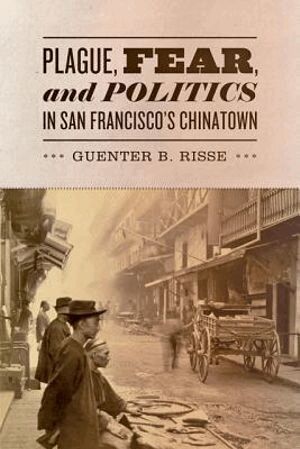
When health officials in San Francisco discovered bubonic plague in their city's Chinatown in 1900, they responded with intrusive, controlling, and arbitrary measures that touched off a sociocultural conflict still relevant today. Guenter B. Risse's history of an epidemic is the first to incorporate the voices of those living in Chinatown at the time, including the desperately ill Wong Chut King, believed to be the first person infected. Lasting until 1904, the plague in San Francisco's Chinatown reignited racial prejudices, renewed efforts to remove the Chinese from their district, and created new tensions among local, state, and federal public health officials quarreling over the presence of the deadly disease. Risse's rich, nuanced narrative of the event draws from a variety of sources, including Chinese-language reports and accounts. He addresses the ecology of Chinatown, the approaches taken by Chinese and Western medical practitioners, and the effects of quarantine plans on Chinatown and its residents.Risse explains how plague threatened California's agricultural economy and San Francisco's leading commercial role with Asia, discusses why it brought on a wave of fear mongering that drove perceptions and intervention efforts, and describes how Chinese residents organized and successfully opposed government quarantines and evacuation plans in federal court. By probing public health interventions in the setting of one of the most visible ethnic communities in United States history, "Plague, Fear, and Politics in San Francisco's Chinatown" offers insight into the clash of Eastern and Western cultures in a time of medical emergency.
Del 78 - Clio Medica
New Medical Challenges during the Scottish Enlightenment
Inbunden, Engelska, 2005
2 214 kr
Skickas inom 3-6 vardagar
New Medical Challenges explores a wide range of social and medical practices, exposing the contradictions and ambiguities found in eighteenth-century Scottish health, science and medicine. The overall picture casts further light on the nature of the Enlightenment as a cultural phenomenon.Commercial society created new jobs, wealth and desires, that threatened contemporary values and physical health. Both luxury and poverty took their toll, spawning disease among the affluent and the poor. A number of key issues are examined, including the role of charity, medical debates and competition, vivisection, and diseases of the time – such as ‘pulmonary consumption’, ‘mill reek’ and ‘ague’. Special chapters are devoted to ‘female troubles’, ‘hysteria’ and ‘hypochondriasis’, showing the evolving relationships across gender and class lines between poor patients and their physicians.To place medical ideas and practices into proper context, the essays offer extensive background information and rediscover the lost voices of prominent physicians involved in promoting health and battling illness. Thanks to the richness of seldom-tapped archival sources – book manuscripts, consultation letters, hospital registration and management records, together with student essays, lecture notes and notebooks – the selected episodes expose a world of uncertainty, confusion and paradox.New Medical Challenges tells a wide range of stories that will be of great interest to a broad readership concerned with past health issues.