Guido Vanheeswijck - Böcker
Visar alla böcker från författaren Guido Vanheeswijck. Handla med fri frakt och snabb leverans.
8 produkter
8 produkter
675 kr
Kommande
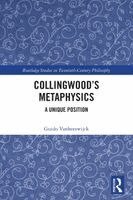
This book explores R.G. Collingwood’s concept of metaphysics. It traces the evolution of Collingwood’s thought on metaphysics through his published work, posthumously published manuscripts and recently discovered course notes.From 1933 to 1936, Collingwood’s thought shifted considerably from the more orthodox Hegelian treatment of metaphysics as the study of the general nature of reality to the more ‘historicist’ study of absolute presuppositions. This radical conversion hypothesis has been for a long time the single most important issue in the interpretation of Collingwood’s philosophy. This book provides a fresh reappraisal of his thinking on metaphysics during these crucial years. It argues that objective idealism is the key to unraveling the true scope of Collingwood’s metaphysics. This theory takes a mid- position between mainstream interpretations in the secondary literature and forms the background to many of Collingwood’s key ideas regarding metaphysics, the philosophy of nature and the philosophy of history. The book also compares Collingwood’s concept of metaphysics to that of his predecessors, contemporaries and followers. The second part of the book focuses in detail on the similarities and differences between Collingwood’s metaphysics and, in chronological order, the views on metaphysics of Dilthey, Whitehead, Ayer, Wittgenstein, Heidegger, Berlin, Kołakowski, Strawson and Taylor.Collingwood’s Metaphysics will be of interest to scholars and graduate students interested in Collingwood’s philosophy, 20th- century philosophy and metaphysics.
1 953 kr
Skickas inom 10-15 vardagar
This book explores R.G. Collingwood’s concept of metaphysics. It traces the evolution of Collingwood’s thought on metaphysics through his published work, posthumously published manuscripts and recently discovered course notes.From 1933 to 1936, Collingwood’s thought shifted considerably from the more orthodox Hegelian treatment of metaphysics as the study of the general nature of reality to the more ‘historicist’ study of absolute presuppositions. This radical conversion hypothesis has been for a long time the single most important issue in the interpretation of Collingwood’s philosophy. This book provides a fresh reappraisal of his thinking on metaphysics during these crucial years. It argues that objective idealism is the key to unraveling the true scope of Collingwood’s metaphysics. This theory takes a mid- position between mainstream interpretations in the secondary literature and forms the background to many of Collingwood’s key ideas regarding metaphysics, the philosophy of nature and the philosophy of history. The book also compares Collingwood’s concept of metaphysics to that of his predecessors, contemporaries and followers. The second part of the book focuses in detail on the similarities and differences between Collingwood’s metaphysics and, in chronological order, the views on metaphysics of Dilthey, Whitehead, Ayer, Wittgenstein, Heidegger, Berlin, Kołakowski, Strawson and Taylor.Collingwood’s Metaphysics will be of interest to scholars and graduate students interested in Collingwood’s philosophy, 20th- century philosophy and metaphysics.
528 kr
Skickas inom 10-15 vardagar
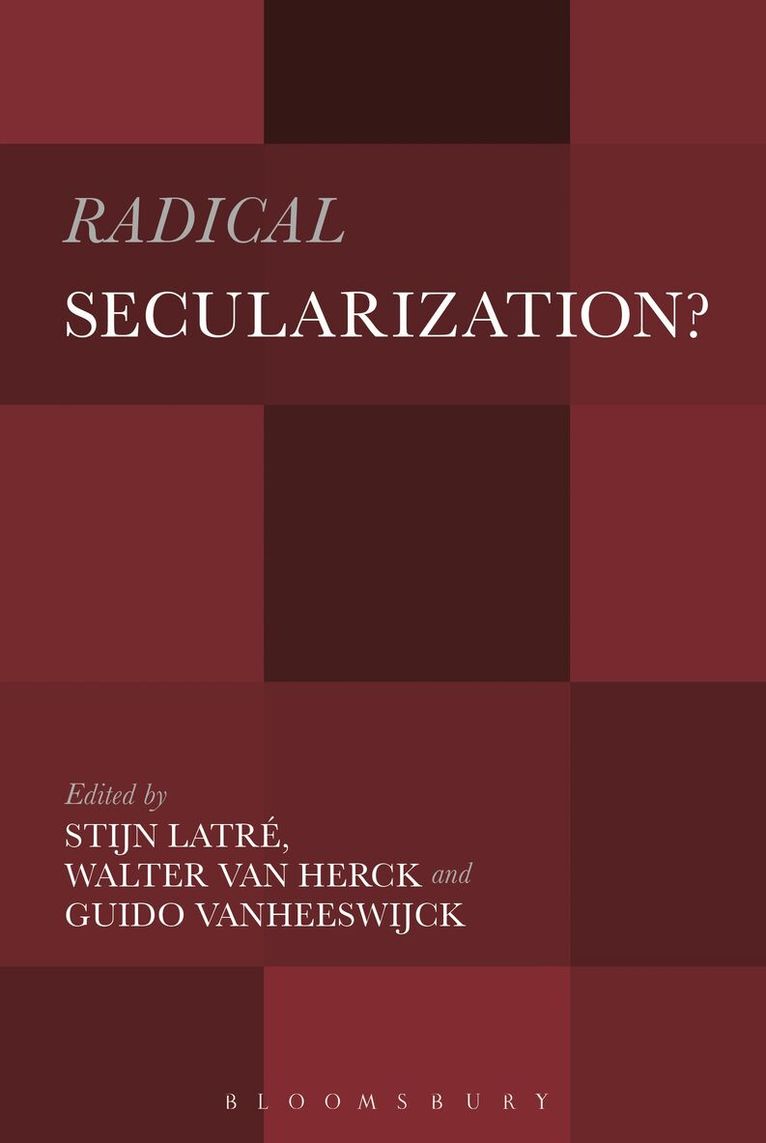
What does it mean for a society to be secular? Answering this question from a philosophical angle, Radical Secularization? delves into the philosophical presuppositions of secularization. Which cultural evolutions made secularization possible? International scholars from different disciplines assess the answers given by many leading philosophers such as, among others, Löwith, Blumenberg and Habermas (Germany), Gauchet and Nancy (France), Taylor and Bellah (North America). They examine the theory that secularization cannot only be regarded as a cultural change that was forced upon religion from an external source (e.g. science), but should also be considered as a phenomenon triggered by motives internal to religion. If religions are indeed capable of inner transformations, the question arises whether religions can persist in the secular societies they inadvertently helped to bring about, and how secular societies may accommodate religion.
Radical Secularization?
An Inquiry into the Religious Roots of Secular Culture
Inbunden, Engelska, 2015
1 833 kr
Skickas inom 10-15 vardagar
What does it mean for a society to be secular? Answering this question from a philosophical angle, Radical Secularization? delves into the philosophical presuppositions of secularization. Which cultural evolutions made secularization possible? International scholars from different disciplines assess the answers given by many leading philosophers such as, among others, Löwith, Blumenberg and Habermas (Germany), Gauchet and Nancy (France), Taylor and Bellah (North America). They examine the theory that secularization cannot only be regarded as a cultural change that was forced upon religion from an external source (e.g. science), but should also be considered as a phenomenon triggered by motives internal to religion. If religions are indeed capable of inner transformations, the question arises whether religions can persist in the secular societies they inadvertently helped to bring about, and how secular societies may accommodate religion.
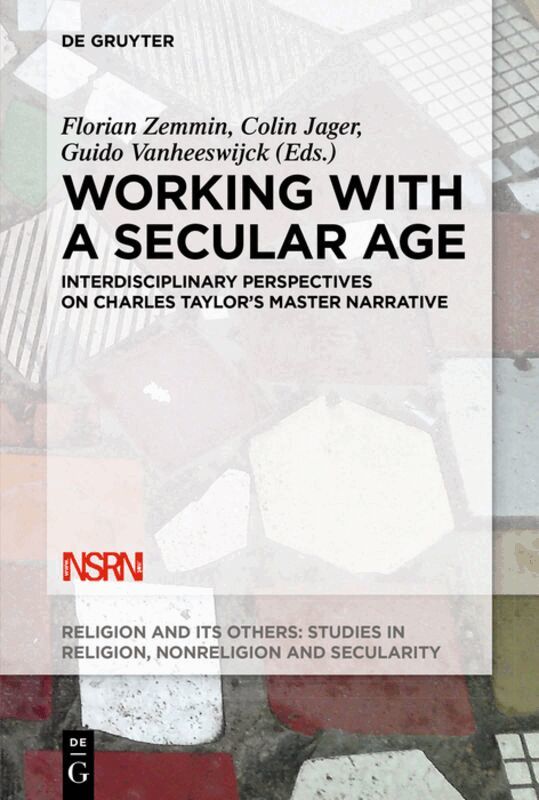
Working with A Secular Age
Interdisciplinary Perspectives on Charles Taylor's Master Narrative
Inbunden, Engelska, 2016
1 866 kr
Skickas inom 5-8 vardagar
Charles Taylor’s monumental book A Secular Age has been extensively discussed, criticized, and worked on. This volume, by contrast, explores ways of working with Taylor’s book, especially its potentials and limits for individual research projects. Due to its wide reception, it has initiated a truly interdisciplinary object of study; with essays drawn from various research fields, this volume fosters substantial conversation across disciplines.
2 036 kr
Skickas inom 5-8 vardagar
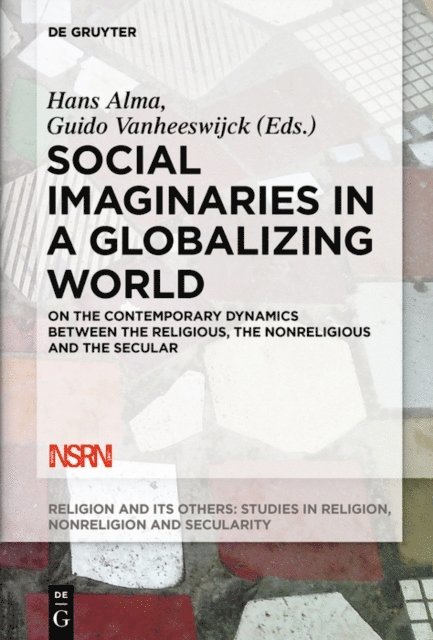
How to study the contemporary dynamics between the religious, the nonreligious and the secular in a globalizing world? Obviously, their relationship is not an empirical datum, liable to the procedures of verification or of logical deduction. We are in need of alternative conceptual and methodological tools. This volume argues that the concept of ‘social imaginary’ as it is used by Charles Taylor, is of utmost importance as a methodological tool to understand these dynamics. The first section is dedicated to the conceptual clarification of Taylor's notion of social imaginaries both through a historical study of their genealogy and through conceptual analysis. In the second section, we clarify the relation of ‘social imaginaries’ to the concept of (religious) worldviewing, understood as a process of truth seeking. Furthermore, we discuss the practical usefulness of the concept of social imaginaries for cultural scientists, by focusing on the concept of human rights as a secular social imaginary. In the third and final section, we relate Taylor's view on the role of social imaginaries and the new paths it opens up for religious studies to other analyses of the secular-religious divide, as they nowadays mainly come to the fore in the debates on what is coined as the ‘post-secular.’
Working with A Secular Age
Interdisciplinary Perspectives on Charles Taylor's Master Narrative
Häftad, Engelska, 2017
333 kr
Skickas inom 5-8 vardagar
340 kr
Skickas inom 5-8 vardagar
How to study the contemporary dynamics between the religious, the nonreligious and the secular in a globalizing world? Obviously, their relationship is not an empirical datum, liable to the procedures of verification or of logical deduction. We are in need of alternative conceptual and methodological tools. This volume argues that the concept of ‘social imaginary’ as it is used by Charles Taylor, is of utmost importance as a methodological tool to understand these dynamics. The first section is dedicated to the conceptual clarification of Taylor's notion of social imaginaries both through a historical study of their genealogy and through conceptual analysis. In the second section, we clarify the relation of ‘social imaginaries’ to the concept of (religious) worldviewing, understood as a process of truth seeking. Furthermore, we discuss the practical usefulness of the concept of social imaginaries for cultural scientists, by focusing on the concept of human rights as a secular social imaginary. In the third and final section, we relate Taylor's view on the role of social imaginaries and the new paths it opens up for religious studies to other analyses of the secular-religious divide, as they nowadays mainly come to the fore in the debates on what is coined as the ‘post-secular.’