Günes Ünüvar – författare
Visar alla böcker från författaren Günes Ünüvar. Handla med fri frakt och snabb leverans.
6 produkter
6 produkter
Inbunden, Engelska, 2027
1 350 kr
Kommande
This book explores the evolution of international space law (ISL) from the perspective of its actors. Firstly, it focuses on the founding players in the creation of ISL and space policymaking, primarily States, diplomats, and intergovernmental organisations. It goes on to shed light on the role of private entities as new actors in shaping the current global legal and political system governing space activities. Finally, it analyses the forces driving the current structure and networks of ISL, as well as the challenges that lie ahead for the new era of space. This book is a much needed timely and intellectually robust review of the transformative changes underway in ISL.
Inbunden, Engelska, 2020
1 401 kr
Skickas inom 10-15 vardagar
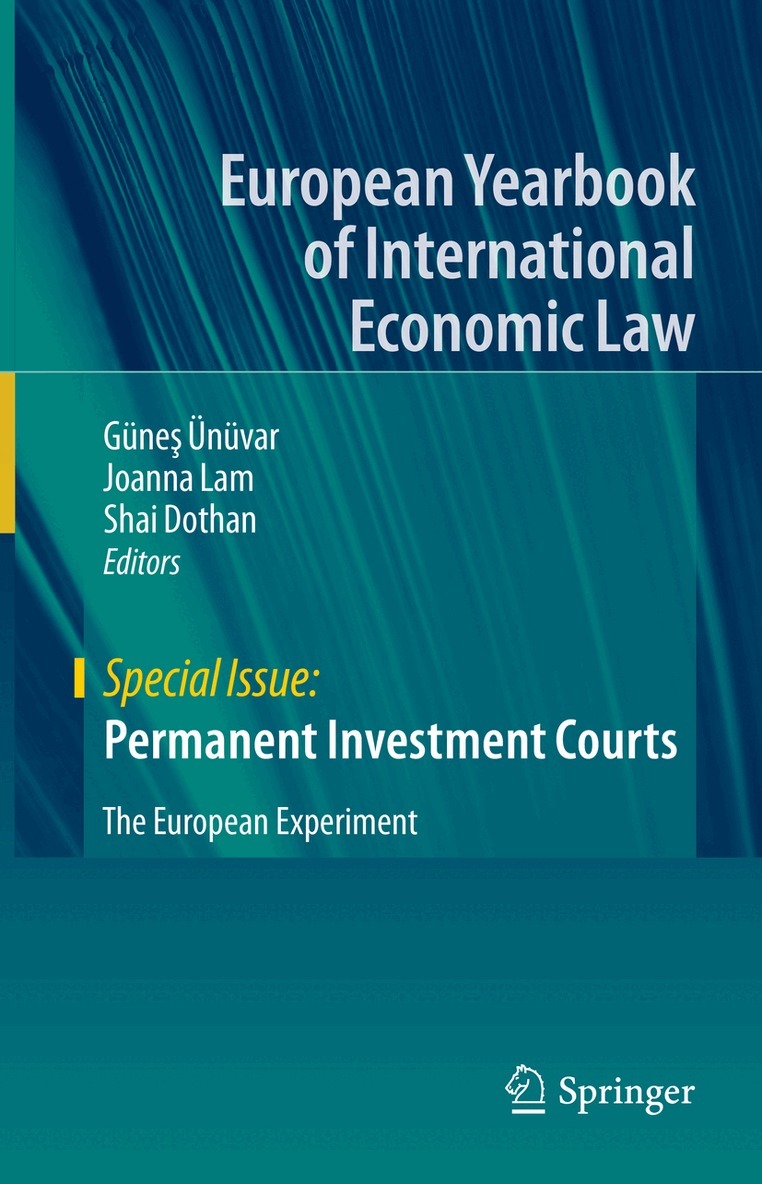
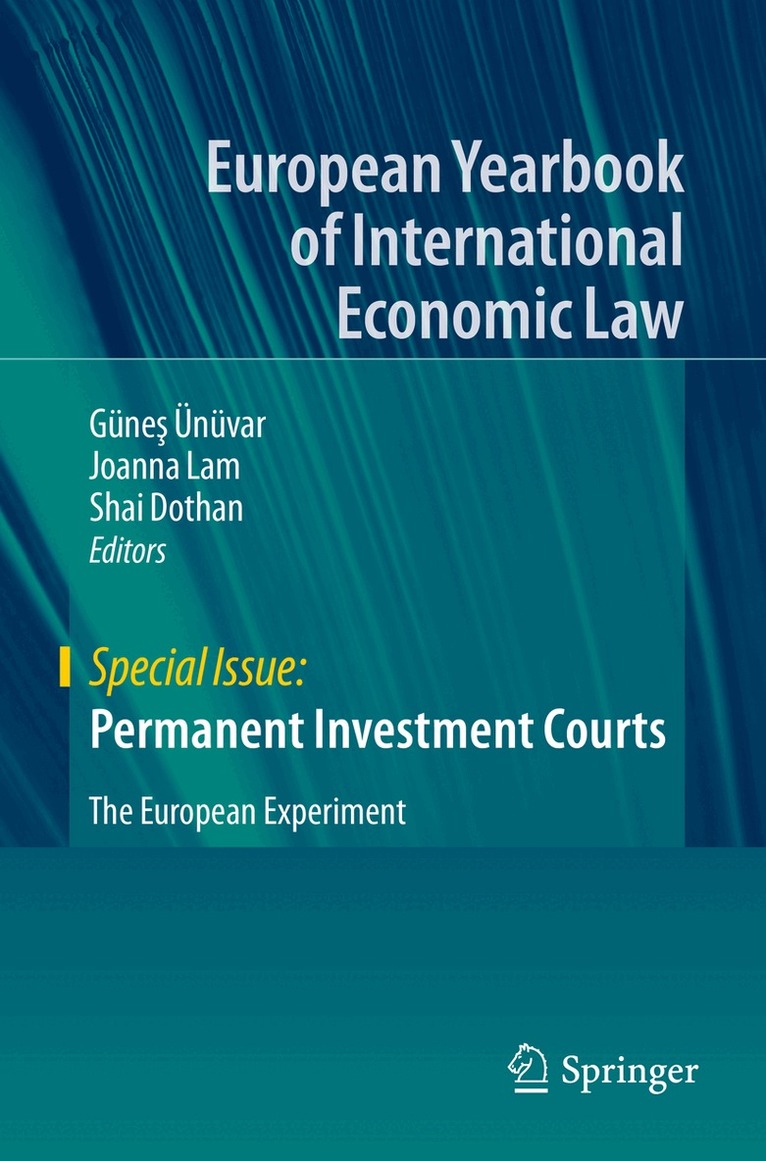
This special issue focuses on the opportunities and challenges connected with investment courts. The creation of permanent investment courts was first proposed several decades ago, but it has only recently become likely that these proposals will be implemented. In particular, the European Commission has pushed for a court-like mechanism to resolve investment disputes in various recent trade and investment negotiations. Such a framework was included in some free trade agreements (FTAs) and investment protection agreements (IPAs) the European Union (EU) signed or negotiated with Vietnam, Singapore, Mexico and Canada. While it was shelved long before the publication of this Special Issue, the European Commission had also formally proposed a court system during the negotiations for the Transatlantic Trade and Investment Partnership (TTIP) agreement with the United States. The issue of a Multilateral Investment Court (MIC) has also been prevalent at the Working Group III proceedings of the UNCITRAL on investor-State dispute settlement reform, attracting scholarly and public attention.Will these developments lead to the creation of permanent investment courts? How will such courts change the future of international investment law? Will they bring about a real institutional change in adjudicatory mechanisms? Will they introduce a 'hybrid' system, which borrows important characteristics from both arbitration and institutional methods of international adjudication? How will the enforcement mechanisms work, and under which rules of ethics will its adjudicators function and exercise their duties? This special issue brings together leading scholars sharing a common interest in investment courts to address these questions.
E-bok
Engelska, 20201 679 kr
Läs direkt efter köp
This special issue focuses on the opportunities and challenges connected with investment courts. The creation of permanent investment courts was first proposed several decades ago, but it has only recently become likely that these proposals will be implemented. In particular, the European Commission has pushed for a court-like mechanism to resolve investment disputes in various recent trade and investment negotiations. Such a framework was included in some free trade agreements (FTAs) and investment protection agreements (IPAs) the European Union (EU) signed or negotiated with Vietnam, Singapore, Mexico and Canada. While it was shelved long before the publication of this Special Issue, the European Commission had also formally proposed a court system during the negotiations for the Transatlantic Trade and Investment Partnership (TTIP) agreement with the United States. The issue of a Multilateral Investment Court (MIC) has also been prevalent at the Working Group III proceedings of the UNCITRAL on investor-State dispute settlement reform, attracting scholarly and public attention.Will these developments lead to the creation of permanent investment courts? How will such courts change the future of international investment law? Will they bring about a real institutional change in adjudicatory mechanisms? Will they introduce a ''hybrid'' system, which borrows important characteristics from both arbitration and institutional methods of international adjudication? How will the enforcement mechanisms work, and under which rules of ethics will its adjudicators function and exercise their duties? This special issue brings together leading scholars sharing a common interest in investment courts to address these questions.
Häftad, Engelska, 2021
1 401 kr
Skickas inom 10-15 vardagar
This special issue focuses on the opportunities and challenges connected with investment courts. The creation of permanent investment courts was first proposed several decades ago, but it has only recently become likely that these proposals will be implemented. In particular, the European Commission has pushed for a court-like mechanism to resolve investment disputes in various recent trade and investment negotiations. Such a framework was included in some free trade agreements (FTAs) and investment protection agreements (IPAs) the European Union (EU) signed or negotiated with Vietnam, Singapore, Mexico and Canada. While it was shelved long before the publication of this Special Issue, the European Commission had also formally proposed a court system during the negotiations for the Transatlantic Trade and Investment Partnership (TTIP) agreement with the United States. The issue of a Multilateral Investment Court (MIC) has also been prevalent at the Working Group III proceedings of the UNCITRAL on investor-State dispute settlement reform, attracting scholarly and public attention.Will these developments lead to the creation of permanent investment courts? How will such courts change the future of international investment law? Will they bring about a real institutional change in adjudicatory mechanisms? Will they introduce a 'hybrid' system, which borrows important characteristics from both arbitration and institutional methods of international adjudication? How will the enforcement mechanisms work, and under which rules of ethics will its adjudicators function and exercise their duties? This special issue brings together leading scholars sharing a common interest in investment courts to address these questions.
Inbunden, Engelska, 2025
1 600 kr
Skickas inom 10-15 vardagar
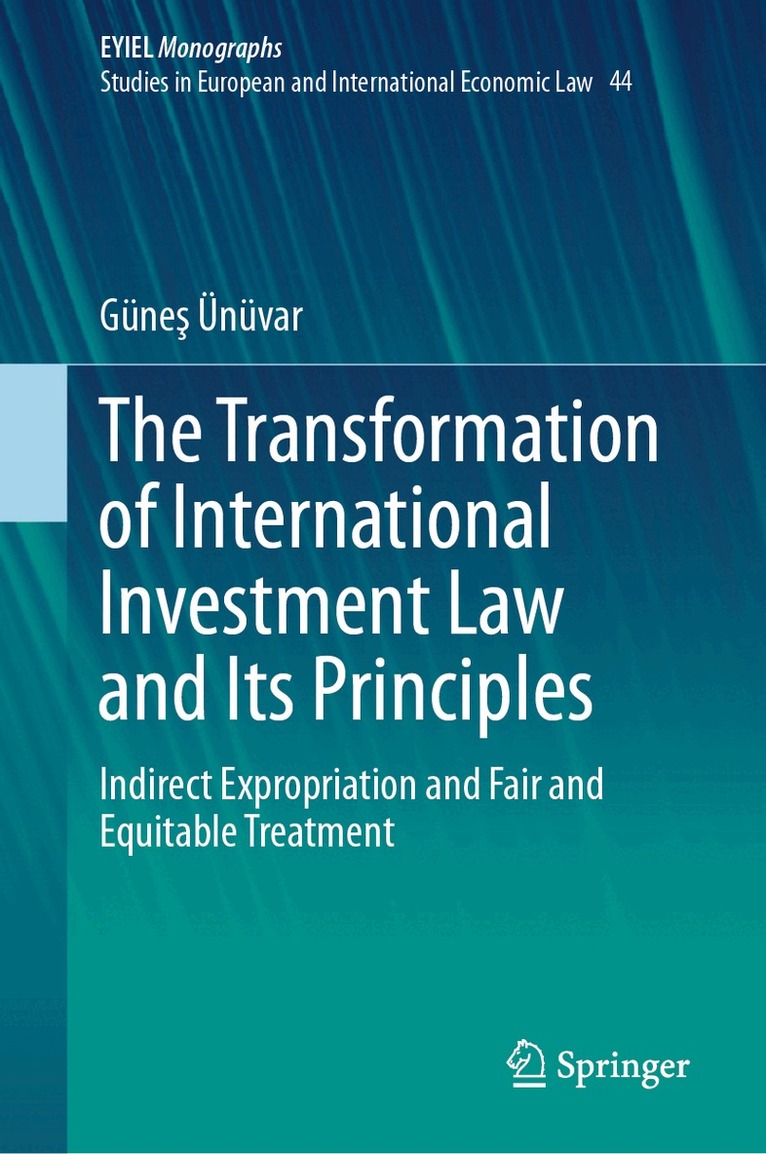
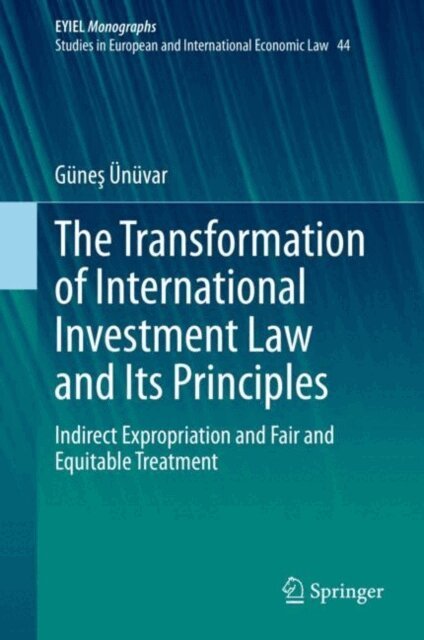
This book explores how international investment law has evolved through the interpretation of key protection standards like Fair and Equitable Treatment and indirect expropriation. It examines how arbitral decisions have shaped, and been shaped by, state treaty-making practices - particularly in recent "new generation" agreements. The analysis reveals a broader trend toward greater clarity, specificity, and balance in the design of investment treaties."Güneş Ünüvar skillfully combines a voluntarist approach to the making of international investment law, and the practical reality that arbitral tribunals are the main interpreters of the volonté of the States, thereby shaping the field as much as, or perhaps more than, the States themselves. Ünüvar’s analysis of the development and evolution, both in cases and treaties, of the two most-used investment protection norms is a unique and compelling contribution to understanding the law and policy of investment law and arbitration. A must-read." Prof. Eric de Brabandere, Leiden University"This book is an important contribution to the thinking about the international investment regime. It looks at the regime dynamically, reflecting on how it has developed historically and how the outcome of disputes has shaped the responses of governments in their treaty making. This book will be important reading for everybody thinking critically about the regime, whether in academia or in government. It is all the more relevant for the work of UNCITRAL Working Group III which has to think both about which reforms to develop, but also how to ensure that adjustments can be made in the future." Colin Brown, European Commission"Güneş Ünüvar offers an insightful perspective on the evolving landscape of international investment law. By examining the dynamic relationship between arbitration and treaty-making, this book sheds light on how protection standards like fair and equitable treatment and indirect expropriation are shaped through practice and interpretation. Ünüvar’s analysis is both thoughtful and accessible, shedding light into complex ideas about legal certainty, legitimacy, and normative development." Prof. Ursula Kriebaum, University of Vienna"An important contribution to international investment law. In The Transformation of International Investment Law and its Principles, Güneş Ünüvar does a remarkable job of integrating treaty practice and arbitral case law into a comprehensive and accessible study of investment law’s most important standards." Prof. Catharine Titi, The French National Centre for Scientific Research (CNRS)
E-bok
Engelska, 20251 960 kr
Läs direkt efter köp
This book explores how international investment law has evolved through the interpretation of key protection standards like Fair and Equitable Treatment and indirect expropriation. It examines how arbitral decisions have shaped, and been shaped by, state treaty-making practices - particularly in recent "e;new generation"e; agreements. The analysis reveals a broader trend toward greater clarity, specificity, and balance in the design of investment treaties."e;Günes Ünüvar skillfully combines a voluntarist approach to the making of international investment law, and the practical reality that arbitral tribunals are the main interpreters of the volonté of the States, thereby shaping the field as much as, or perhaps more than, the States themselves. Ünüvar’s analysis of the development and evolution, both in cases and treaties, of the two most-used investment protection norms is a unique and compelling contribution to understanding the law and policy of investment law and arbitration. A must-read."e; Prof. Eric de Brabandere, Leiden University"e;This book is an important contribution to the thinking about the international investment regime. It looks at the regime dynamically, reflecting on how it has developed historically and how the outcome of disputes has shaped the responses of governments in their treaty making. This book will be important reading for everybody thinking critically about the regime, whether in academia or in government. It is all the more relevant for the work of UNCITRAL Working Group III which has to think both about which reforms to develop, but also how to ensure that adjustments can be made in the future."e; Colin Brown, European Commission"e;Günes Ünüvar offers an insightful perspective on the evolving landscape of international investment law. By examining the dynamic relationship between arbitration and treaty-making, this book sheds light on how protection standards like fair and equitable treatment and indirect expropriation are shaped through practice and interpretation. Ünüvar’s analysis is both thoughtful and accessible, shedding light into complex ideas about legal certainty, legitimacy, and normative development."e; Prof. Ursula Kriebaum, University of Vienna"e;An important contribution to international investment law. In The Transformation of International Investment Law and its Principles, Günes Ünüvar does a remarkable job of integrating treaty practice and arbitral case law into a comprehensive and accessible study of investment law’s most important standards."e; Prof. Catharine Titi, The French National Centre for Scientific Research (CNRS)