Joanna Lam – författare
Visar alla böcker från författaren Joanna Lam. Handla med fri frakt och snabb leverans.
6 produkter
6 produkter
Inbunden, Engelska, 2022
1 312 kr
Skickas inom 7-10 vardagar
International law is usually communicated in more than one language and reflects common norms that lawyers and adjudicators across national legal cultures agree on and develop together. As a result, the negotiation of the wording and meaning of international legislative texts is an integral part of legal interpretation in international law. This book sheds light on that essential interpretation process. Language and Legal Interpretation in International Law treats the subject from the perspective of recent legal and linguistic theories of meaning. Anne Lise Kjær and Joanna Lam bring together internationally renowned experts to provide strong theoretical and practical foundations for the study of legal interpretation in such fields as human rights law, international trade, investment and commercial law, EU law, and international criminal law. The volume explains how the positivist tradition--in which interpretation is understood as an automatic process by which judges simply apply the text of legislative instruments to specific fact situations--cannot be upheld in an era of pragmatic and cognitive meaning theories. Those theories instead focus on the context of interpretation and on the interpreter as a co-producer of meaning. Through a collection of thoroughly researched and timely essays, this book explores the linguistically and culturally diversified world of meaning-making in international law.
E-bok
PDF, Engelska, 20221 147 kr
Läs direkt efter köp
International law is usually communicated in more than one language and reflects common norms that lawyers and adjudicators across national legal cultures agree on and develop together. As a result, the negotiation of the wording and meaning of international legislative texts is an integral part of legal interpretation in international law. This book sheds light on that essential interpretation process.Language and Legal Interpretation in International Law treats the subject from the perspective of recent legal and linguistic theories of meaning. Anne Lise Kjær and Joanna Lam bring together internationally renowned experts to provide strong theoretical and practical foundations for the study of legal interpretation in such fields as human rights law, international trade, investment and commercial law, EU law, and international criminal law. The volume explains how the positivist tradition--in which interpretation is understood as an automatic process by which judges simply apply the text of legislative instruments to specific fact situations--cannot be upheld in an era of pragmatic and cognitive meaning theories. Those theories instead focus on the context of interpretation and on the interpreter as a co-producer of meaning. Through a collection of thoroughly researched and timely essays, this book explores the linguistically and culturally diversified world of meaning-making in international law.
E-bok
Engelska, 20221 048 kr
Läs direkt efter köp
International law is usually communicated in more than one language and reflects common norms that lawyers and adjudicators across national legal cultures agree on and develop together. As a result, the negotiation of the wording and meaning of international legislative texts is an integral part of legal interpretation in international law. This book sheds light on that essential interpretation process.Language and Legal Interpretation in International Law treats the subject from the perspective of recent legal and linguistic theories of meaning. Anne Lise Kjær and Joanna Lam bring together internationally renowned experts to provide strong theoretical and practical foundations for the study of legal interpretation in such fields as human rights law, international trade, investment and commercial law, EU law, and international criminal law. The volume explains how the positivist tradition--in which interpretation is understood as an automatic process by which judges simply apply the text of legislative instruments to specific fact situations--cannot be upheld in an era of pragmatic and cognitive meaning theories. Those theories instead focus on the context of interpretation and on the interpreter as a co-producer of meaning. Through a collection of thoroughly researched and timely essays, this book explores the linguistically and culturally diversified world of meaning-making in international law.
Inbunden, Engelska, 2020
1 393 kr
Skickas inom 10-15 vardagar
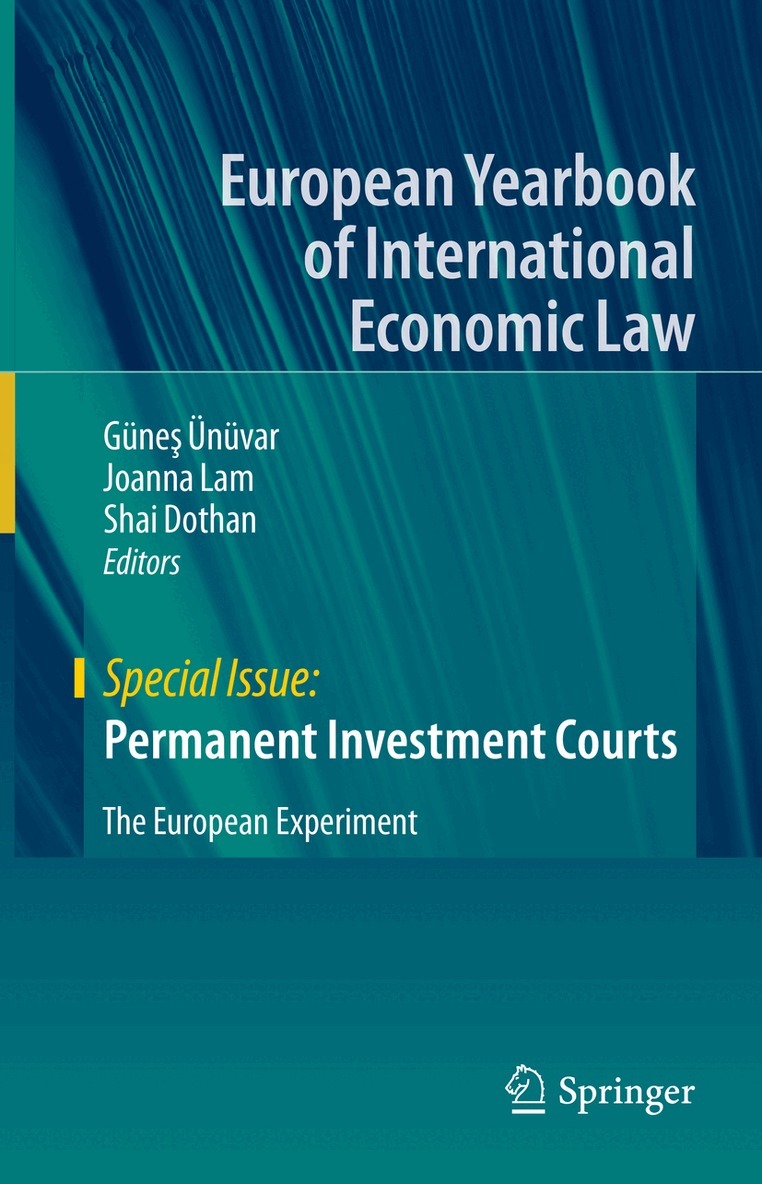
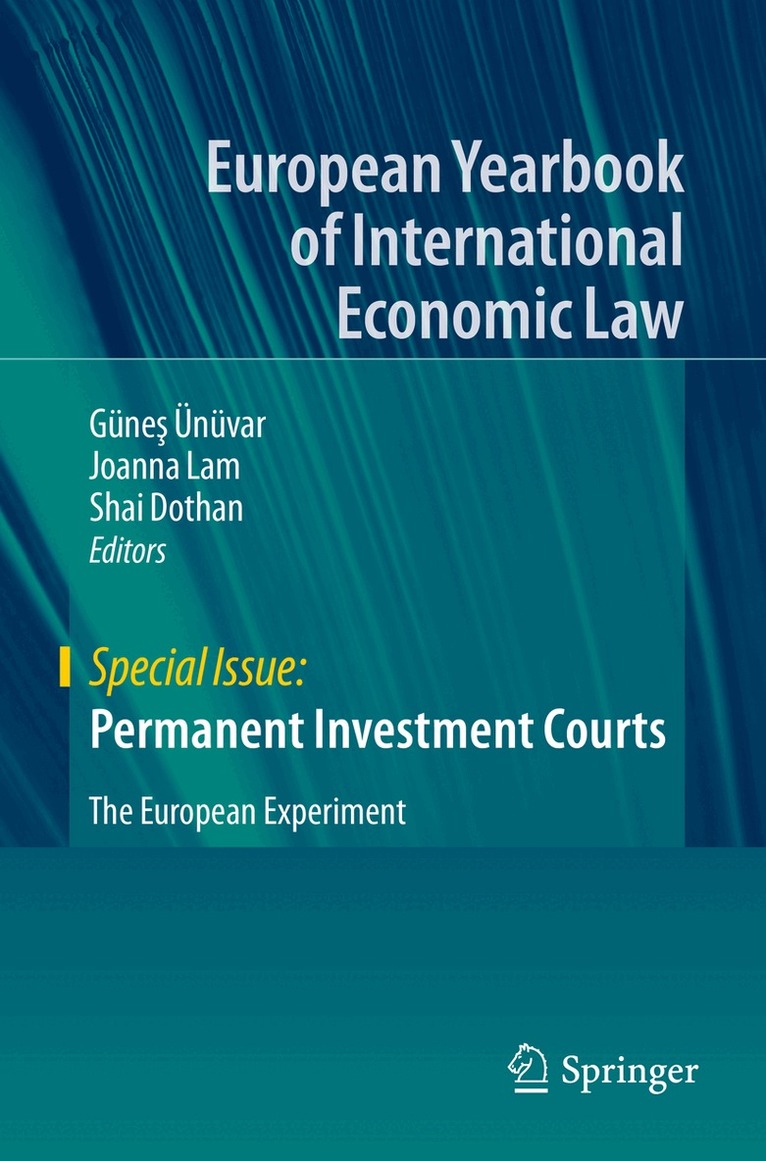
This special issue focuses on the opportunities and challenges connected with investment courts. The creation of permanent investment courts was first proposed several decades ago, but it has only recently become likely that these proposals will be implemented. In particular, the European Commission has pushed for a court-like mechanism to resolve investment disputes in various recent trade and investment negotiations. Such a framework was included in some free trade agreements (FTAs) and investment protection agreements (IPAs) the European Union (EU) signed or negotiated with Vietnam, Singapore, Mexico and Canada. While it was shelved long before the publication of this Special Issue, the European Commission had also formally proposed a court system during the negotiations for the Transatlantic Trade and Investment Partnership (TTIP) agreement with the United States. The issue of a Multilateral Investment Court (MIC) has also been prevalent at the Working Group III proceedings of the UNCITRAL on investor-State dispute settlement reform, attracting scholarly and public attention.Will these developments lead to the creation of permanent investment courts? How will such courts change the future of international investment law? Will they bring about a real institutional change in adjudicatory mechanisms? Will they introduce a 'hybrid' system, which borrows important characteristics from both arbitration and institutional methods of international adjudication? How will the enforcement mechanisms work, and under which rules of ethics will its adjudicators function and exercise their duties? This special issue brings together leading scholars sharing a common interest in investment courts to address these questions.
E-bok
Engelska, 20201 740 kr
Läs direkt efter köp
This special issue focuses on the opportunities and challenges connected with investment courts. The creation of permanent investment courts was first proposed several decades ago, but it has only recently become likely that these proposals will be implemented. In particular, the European Commission has pushed for a court-like mechanism to resolve investment disputes in various recent trade and investment negotiations. Such a framework was included in some free trade agreements (FTAs) and investment protection agreements (IPAs) the European Union (EU) signed or negotiated with Vietnam, Singapore, Mexico and Canada. While it was shelved long before the publication of this Special Issue, the European Commission had also formally proposed a court system during the negotiations for the Transatlantic Trade and Investment Partnership (TTIP) agreement with the United States. The issue of a Multilateral Investment Court (MIC) has also been prevalent at the Working Group III proceedings of the UNCITRAL on investor-State dispute settlement reform, attracting scholarly and public attention.Will these developments lead to the creation of permanent investment courts? How will such courts change the future of international investment law? Will they bring about a real institutional change in adjudicatory mechanisms? Will they introduce a ''hybrid'' system, which borrows important characteristics from both arbitration and institutional methods of international adjudication? How will the enforcement mechanisms work, and under which rules of ethics will its adjudicators function and exercise their duties? This special issue brings together leading scholars sharing a common interest in investment courts to address these questions.
Häftad, Engelska, 2021
1 393 kr
Skickas inom 10-15 vardagar
This special issue focuses on the opportunities and challenges connected with investment courts. The creation of permanent investment courts was first proposed several decades ago, but it has only recently become likely that these proposals will be implemented. In particular, the European Commission has pushed for a court-like mechanism to resolve investment disputes in various recent trade and investment negotiations. Such a framework was included in some free trade agreements (FTAs) and investment protection agreements (IPAs) the European Union (EU) signed or negotiated with Vietnam, Singapore, Mexico and Canada. While it was shelved long before the publication of this Special Issue, the European Commission had also formally proposed a court system during the negotiations for the Transatlantic Trade and Investment Partnership (TTIP) agreement with the United States. The issue of a Multilateral Investment Court (MIC) has also been prevalent at the Working Group III proceedings of the UNCITRAL on investor-State dispute settlement reform, attracting scholarly and public attention.Will these developments lead to the creation of permanent investment courts? How will such courts change the future of international investment law? Will they bring about a real institutional change in adjudicatory mechanisms? Will they introduce a 'hybrid' system, which borrows important characteristics from both arbitration and institutional methods of international adjudication? How will the enforcement mechanisms work, and under which rules of ethics will its adjudicators function and exercise their duties? This special issue brings together leading scholars sharing a common interest in investment courts to address these questions.