Gunter P. Wagner - Böcker
Visar alla böcker från författaren Gunter P. Wagner. Handla med fri frakt och snabb leverans.
5 produkter
5 produkter
1 108 kr
Skickas inom 7-10 vardagar
Modularity in Development and Evolution offers the first sustained exploration of modules from developmental and evolutionary perspectives. Contributors discuss what modularity is, how it can be identified and modeled, how it originated and evolved, and its biological significance. Covering modules at levels ranging from genes to colonies, the book focuses on their roles not just in structures but also in processes such as gene regulation. Among many exciting findings, the contributors demonstrate how modules can highlight key constraints on evolutionary processes.A timely synthesis of a crucial topic, Modularity in Development and Evolution shows the invaluable insights modules can give into both developmental complexities and their evolutionary origins.
661 kr
Skickas inom 11-20 vardagar
Modularity in Development and Evolution offers the first sustained exploration of modules from developmental and evolutionary perspectives. Contributors discuss what modularity is, how it can be identified and modeled, how it originated and evolved, and its biological significance. Covering modules at levels ranging from genes to colonies, the book focuses on their roles not just in structures but also in processes such as gene regulation. Among many exciting findings, the contributors demonstrate how modules can highlight key constraints on evolutionary processes.A timely synthesis of a crucial topic, Modularity in Development and Evolution shows the invaluable insights modules can give into both developmental complexities and their evolutionary origins.
641 kr
Skickas
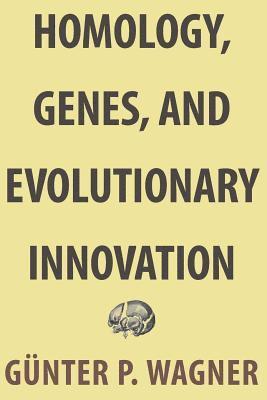
Homology--a similar trait shared by different species and derived from common ancestry, such as a seal's fin and a bird's wing--is one of the most fundamental yet challenging concepts in evolutionary biology. This groundbreaking book provides the first mechanistically based theory of what homology is and how it arises in evolution. Gunter Wagner, one of the preeminent researchers in the field, argues that homology, or character identity, can be explained through the historical continuity of character identity networks--that is, the gene regulatory networks that enable differential gene expression. He shows how character identity is independent of the form and function of the character itself because the same network can activate different effector genes and thus control the development of different shapes, sizes, and qualities of the character. Demonstrating how this theoretical model can provide a foundation for understanding the evolutionary origin of novel characters, Wagner applies it to the origin and evolution of specific systems, such as cell types; skin, hair, and feathers; limbs and digits; and flowers.The first major synthesis of homology to be published in decades, Homology, Genes, and Evolutionary Innovation reveals how a mechanistically based theory can serve as a unifying concept for any branch of science concerned with the structure and development of organisms, and how it can help explain major transitions in evolution and broad patterns of biological diversity.
330 kr
Skickas inom 7-10 vardagar
A major synthesis of homology, written by a top researcher in the fieldHomology—a similar trait shared by different species and derived from common ancestry, such as a seal's fin and a bird’s wing—is one of the most fundamental yet challenging concepts in evolutionary biology. This groundbreaking book provides the first mechanistically based theory of what homology is and how it arises in evolution.Günter Wagner, one of the preeminent researchers in the field, argues that homology, or character identity, can be explained through the historical continuity of character identity networks—that is, the gene regulatory networks that enable differential gene expression. He shows how character identity is independent of the form and function of the character itself because the same network can activate different effector genes and thus control the development of different shapes, sizes, and qualities of the character. Demonstrating how this theoretical model can provide a foundation for understanding the evolutionary origin of novel characters, Wagner applies it to the origin and evolution of specific systems, such as cell types; skin, hair, and feathers; limbs and digits; and flowers.The first major synthesis of homology to be published in decades, Homology, Genes, and Evolutionary Innovation reveals how a mechanistically based theory can serve as a unifying concept for any branch of science concerned with the structure and development of organisms, and how it can help explain major transitions in evolution and broad patterns of biological diversity.
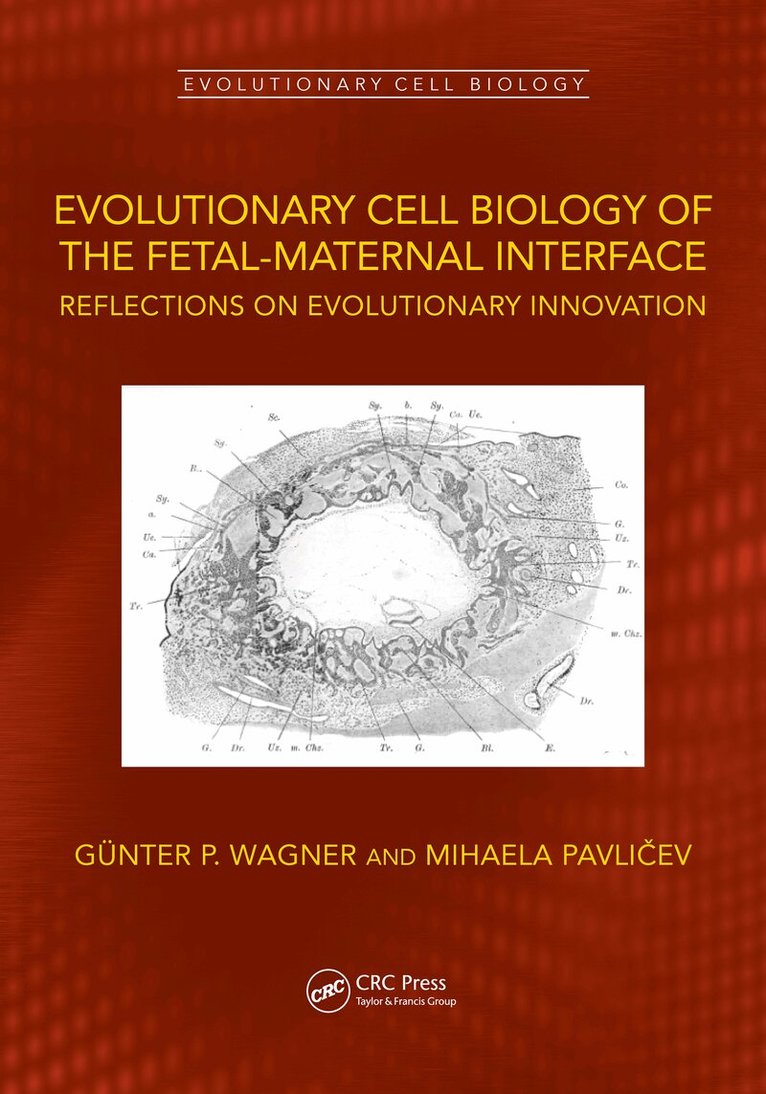
Evolutionary Cell Biology of the Fetal-Maternal Interface
Reflections on Evolutionary Innovation
Inbunden, Engelska, 2026
2 101 kr
Kommande
The cell biological perspective on the evolution of the Fetal-Maternal Interface has several historical roots. The best known is the immunological paradox, i. e. the maternal tolerance of a semi-allogenous tissue in her body. Clinicians complain this view misleads clinical practice by pushing an incomplete paradigm based on a flawed analogy between an embryo and a xenotransplant. In this book the authors explore three alternative views of this interface: the cell biological paradox involved in embryo attachment, the inflammation paradox, and the tissue biological paradox. The conceptual core of this book is derived from the biological details of these paradoxical metaphors. The unifying idea is that evolutionary transformation of parts of the organism are opposed by the homeostatic tendencies of the body itself. Chapters explore innovations realized by mechanisms overcoming or modifying existing homeostatic mechanisms. On the other hand, the homeostatic mechanisms themselves can become the seed for evolutionary change, such as cellular stress mechanisms. A collateral topic is dedicated to a methodological critique of a popular research approach in evolutionary reproductive biology – the comparative method. Our critique is less directed towards the technical implementation of the comparative method, which is largely fine, but the anterior problem of how to represent the data and how to define the research questions. Another equally fascinating topic covered is the hypothesized connection between the evolution of invasive placentation and the evolution of cancer malignancy.