Gur Alroey – författare
Visar alla böcker från författaren Gur Alroey. Handla med fri frakt och snabb leverans.
5 produkter
5 produkter
824 kr
Skickas inom 5-8 vardagar
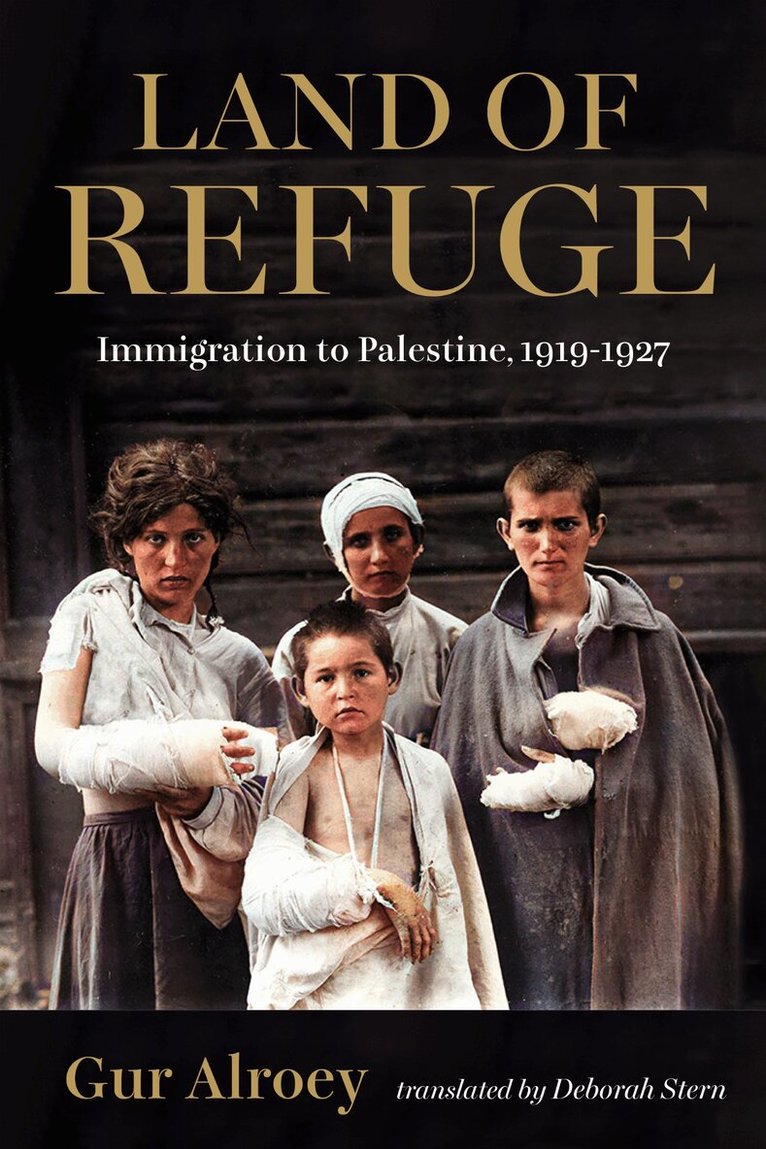
After the First World War, tens of thousands of Jews immigrated to Palestine. They went there not to found a Zionist state but primarily to seek refuge from the violence and persecution of the Russian Civil War and its aftermath. Fleeing to the United States was not an option due to heavily restrictive immigration laws enacted there in the early 1920s.In Land of Refuge , the experiences of this generation of Jewish immigrants come vividly to life through a wealth of previously unstudied archival sources. Historian Gur Alroey skillfully weaves together the riveting and remarkable stories of survivors of pogroms and riots in Ukraine and Uramia, including widows, orphans, and survivors of rape and other unimaginable violence; migrants who risked harrowing journeys by boat, only to endure illness on the way, be detained or sent back, or have their luggage broken into or stolen; survivors of the famine in Russia during the Lenin and Stalin regimes; and marginalized Jews such as the mentally ill, thieves, prostitutes, and those with falsified entry visas. The stories of the people at the core of Land of Refuge form an important but little appreciated part of the history of the Jewish settlement in the Land of Israel.
334 kr
Skickas inom 5-8 vardagar
After the First World War, tens of thousands of Jews immigrated to Palestine. They went there not to found a Zionist state but primarily to seek refuge from the violence and persecution of the Russian Civil War and its aftermath. Fleeing to the United States was not an option due to heavily restrictive immigration laws enacted there in the early 1920s.In Land of Refuge , the experiences of this generation of Jewish immigrants come vividly to life through a wealth of previously unstudied archival sources. Historian Gur Alroey skillfully weaves together the riveting and remarkable stories of survivors of pogroms and riots in Ukraine and Uramia, including widows, orphans, and survivors of rape and other unimaginable violence; migrants who risked harrowing journeys by boat, only to endure illness on the way, be detained or sent back, or have their luggage broken into or stolen; survivors of the famine in Russia during the Lenin and Stalin regimes; and marginalized Jews such as the mentally ill, thieves, prostitutes, and those with falsified entry visas. The stories of the people at the core of Land of Refuge form an important but little appreciated part of the history of the Jewish settlement in the Land of Israel.
Unpromising Land
Jewish Migration to Palestine in the Early Twentieth Century
Inbunden, Engelska, 2014
800 kr
Skickas inom 5-8 vardagar
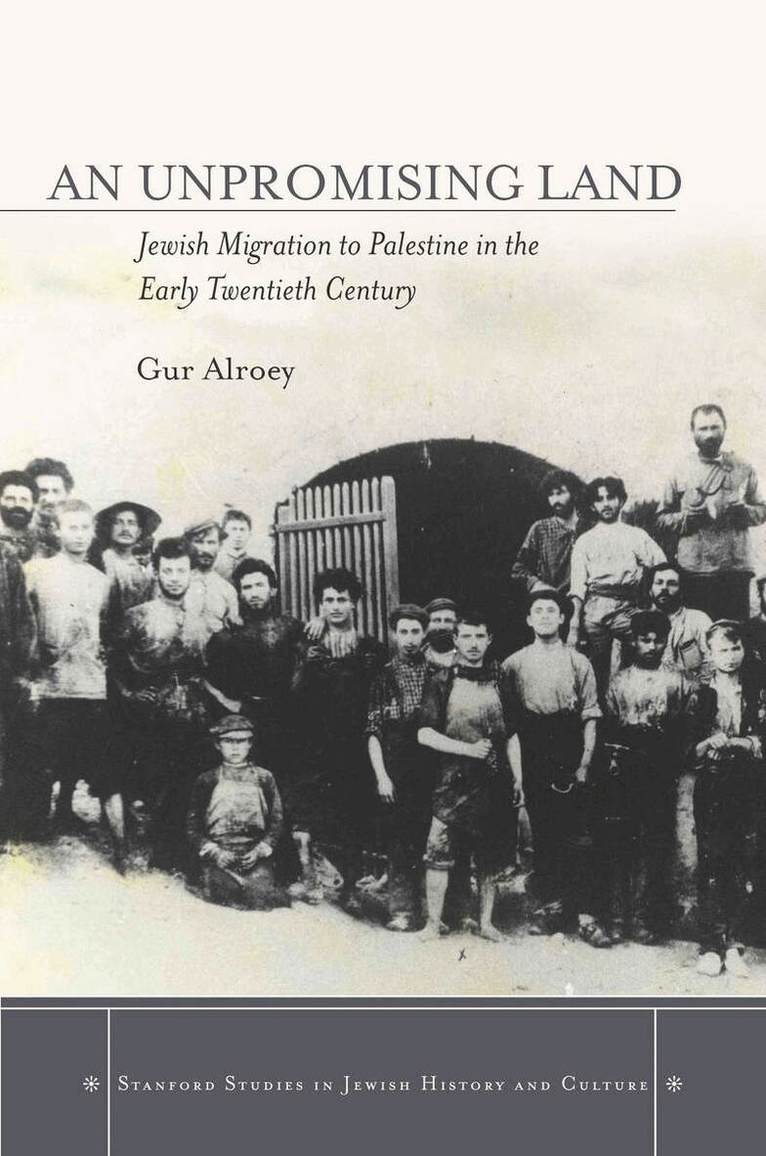
The Jewish migration at the end of the nineteenth and beginning of the twentieth centuries was one of the dramatic events that changed the Jewish people in modern times. Millions of Jews sought to escape the distressful conditions of their lives in Eastern Europe and find a better future for themselves and their families overseas. The vast majority of the Jewish migrants went to the United States, and others, in smaller numbers, reached Argentina, Canada, Australia, and South Africa. From the beginning of the twentieth century until the First World War, about 35,000 Jews reached Palestine. Because of this difference in scale and because of the place the land of Israel possesses in Jewish thought, historians and social scientists have tended to apply different criteria to immigration, stressing the uniqueness of Jewish immigration to Palestine and the importance of the Zionist ideology as a central factor in that immigration. This book questions this assumption, and presents a more complex picture both of the causes of immigration to Palestine and of the mass of immigrants who reached the port of Jaffa in the years 1904–1914.
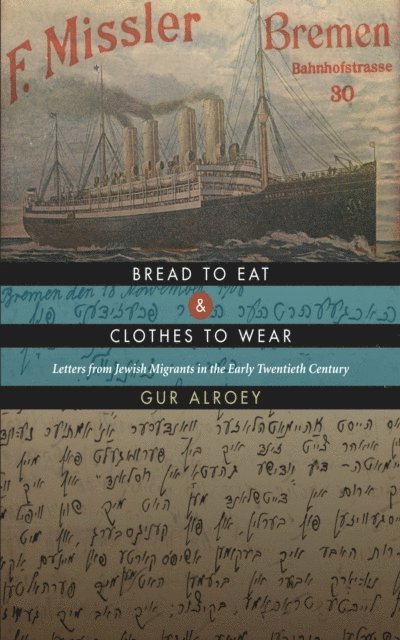
Bread to Eat and Clothes to Wear
Letters from Jewish Migrants in the Early Twentieth Century
Häftad, Engelska, 2011
363 kr
Skickas inom 10-15 vardagar
Between 1875 and 1924, more than 2.7 million Jews from Eastern Europe left their home countries in the hopes of escaping economic subjugation and religious persecution and creating better lives overseas. Although many studies have addressed how these millions of men, women, and children were absorbed into their destination countries, very little has been written on the process of deciding to migrate. In Bread to Eat and Clothes to Wear: Letters from Jewish Migrants in the Early Twentieth Century, author Gur Alroey fills this gap by considering letters written by Eastern European Jews embarking on their migration. Alroey begins with a comprehensive introduction that describes the extent and unique characteristics of Jewish migration during this period, discusses the establishment of immigrant information bureaus, and analyzes some of the specific aspects of migration that are reflected in the letters. In the second part of the book, Alroey translates and annotates 66 letters from Eastern European Jews considering migration. From the letters, readers learn firsthand of the migrants’ fear of making a decision; their desire for advice and information before they took the fateful step; the gnawing anxiety of women whose husbands had already sailed for America and who were waiting impatiently for a ticket to join them; women whose husbands had disappeared in America and had broken off contact with their families; pogroms (documented in real time); and the obstacles and hardships on the way to the port of exit, as described by people who had already set out. Through the letters in Bread to Eat and Clothes to Wear readers will follow the dilemmas and predicaments of the ordinary Jewish migrant, the difficulties of migration, and the changes that it brought about within the Jewish family. Scholars of Jewish studies and those interested in American and European history will appreciate this landmark volume.
615 kr
Skickas inom 10-15 vardagar
While the ideologies of Territorialism and Zionism originated at the same time, the Territorialists foresaw a dire fate for Eastern European Jews, arguing that they could not wait for the Zionist Organization to establish a Jewish state in Palestine. This pessimistic worldview led Territorialists to favor a solution for the Jewish state ""here and now""—and not only in the Land of Israel. In Zionism without Zion: The Jewish Territorial Organization and Its Conflict with the Zionist Organization, author Gur Alroey examines this group’s unique perspective, its struggle with the Zionist movement, its Zionist rivals’ response, and its diplomatic efforts to obtain a territory for the Jewish people in the first decades of the twentieth century.Alroey begins by examining the British government’s Uganda Plan and the ensuing crisis it caused in the Zionist movement and Jewish society. He details the founding of the Jewish Territorial Organization (ITO) in 1903 and explains the varied reactions that the Territorialist ideology received from Zionists and settlers in Palestine. Alroey also details the diplomatic efforts of Territorialists during their desperate search for a suitable territory, which ultimately never bore fruit. Finally, he attempts to understand the reasons for the ITO’s dissolution after the Balfour Declaration, explores the revival of Territorialismwith the New Territorialists in the 1930s and 1940s, and describes the similarities and differences between the movement then and its earlier version.Zionism without Zion sheds new light on the solutions Territorialism proposed to alleviate the hardship of Eastern European Jews at the start of the twentieth century and offers fresh insights into the challenges faced by Zionism in the same era. The thorough discussion of this under-studied ideology will be of considerable interested to scholars of Eastern European history, Jewish history, and Israel studies.