Gustavo Deco - Böcker
Visar alla böcker från författaren Gustavo Deco. Handla med fri frakt och snabb leverans.
8 produkter
8 produkter
1 633 kr
Skickas inom 7-10 vardagar
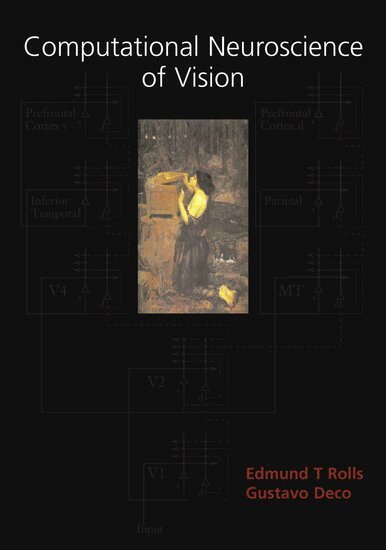
This exciting new book presents a highly complex subject of vision, focussing on the visual information processing and computational operations in the visual system that lead to representations of objects in the brain. In addition to visual processing, it also considers how visual imputs reach and are involved in the computations underlying a wide range of behaviour, thus providing a foundation for understanding the operation of a number of different brain systems. This fascinating book will be of value to all those interested in understanding how the brain works, and in understanding vision, attention, memory, emotion, motivation and action.
2 137 kr
Skickas inom 7-10 vardagar
The Computational Neuroscience of Vision focuses on the visual information processing and computational operations in the visual system that lead to representations of objects in the brain. Chapters 1-6, describe the structure and function of many of the cortical areas invovlved in this visual processing, including the temporal lobe cortical visual areas where representations of objects are found. Chapter 7 describes the operation of neural networks that provide a foundation for understanding how some of the computations involved take place in cortical areas. Chapter 8 describes different computational approaches to the recognition of objects, and then develops a computational approach to understanding how the visual system actually forms representations of objects. Chapters 9-11 provide a computational approach to understanding how attention operates in the brain. In addition to purely visual processing, Computational Neuroscience of Vision also considers how visual inputs reach and are involved in the computations underlying a range of behaviours, including short-term memory, long-term memory, emotion and motivation, and the initiation of action. The book thus provides a foundation for understanding the operation of a number of different brain systems. This book is relatively unique in integrating evidence from the neurophysiology, neuroimaging, and neuropsychology of the high-level visual processing systems in the brain and their connected output systems with a computational framework based on biologically plausible neural networks. The book will be of value to all those interested in understanding how the brain works, and in understanding vision, attention, memory, emotion, motiviation, and action.
1 389 kr
Skickas inom 5-8 vardagar
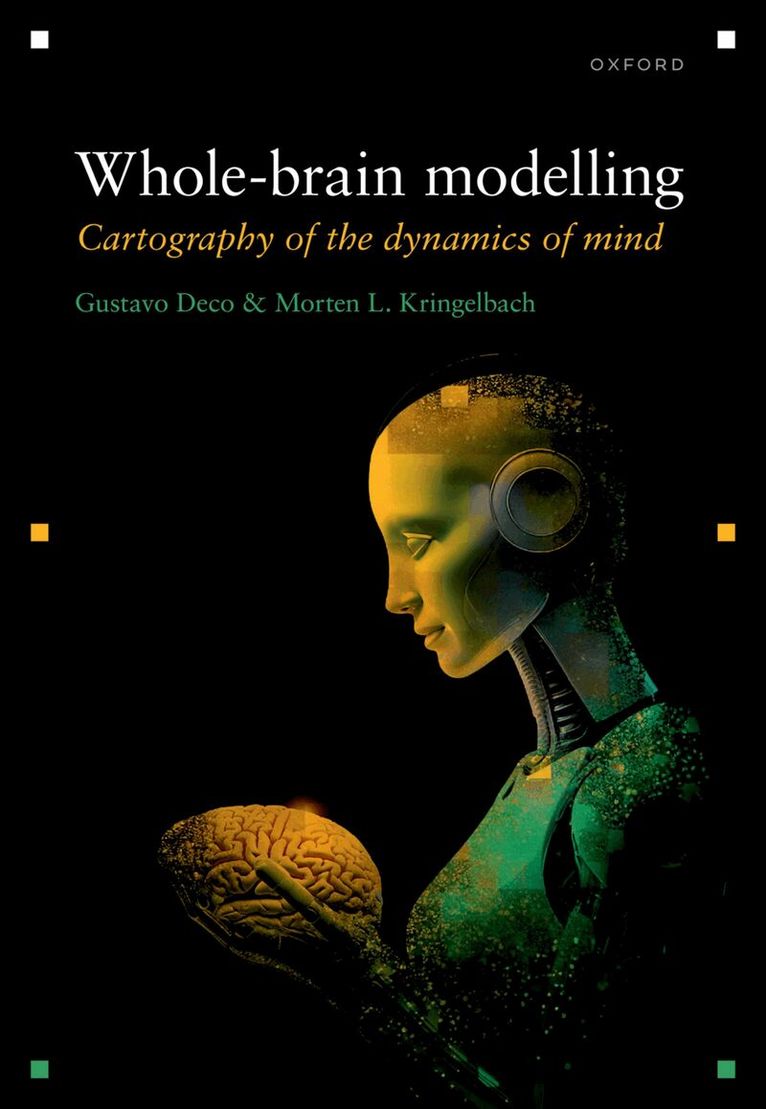
This is an open access title available under the terms of a CC BY-NC-ND 4.0 licence. It is free to read at Oxford Scholarship Online and offered as a free PDF download from OUP and selected open access locations.Whole-brain modelling provides a comprehensive overview of sophisticated whole-brain models able to capture the underlying mechanisms of brain dynamics, which are fundamental to gain a full understanding of the cartography of the dynamics of mind. The book is written for an audience of students and scholars coming from fields such as neuroscience, psychology, biology, physics, mathematics, engineering and medical science. Importantly, the book is written such that the necessary advanced maths and physics are easily accessible.Deco and Kringelbach provide all the key elements for understanding how these powerful computer models can accurately reproduce human brain activity in silico as measured through a combination of many different neuroimaging techniques. These computational models can be treated like animal models, where systematic lesion and stimulation allow for accurate descriptions of the precise mechanisms underlying human brain activity.In this book, the reader will gain a deeper understanding of how the mind is shaped through hierarchical orchestration of brain dynamics. This is made possible by incorporating fundamental principles of modern physics, including stochastic thermodynamics and turbulence, which have already shed new light on the inner workings of the brain in health and disease.
1 268 kr
Skickas inom 7-10 vardagar
The activity of neurons in the brain is noisy in that their firing times are random when they are firing at a given mean rate. This introduces a random or stochastic property into brain processing which we show in this book is fundamental to understanding many aspects of brain function, including probabilistic decision making, perception, memory recall, short-term memory, attention, and even creativity. In The Noisy Brain we show that in many of these processes, the noise caused by the random neuronal firing times is useful. However, this stochastic dynamics can be unstable or overstable, and we show that the stability of attractor networks in the brain in the face of noise may help to understand some important dysfunctions that occur in schizophrenia, normal aging, and obsessive-compulsive disorder.The Noisy Brain provides a unifying computational approach to brain function that links synaptic and biophysical properties of neurons through the firing of single neurons to the properties of the noise in large connected networks of noisy neurons to the levels of functional neuroimaging and behaviour. The book describes integrate-and-fire neuronal attractor networks with noise, and complementary mean-field analyses using approaches from theoretical physics. The book shows how they can be used to understand neuronal, functional neuroimaging, and behavioural data on decision-making, perception, memory recall, short-term memory, attention, and brain dysfunctions that occur in schizophrenia, normal aging, and obsessive-compulsive disorder.The Noisy Brain will be valuable for those in the fields of neuroscience, psychology, cognitive neuroscience, and biology from advanced undergraduate level upwards. It will also be of interest to those interested in neuroeconomics, animal behaviour, zoology, psychiatry, medicine, physics, and philosophy. The book has been written with modular chapters and sections, making it possible to select particular Chapters for course work. Advanced material on the physics of stochastic dynamics in the brain is contained in the Appendix.
1 105 kr
Skickas inom 10-15 vardagar
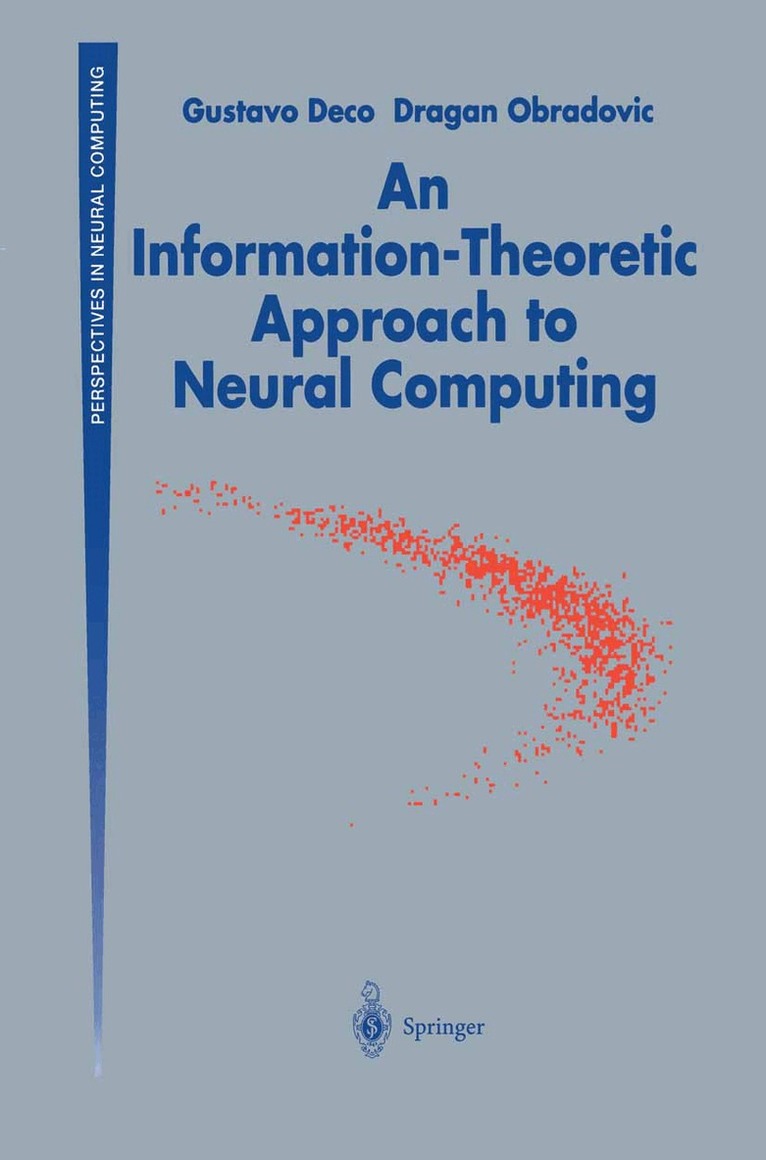
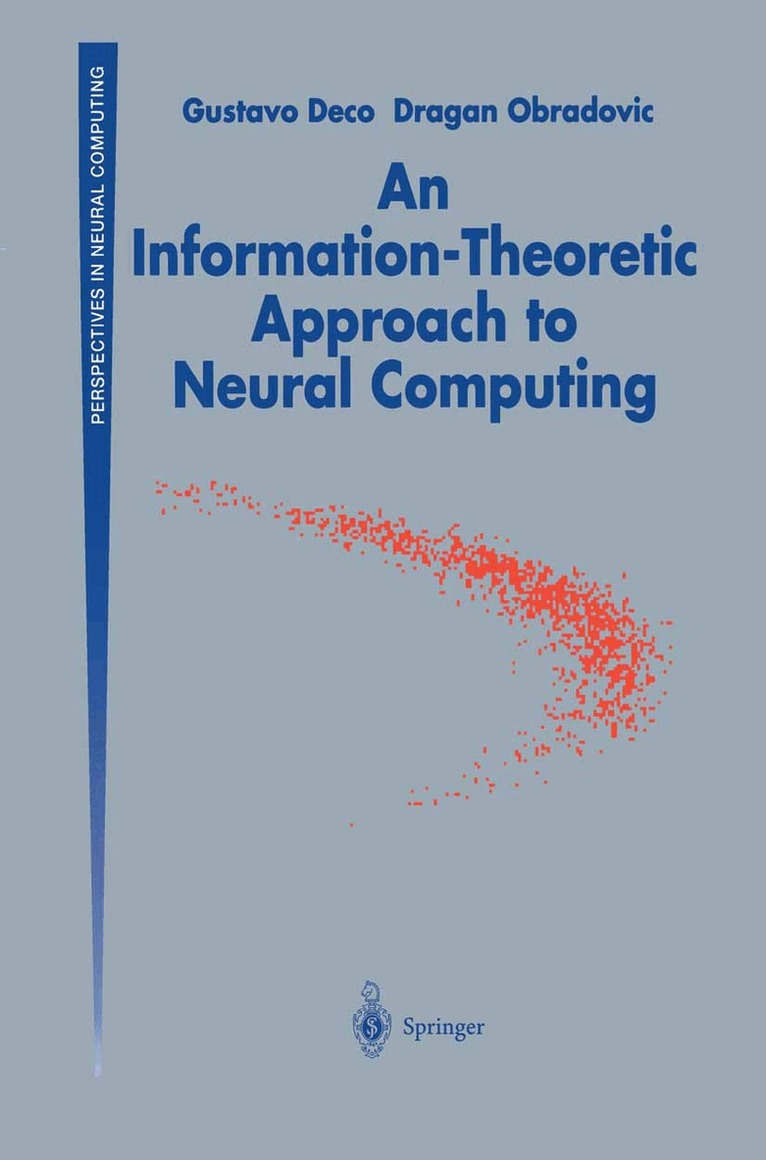
Neural networks provide a powerful new technology to model and control nonlinear and complex systems. In this book, the authors present a detailed formulation of neural networks from the information-theoretic viewpoint. They show how this perspective provides new insights into the design theory of neural networks. In particular they show how these methods may be applied to the topics of supervised and unsupervised learning including feature extraction, linear and non-linear independent component analysis, and Boltzmann machines. Readers are assumed to have a basic understanding of neural networks, but all the relevant concepts from information theory are carefully introduced and explained. Consequently, readers from several different scientific disciplines, notably cognitive scientists, engineers, physicists, statisticians, and computer scientists, will find this to be a very valuable introduction to this topic.
556 kr
Skickas inom 10-15 vardagar
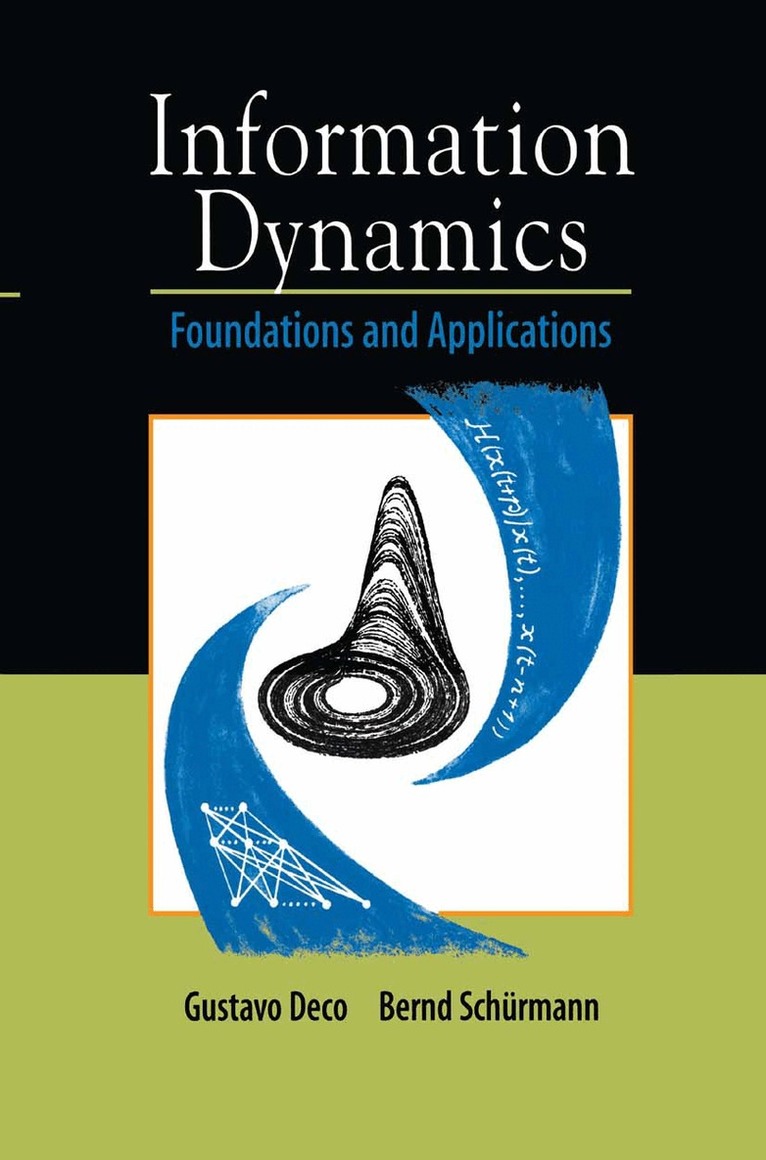
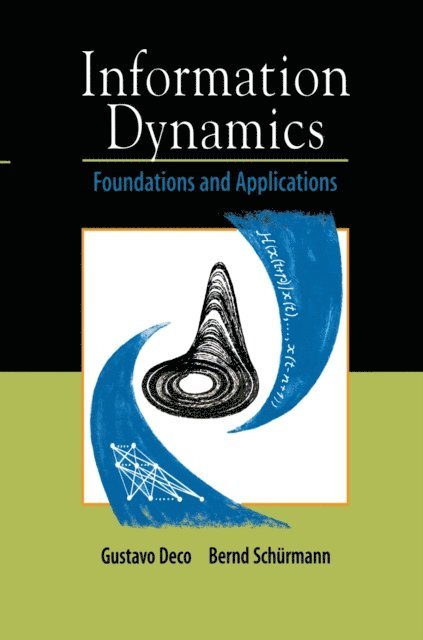
This book originated from a forefront R&D project pursued at Siemens Corporate Technology over the past several years. As a name for this project, we chose "Information Dynamics", which stands for information processing in complex dynamical systems. In the project, we wanted to grasp the flow of information in such systems in a quantitative manner, on the one hand by making use of an existing arsenal of methods and techniques from areas such as information theory, mathematical statistics, neural networks, nonlinear dynamics, probability theory, and statistical physics, and on the other hand by deriving new methods and techniques if required. The book contains only those contributions to the above-mentioned project which lend themselves to a unifying theoretical framework. Other important results obtained in the project, such as the extension of transport-theoretic techniques and their application to optimizing traffic flow, or the design of new neural network architectures for treating systems at the edge of chaos with applications in economics, are left out. This certainly is a sacrifice, but we think it is of benefit to the reader that we tried to be as focused and self contained as possible.
556 kr
Skickas inom 10-15 vardagar
This book originated from a forefront R&D project pursued at Siemens Corporate Technology over the past several years. As a name for this project, we chose "Information Dynamics", which stands for information processing in complex dynamical systems. In the project, we wanted to grasp the flow of information in such systems in a quantitative manner, on the one hand by making use of an existing arsenal of methods and techniques from areas such as information theory, mathematical statistics, neural networks, nonlinear dynamics, probability theory, and statistical physics, and on the other hand by deriving new methods and techniques if required. The book contains only those contributions to the above-mentioned project which lend themselves to a unifying theoretical framework. Other important results obtained in the project, such as the extension of transport-theoretic techniques and their application to optimizing traffic flow, or the design of new neural network architectures for treating systems at the edge of chaos with applications in economics, are left out. This certainly is a sacrifice, but we think it is of benefit to the reader that we tried to be as focused and self contained as possible.
1 105 kr
Skickas inom 10-15 vardagar
Neural networks provide a powerful new technology to model and control nonlinear and complex systems. In this book, the authors present a detailed formulation of neural networks from the information-theoretic viewpoint. They show how this perspective provides new insights into the design theory of neural networks. In particular they show how these methods may be applied to the topics of supervised and unsupervised learning including feature extraction, linear and non-linear independent component analysis, and Boltzmann machines. Readers are assumed to have a basic understanding of neural networks, but all the relevant concepts from information theory are carefully introduced and explained. Consequently, readers from several different scientific disciplines, notably cognitive scientists, engineers, physicists, statisticians, and computer scientists, will find this to be a very valuable introduction to this topic.