Guy Beauchamp - Böcker
458 kr
Skickas inom 7-10 vardagar
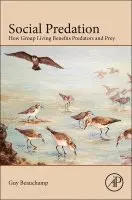
The classic literature on predation dealt almost exclusively with solitary predators and their prey. Going back to Lotka-Volterra and optimal foraging theory, the theory about predation, including predator-prey population dynamics, was developed for solitary species. Various consequences of sociality for predators have been considered only recently. Similarly, while it was long recognized that prey species can benefit from living in groups, research on the adaptive value of sociality for prey species mostly emerged in the 1970s. The main theme of this book is the various ways that predators and prey may benefit from living in groups. The first part focusses on predators and explores how group membership influences predation success rate, from searching to subduing prey. The second part focusses on how prey in groups can detect and escape predators. The final section explores group size and composition and how individuals respond over evolutionary times to the challenges posed by chasing or being chased by animals in groups. This book will help the reader understand current issues in social predation theory and provide a synthesis of the literature across a broad range of animal taxa.
Includes the whole taxonomical range rather than limiting it to a select few Features in-depth analysis that allows a better understanding of many subtleties surrounding the issues related to social predation Presents both models and empirical results while covering the extensive predator and prey literature Contains extensive illustrations and separate boxes that cover more technical features, i.e., to present models and review results458 kr
Skickas inom 7-10 vardagar
Animal Vigilance builds on the author's previous publication with Academic Press (Social Predation: How Group Living Benefits Predators and Prey) by developing several other themes including the development and mechanisms underlying vigilance, as well as developing more fully the evolution and function of vigilance.
Animal vigilance has been at the forefront of research on animal behavior for many years, but no comprehensive review of this topic has existed. Students of animal behavior have focused on many aspects of animal vigilance, from models of its adaptive value to empirical research in the laboratory and in the field. The vast literature on vigilance is widely dispersed with often little contact between models and empirical work and between researchers focusing on different taxa such as birds and mammals. Animal Vigilance fills this gap in the available material.
Tackles vigilance from all angles, theoretical and empirical, while including the broadest range of species to underscore unifying themes Discusses several newer developments in the area, such as vigilance copying and effect of food density Highlights recent challenges to assumptions of traditional models of vigilance, such as the assumption that vigilance is independent among group members, which is reviewed during discussion of synchronization and coordination of vigilance in a group Written by a top expert in animal vigilanceMixed-Species Groups of Animals
Behavior, Community Structure, and Conservation
592 kr
Skickas inom 7-10 vardagar
Mixed-Species Groups of Animals: Behavior, Community Structure, and Conservation presents a comprehensive discussion on the mixed-species groups of animals, a spectacular and accessible example of the complexity of species interactions.
They are found in a wide range of animals, including invertebrates, fish, mammals and birds, and in different habitats, both terrestrial and aquatic, throughout the world.
While there are more than 500 articles on this subject scattered in separate categories of journals, there has yet to be a general, cross-taxa book-length introduction to this subject that summarizes the behavior and community structure of these groups.
The authors first survey the diversity of spatial associations among animals and then concentrate on moving groups. They review the major classes of theories that have been developed to explain their presence, particularly in how groups increase foraging efficiency and decrease predation. Finally, they explore the intricacies of species interactions, such as communication, that explain species roles in groups and discuss what implications these social systems have for conservation.
Functions as a single resource for readers inside and outside of academia on mixed-species groups, serving as a foundation for future research in this field Begins with an empirical summary of mixed-species distribution and reviews how the theories explaining their adaptive benefits are supported by the evidence Includes many aspects of mixed-group behavior (e.g. foraging, communication, collective decision-making, dominance, social roles of species and leadership, relationship to conservation) that were not previously or easily accessible