Gwyneira Isaac - Böcker
Visar alla böcker från författaren Gwyneira Isaac. Handla med fri frakt och snabb leverans.
2 produkter
2 produkter
385 kr
Skickas inom 7-10 vardagar
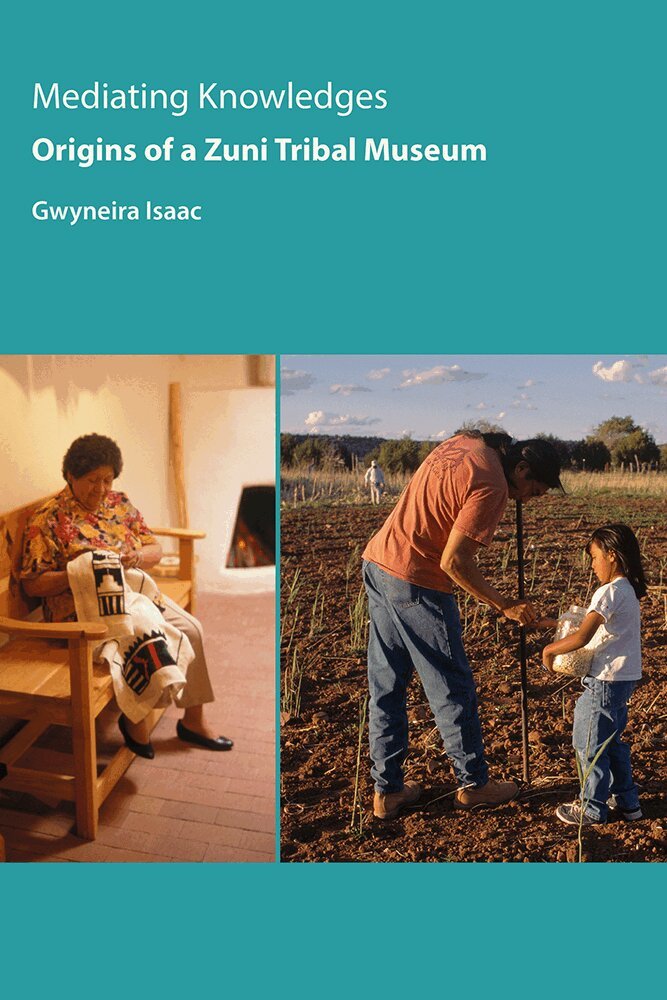
This book tells the story of the search by the Zuni people for a culturally relevant public institution to help them maintain their heritage for future generations. Using a theoretical perspective grounded in knowledge systems, it examines how Zunis developed the A:shiwi A:wan Museum and Heritage Center to mediate between Zuni and Anglo-American values of history and culture. By using in-depth interviews, previously inaccessible archival records, and extensive ethnographic observations, Gwyneira Isaac provides firsthand accounts of the Zunis and non-Zunis involved in the development of the museum. These personal narratives provide insight into the diversity of perspectives found within the community, as well as tracing the ongoing negotiation of the relationship between Zuni and Anglo-American cultures. In particular, Isaac examines how Zunis, who transmit knowledge about their history through oral tradition and initiation into religious societies, must navigate the challenge of utilizing Anglo-American museum practices, which privilege technology that aids the circulation of knowledge beyond its original narrators. This book provides a much-needed contemporary ethnography of a Pueblo community recognized for its restrictive approach to outside observers. The complex interactions between Zunis and anthropologists explored here, however, reveal not only Puebloan but also Anglo-American attitudes toward secrecy and the control of knowledge.
2 103 kr
Skickas inom 10-15 vardagar
This experimental volume explores how intersections between different knowledge systems affect identity formation through names and naming, bringing together anthropologists, community scholars, artists, linguists, scientists, poets, specialists in science and technology, as well as legal and Indigenous studies. This interdisciplinary approach values naming practices as creative and political acts that generate and continuously shape our world(s), as well as our relations with others—both human and non-human. By embracing diverse ways of knowing and creative modes through which naming, re-naming, or un-naming unfolds via language, art, and place-making, the authors and artists bring to the forefront implicit and explicit conflicts over the right to self-definition, as well as impositions and contestations of dominant narratives via naming. The goal is to inspire meaningful exchanges between essays, art, poetry, and ethnographic fiction, with each perspective and imaginative methodology treated as equally robust analytic tools. Political entities and top-down structures often use processes of naming to assert power. While recognizing these mechanisms of oppression are important, by bringing openness toward other positionalities regarding the complex problematics of naming and being in the world, this volume invites a wide range of scholars and practitioners to also engage with and consider the empowering and liberatory potential of names and naming in their own work.The Open Access version of this book, available at http://www.taylorfrancis.com, has been made available under a Creative Commons Attribution-Non Commercial-No Derivatives (CC BY-NC-ND) 4.0 license.