H. J. Biersack – Författare
Visar alla böcker från författaren H. J. Biersack. Handla med fri frakt och snabb leverans.
8 produkter
8 produkter
1 202 kr
Skickas inom 10-15 vardagar
Amphetamines and pH-shift Agents for Brain Imaging
Basic Research and Clinical Results
Inbunden, Engelska, 1986
1 574 kr
Skickas inom 7-10 vardagar
No detailed description available for "Amphetamines and pH-shift Agents for Brain Imaging".
1 996 kr
Skickas inom 7-10 vardagar
No detailed description available for "Brain SPECT Imaging in Psychiatry".
1 637 kr
Skickas inom 10-15 vardagar
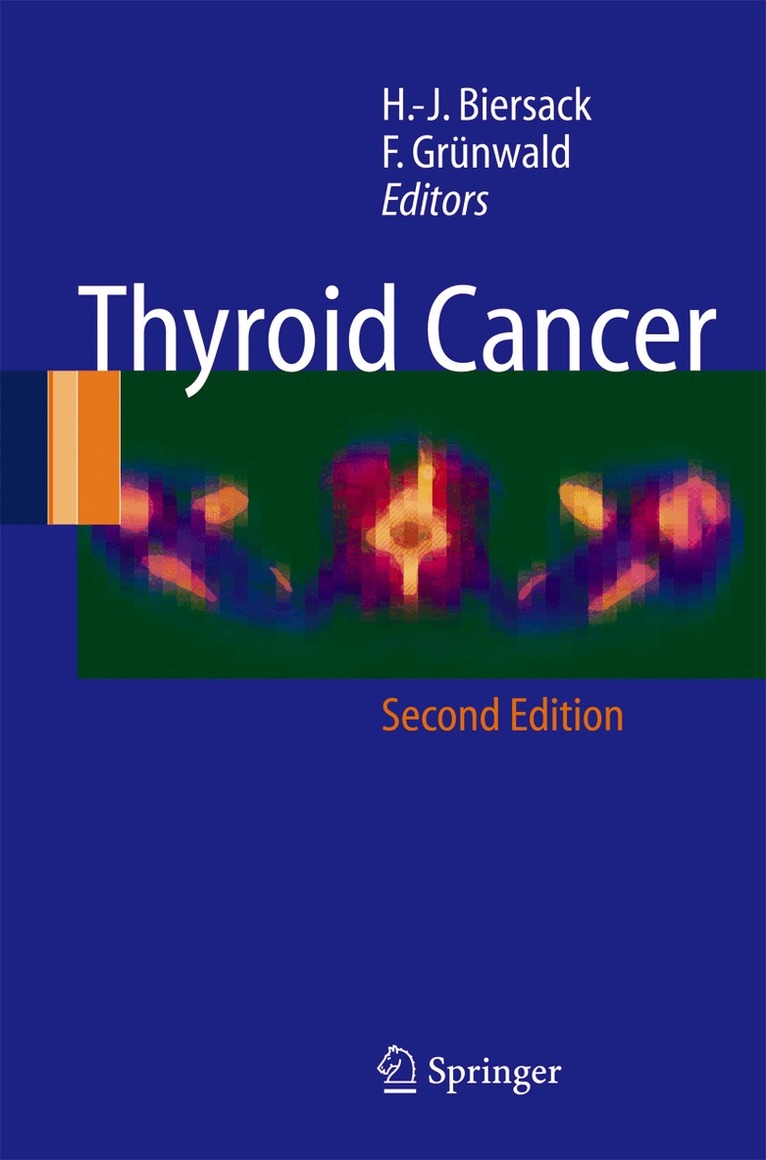
Thyroid Cancer describes all current diagnostic techniques, including FDG-PET and MRI. In recent years these modalities have documented hitherto hidden radioiodine-negative metastases, thus improving surgical therapy. The whole gamut of treatment, including surgery, radioiodine therapy, percutaneous radiation therapy and medical management, is covered. In some 10 per cent of differentiated thyroid cancers, the well-known treatment tools of surgery and radioiodine therapy are not sufficient. New treatment modalities such as high-dose radioiodine therapy, redifferentiation therapy with retinoic acid and recombinant TSH are therefore highlighted. In a special section devoted to medullary thyroid cancer, new imaging procedures such as octreotide scintigraphy are described. The second edition includes two new chapters, on I-124 PET and dosimetry. Other chapters have been modified particularly in view of the new UICC classification, with special regard to the definition of T1 tumors.
514 kr
Skickas inom 10-15 vardagar
1 202 kr
Skickas inom 10-15 vardagar
One of the main reasons for publishing this second edition of “T- roid Cancer” is the fact that the first edition has sold out. Furth- more, during the 4 years following the publication of the first edition in 2001, some progress, mainly in the basic sciences (molecular biology), has been made. The most prominent change in the clinical sciences has been the new classification of thyroid cancer, especially with relation to T1–T3 tumors. Now, tumors with a diameter of up to 2 cm are still classified T1. This new UICC classification (6th edition) follows the classification of the American Society of Pathology. These changes require a modification of the old guidelines. According to the Hedinger classification (1988) tumors with a diameter below 1 cm were classified as “papillary microcarcinoma of the thyroid”. Only in those tumors was total or nearly total thyroidectomy deemed unn- essary and I-131 therapy not a prerequisite for treatment. The majority of the chapters has been updated including references to many new publications. Two new chapters, on I-124 PET and - simetry, have been added. We strongly feel that this second edition of “Thyroid Cancer” is again a state-of-the-art overview of the diagnosis and treatment of thyroid cancer. Bonn, Frankfurt am Main H. -J. Biersack, F. Grünwald Preface to the First Edition Thyroid cancer was first described at the end of the eighteenth c- tury.
550 kr
Skickas inom 10-15 vardagar
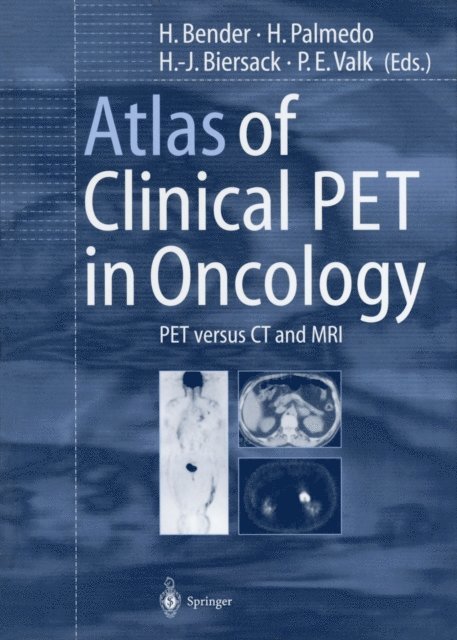
Clinical studies during the past 10 years have shown that PET is more sensitive than CT and MRI for the detection of many tumors. In many cases, however, for example in head and neck tumors, combination with radiological procedures is necessary. It may be speculated that PET should be the first study in a malignant tumor when metastatic spread is suspected. MRI and CT may then be restricted to those body areas which evince sites of increased glucose metabolism. Thus, a combination of metabolic and morphologic procedures will enhance tumor detection and change the therapeutic strategy. In this light, an atlas including PET, CT, MRI, and histology data seems desirable to combine metabolic and morphologic imaging. This book presents an overview of the available data which should be of great interest not only for specialists in radiology and nuclear medicine, but also for oncologists.
1 094 kr
Skickas inom 10-15 vardagar
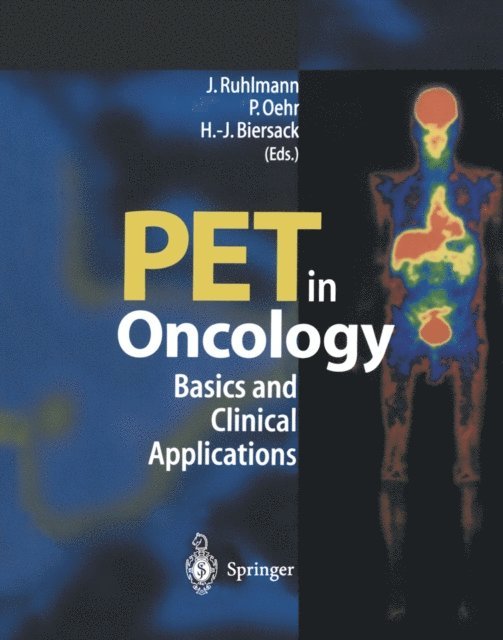
PET in Oncology describes the principles of positron emission tomography and is a useful resource for incorporating the technique in clinical practice. In clear and straightforward fashion, this book offers instructive information and overviews of the physical, biochemical and clinical principles of PET scanning and its routine clinical use. It serves as a reference work for specialists in nuclear medicine and for oncologists, and also provides students and physicians in other medical specialties with a general introduction to the effective integration of this modern technique in routine clinical diagnostics. Above all, this book illustrates the importance of PET in comparison with other imaging techniques.