H. Tolle – författare
Visar alla böcker från författaren H. Tolle. Handla med fri frakt och snabb leverans.
5 produkter
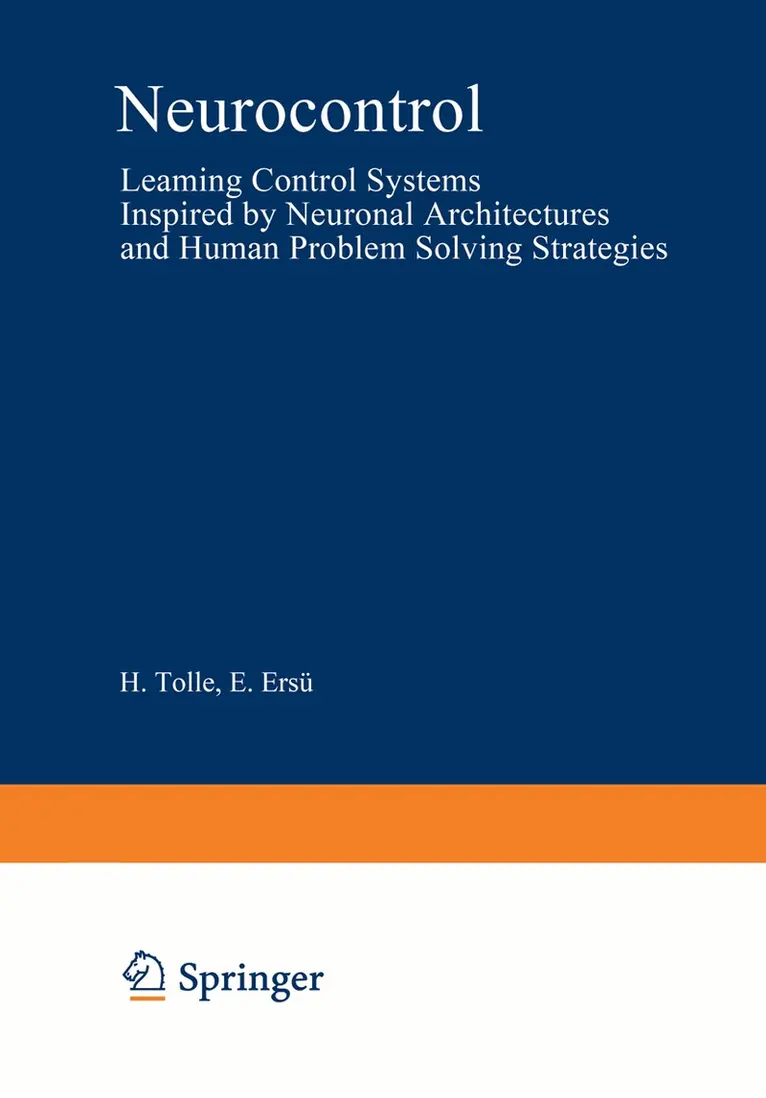
Neurocontrol
Learning Control Systems Inspired by Neuronal Architectures and Human Problem Solving Strategies
Häftad, 1992
550 kr
Lägg i varukorg
Since heavily non-linear and/or very complex processes still pose a problem for automatic control, they can often be handled easily by human operators. The book describes re- sults from ten years of research on learning control loops, which imitate these abilities. After discussing the diffe- …
Optimierungsverfahren
Für Variationsaufgaben mit gewöhnlichen Differentialgleichungen als Nebenbedingungen
Av H. Tolle
E-bok, 2013
587 kr
Lägg i varukorg
Optimierungsverfahren
Für Variationsaufgaben mit gewöhnlichen Differentialgleichungen als Nebenbedingungen
Av H. Tolle
Häftad, 2012
565 kr
Lägg i varukorg
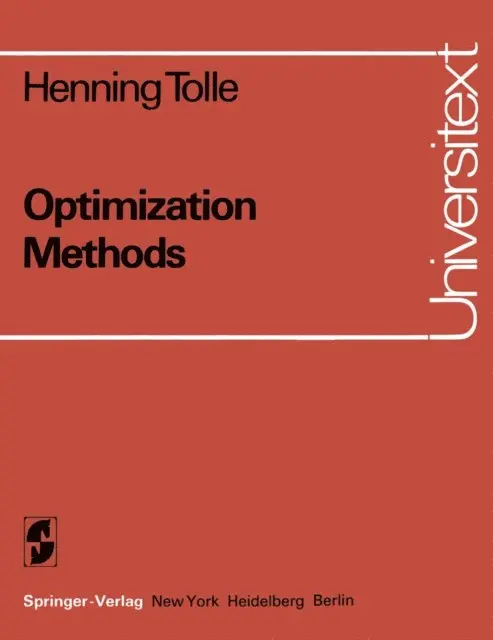
Optimization Methods
Av H. Tolle
E-bok, 2012
1174 kr
Lägg i varukorg
Variational problems which are interesting from physical and technical viewpoints are often supplemented with ordinary differential equations as constraints, e. g. , in the form of Newton''s equations of motion. Since analytical solutions for such problems are possible only in exceptional cases and …
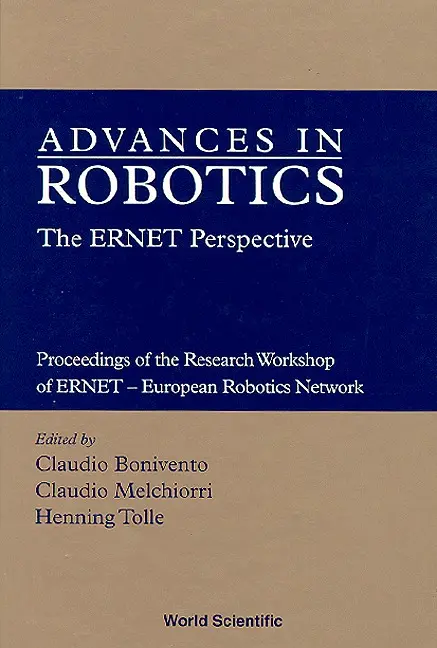
ADVANCES IN ROBOTICS: THE ERNET PERSPECTIVE - PROCEEDINGS OF THE RESEARCH WORKSHOP OF ERNET - EUROPEAN ROBOTICS NETWORK
Av HENNIG MELCHIORRI CLAUDIO BONIVENTO, C Bonivento m. fl.
Inbunden, 1996
1788 kr
Tillfälligt slut
This volume contains the research papers for the final Workshop of European Robotics Network (ERNET). ERNET is a research network created since 1993 in the framework of the Human and Capital Mobility Programme and supported by the Commission of European Communities with the focus on methodologies …