H. Tong – författare
Visar alla böcker från författaren H. Tong. Handla med fri frakt och snabb leverans.
4 produkter
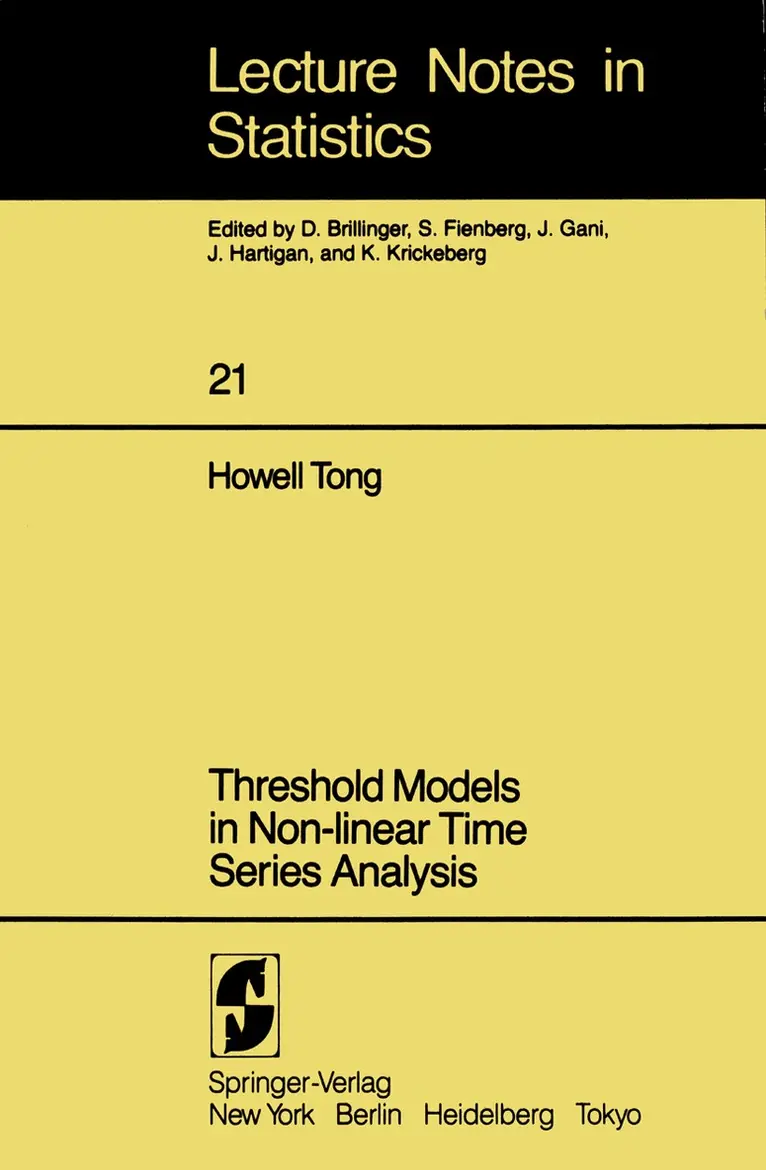
Threshold Models in Non-linear Time Series Analysis
Av H. Tong
Häftad, 1983
1093 kr
Lägg i varukorg
In the last two years or so, I was most fortunate in being given opportunities of lecturing on a new methodology to a variety of audiences in Britain, China, Finland, France and Spain. Despite my almost Confucian attitude of preferring talking (i.e. a transient record) to writing (i.e. a permanent …
Threshold Models in Non-linear Time Series Analysis
Av H. Tong
E-bok, 2012
1459 kr
Lägg i varukorg
In the last two years or so, I was most fortunate in being given opportunities of lecturing on a new methodology to a variety of audiences in Britain, China, Finland, France and Spain. Despite my almost Confucian attitude of preferring talking (i.e. a transient record) to writing (i.e. a permanent …
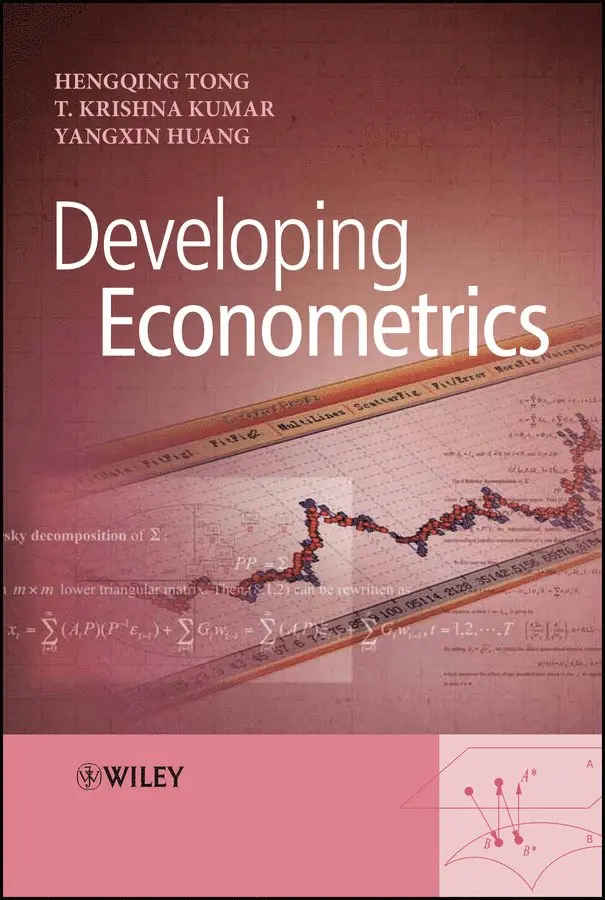
Developing Econometrics Statistical Theories and Methods with Applications to Economics and Business
Av H Tong
2011
1197 kr
Tillfälligt slut
Statistical Theories and Methods with Applications to Economics and Business highlights recent advances in statistical theory and methods that benefit econometric practice. It deals with exploratory data analysis, a prerequisite to statistical modelling and part of data mining. It provides recently …
CHAOS AND FORECASTING - PROCEEDINGS OF THE ROYAL SOCIETY DISCUSSION MEETING
Av H TONG, Howell Tong
Häftad, 1995
547 kr
Tillfälligt slut
It is now generally recognised that very simple dynamical systems can produce apparently random behaviour. In the last couple of years, attention has turned to focus on the flip side of this coin: random-looking time series (or random-looking patterns in space) may indeed be the result of very …