Hal M. Friedman – författare
Visar alla böcker från författaren Hal M. Friedman. Handla med fri frakt och snabb leverans.
7 produkter
Creating an American Lake
United States Imperialism and Strategic Security in the Pacific Basin, 1945-1947
E-bok, 2000
1204 kr
Lägg i varukorg
Many historians of U.S. foreign relations think of the post-World War II period as a time when the United States, as an anti-colonial power, advocated collective security through the United Nations and denounced territorial aggrandizement. Yet between 1945 and 1947, the United States violated its …
Creating an American Lake
United States Imperialism and Strategic Security in the Pacific Basin, 1945-1947
Inbunden, 2000
1098 kr
Lägg i varukorg
Many historians of U.S. foreign relations think of the post-World War II period as a time when the United States, as an anti-colonial power, advocated collective security through the United Nations and denounced territorial aggrandizement. Yet between 1945 and 1947, the United States violated its …
War in the American Pacific and East Asia, 1941-1972
E-bok, 2019
472 kr
Lägg i varukorg
Before 1940, the Japanese empire stood as the greatest single threat to the American presence in the Pacific and East Asia. To a lesser degree, the formerly hegemonic colonial powers of Britain, France, and the Netherlands still controlled portions of the region. At the same time, subjugated …
War in the American Pacific and East Asia, 1941-1972
E-bok, 2019
472 kr
Lägg i varukorg
Before 1940, the Japanese empire stood as the greatest single threat to the American presence in the Pacific and East Asia. To a lesser degree, the formerly hegemonic colonial powers of Britain, France, and the Netherlands still controlled portions of the region. At the same time, subjugated …
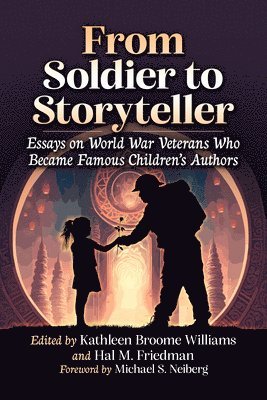
From Soldier to Storyteller
Essays on World War Veterans Who Became Famous Children's Authors
Av Kathleen Broome Williams, Hal M. Friedman
Häftad, 2024
672 kr
Lägg i varukorg
Many of the best-known and most popular stories that children grew up with in the 20th century and into the 21st were written by veterans of World War I and World War II. These include works by such writers as A. A. Milne, C. S. Lewis, Roald Dahl, and Ian Fleming, among others. Although they had …
Arguing Over the American Lake
Bureaucracy and Rivalry in the U.S. Pacific, 1945-1947
Inbunden, 2009
790 kr
Lägg i varukorg
Between 1945 and 1947, the United States sought an imperial solution to its security problems in the Pacific Basin. Faced with fears of a future Pearl Harbor-style attack by a potentially resurgent Japan, and facing an even more realistic confrontation with the Soviet Union, American policymakers, …
Governing the American Lake
The U.S. Defense and Administration of the Pacific Basin, 1945-1947
Inbunden, 2007
1899 kr
Tillfälligt slut
In this carefully crafted and meticulously researched book, Hal M. Friedman contends that US fears after World War II led the nation into military domination of the Pacific Ocean, turning it into an "American lake" in the hope of keeping the mainland safe from attack. According to Friedman, with …