Kathleen Broome Williams - Böcker
Visar alla böcker från författaren Kathleen Broome Williams. Handla med fri frakt och snabb leverans.
3 produkter
3 produkter
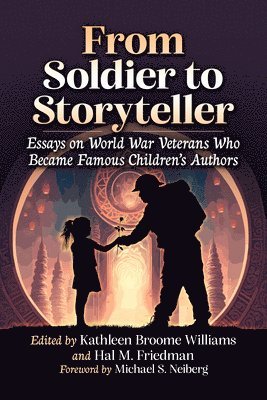
From Soldier to Storyteller
Essays on World War Veterans Who Became Famous Children's Authors
Häftad, Engelska, 2024
658 kr
Skickas inom 5-8 vardagar
Many of the best-known and most popular stories that children grew up with in the 20th century and into the 21st were written by veterans of World War I and World War II. These include works by such writers as A. A. Milne, C. S. Lewis, Roald Dahl, and Ian Fleming, among others. Although they had experienced war, most of the veterans did not overtly write about it. The seeming paradox of warriors who went through searing combat and then wrote books for children has not been addressed collectively before now. This book explores what motivated these veterans to write for children, what they wrote, and how their writing was influenced by the wars they lived through. It examines how their combat experience can be traced in their writing, however subtly, whether it was stories about a bear and his piglet companion, a World War I flying ace, or a flying car. Their reactions to war, as reflected in their writing, yield important lessons about the complicated legacy of the 20th century's two great conflicts and their long-lasting impact--through children--on society at large.
327 kr
Skickas inom 3-6 vardagar
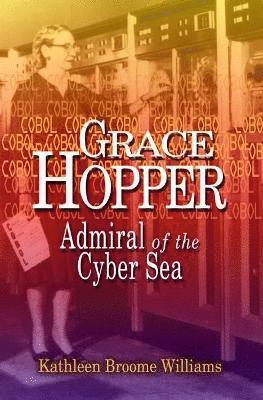
When Grace Hopper retired as a rear admiral from the U.S. Navy in 1986, she was the first woman restricted line officer to reach flag rank and, at the age of seventy-nine, the oldest serving officer in the Navy. A mathematician by training who became a computer scientist, the eccentric and outspoken Hopper helped propel the Navy into the computer age. She also was a superb publicist for the Navy, appearing frequently on radio and television and quoted regularly in newspapers and magazines. Yet in spite of all the attention she received, until now ""Amazing Grace,"" as she was called, has never been the subject of a full biography.Kathleen Broome Williams looks at Hopper's entire naval career, from the time she joined the WAVES and was sent in 1943 to work on the Mark I computer at Harvard, where she became one of the country's first computer programmers. Thanks to this early Navy introduction to computing, the author explains, Hopper had a distinguished civilian career in commercial computing after the war, gaining fame for her part in the creation of COBOL.The admiral's Navy days were far from over, however, and Williams tells how Hopper-already past retirement age-was recalled to active duty at the Pentagon in 1967 to standardize computer programming languages for Navy computers. Her temporary appointment lasted for nineteen years while she standardized COBOL for the entire department of defense. Based on extensive interviews with colleagues and family and on archival material never before examined, this biography not only illuminates Hopper's pioneering accomplishments in a field that came to be dominated by men, but provides a fascinating overview of computing from its beginnings in World War II to the late 1980s.
336 kr
Tillfälligt slut
Scottish artist George Plante did not enter World War II as an artist but as a volunteer radio operator in the British merchant fleet. There he spent more than two years engaged in the long-running and fierce Battle of the Atlantic, splitting his time between Britain and the United States. But while dodging U-boats and battling the elements, he also painted. Every time his tanker docked in New York he pursued contacts in the worlds of art and advertising. Even in the midst of a devastating conflict, he never lost sight of his devotion to his craft. Very quickly, he caught the attention of agents of the British Ministry of Information (MOI) and of the War Artists Advisory Committee (WAAC). They recruited him to use his paintings of the war at sea for what was seen as a vital effort to rally Americans for the war effort in Britain. In March 1943 Plante's nautical days ended abruptly after his tanker was torpedoed and sank. Surviving and returning to Britain, he was reassigned to work closely with the Americans in Egypt and Italy, this time to use his art as overt propaganda, both to demonize the Nazi and Fascist enemy and to arouse opposition to them among occupied peoples under their control. Plante's unusual wartime career spanned three continents, moving from the North Atlantic to North Africa and the Mediterranean. Both at sea and on land, Plante was far from the policy-making, strategic, and even operational levels of the war. Rather, the decisions he was called upon to make dealt with color and style and layout. Seeing the war through George Plante's vivid and articulate letters and memoirs, and through his art, adds a granular, ground-level view that expands and enriches the historical record.