Hamid R. Tizhoosh – författare
Visar alla böcker från författaren Hamid R. Tizhoosh. Handla med fri frakt och snabb leverans.
4 produkter
Fuzzy-Bildverarbeitung
Einführung in Theorie und Praxis
Häftad, 1997
516 kr
Lägg i varukorg
In den letzten Jahren hat die Fuzzy-Logik auch im Bereich der Mustererkennung Einzug gehalten. Das Buch befaßt sich mit dem Einsatz von Fuzzy-Methoden in der digitalen Bildverarbeitung. Es führt Schritt für Schritt in die Theorie und Praxis der Fuzzy-Bildverarbeitung ein und stellt neue Konzepte, …
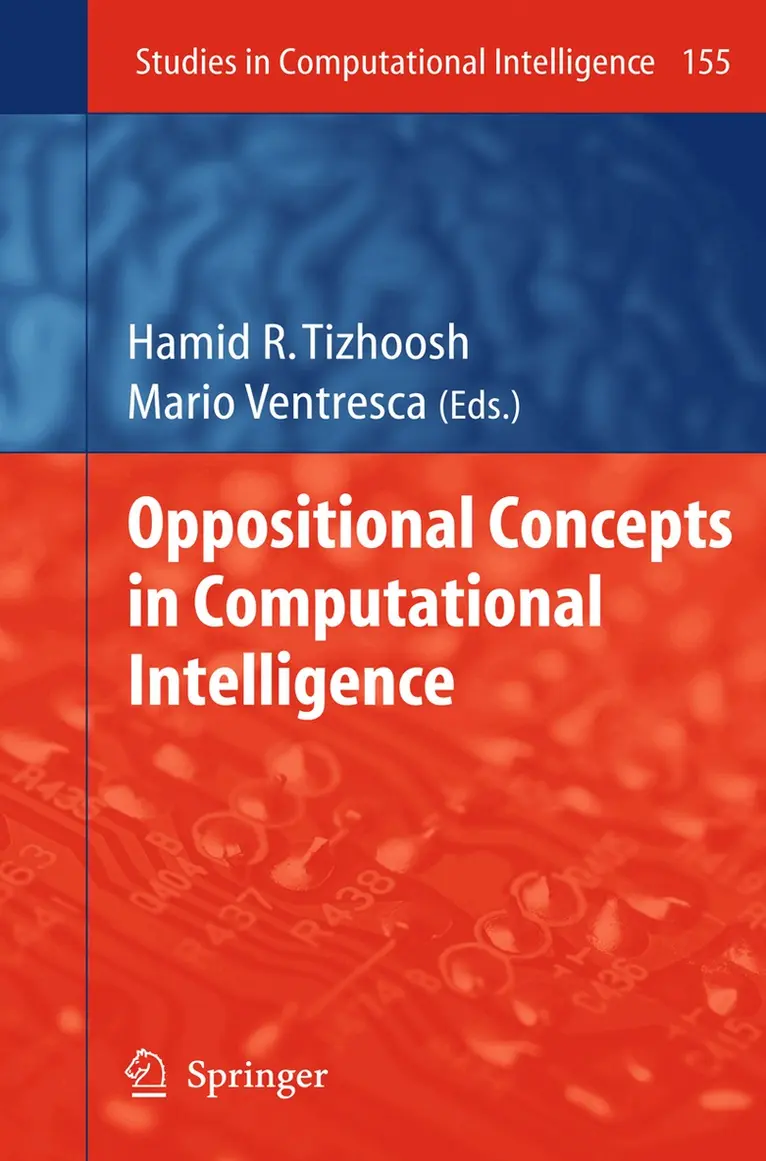
Oppositional Concepts in Computational Intelligence
Av M. Ventresca, Hamid R. Tizhoosh
E-bok, 2008
2384 kr
Lägg i varukorg
“Theoppositeofacorrectstatementisafalsestatement.Buttheopposite of a profound truth may well be another profound truth.” – Niels Bohr This volume is motivated in part by the observation that opposites permeate everything around us, in some form or another. Its study has attracted the attention of …
Oppositional Concepts in Computational Intelligence
Av Hamid R. Tizhoosh, M. Ventresca
Häftad, 2010
1858 kr
Lägg i varukorg
“Theoppositeofacorrectstatementisafalsestatement.Buttheopposite of a profound truth may well be another profound truth.” – Niels Bohr This volume is motivated in part by the observation that opposites permeate everything around us, in some form or another. Its study has attracted the attention of …
Fuzzy-Bildverarbeitung
Einführung in Theorie und Praxis
E-bok, 2013
367 kr
Lägg i varukorg
In den letzten Jahren hat die Fuzzy-Logik auch im Bereich der Mustererkennung Einzug gehalten. Das Buch befaßt sich mit dem Einsatz von Fuzzy-Methoden in der digitalen Bildverarbeitung. Es führt Schritt für Schritt in die Theorie und Praxis der Fuzzy-Bildverarbeitung ein und stellt neue Konzepte, …