M. Ventresca - Böcker
Visar alla böcker från författaren M. Ventresca. Handla med fri frakt och snabb leverans.
2 produkter
2 produkter
Del 19 - Research in the Sociology of Organizations
Social Structure and Organizations Revisited
Inbunden, Engelska, 2002
1 348 kr
Skickas inom 7-10 vardagar
This work brings together empirical research and thematic commentaries which chart out research directions for politically-inflected studies of organizational and institutional change. The chapters give practical voice to the theoretical questions and research designs of an emerging agenda for organization theory that engages questions about broader social structure and organizations with theory in cultural analysis, stratification, and entrepreneurship. Cases include historical studies of the evolution of the fire insurance industry in the 19th century, studies of the organizational vitality of contemporary evangelical Protestantism, the emergence of gay and lesbian identity organizations, challenges in the institutional structuring of the mutual fund industry the post-Soviet Russia, stratification and status organizing processes in entrepreneurial organizations, studies of social movements and organizations, both external to and inside of organizations.
Del 155 - Studies in Computational Intelligence
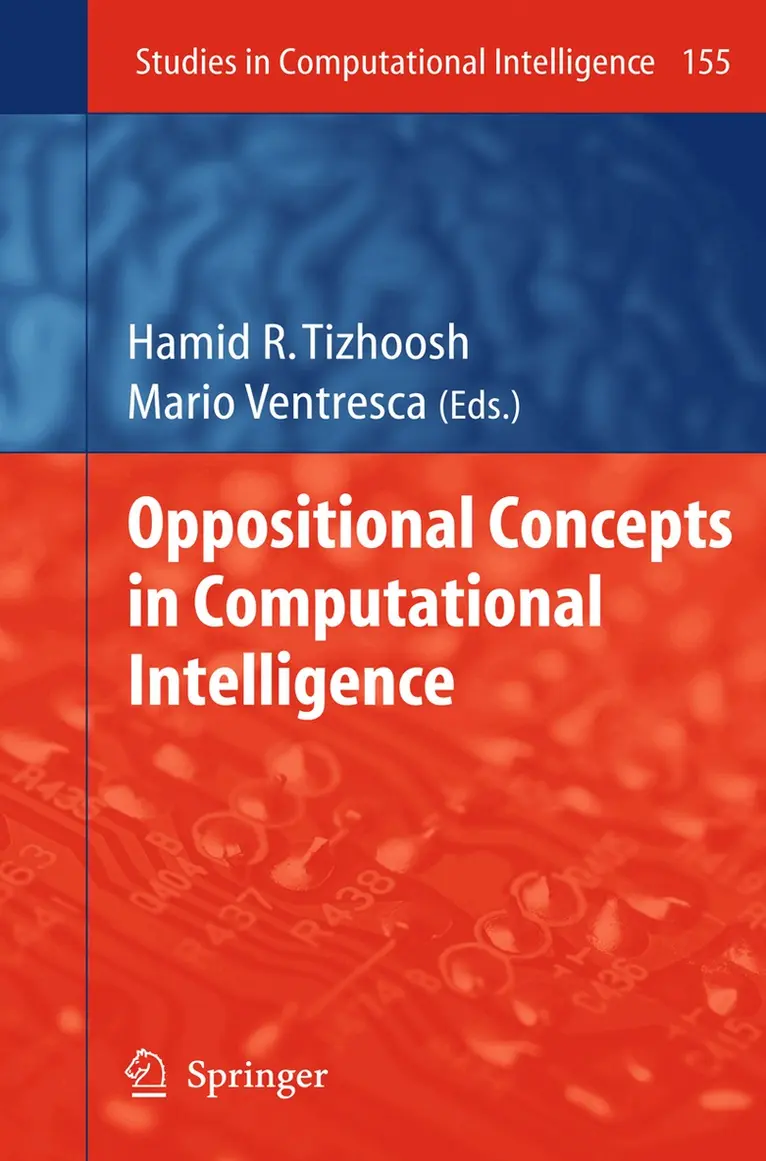
Oppositional Concepts in Computational Intelligence
Häftad, Engelska, 2010
1 787 kr
Skickas inom 10-15 vardagar
“Theoppositeofacorrectstatementisafalsestatement.Buttheopposite of a profound truth may well be another profound truth.” – Niels Bohr This volume is motivated in part by the observation that opposites permeate everything around us, in some form or another. Its study has attracted the attention of countless minds for at least 2500 years. However, due to the lack of an accepted mathematical formalism for opposition it has not been explicitly studiedtoanygreatlengthin?eldsoutsideofphilosophyandlogic.This,despite the fact that we observe opposition everywhere in nature, our minds seem to divide the world into entities and opposite entities; indeed we use opposition everyday. We have become so accustomed to opposition that its existence is accepted, not usually questioned and its importance is constantly overlooked. On one hand, this volume is a ?st attempt to bring together researchers who are inquiring into the complementary nature of systems and processes and, on the other hand, provide some elementary components for a framework to establish a formalism for opposition-based computing. From a computational intelligence perspective, many successful opposition-based concepts have been in existence for a long time. It is not our intention to recast these existing methods, rather to elucidate that, while diverse, they all share the commonality of opposition - in one form or another, either implicitly or explicitly. To this end, we have attempted to provide rough guidelines to understand what makes concepts “oppositional”.