Hamish Williams - Böcker
Visar alla böcker från författaren Hamish Williams. Handla med fri frakt och snabb leverans.
7 produkter
7 produkter
1 237 kr
Skickas inom 10-15 vardagar
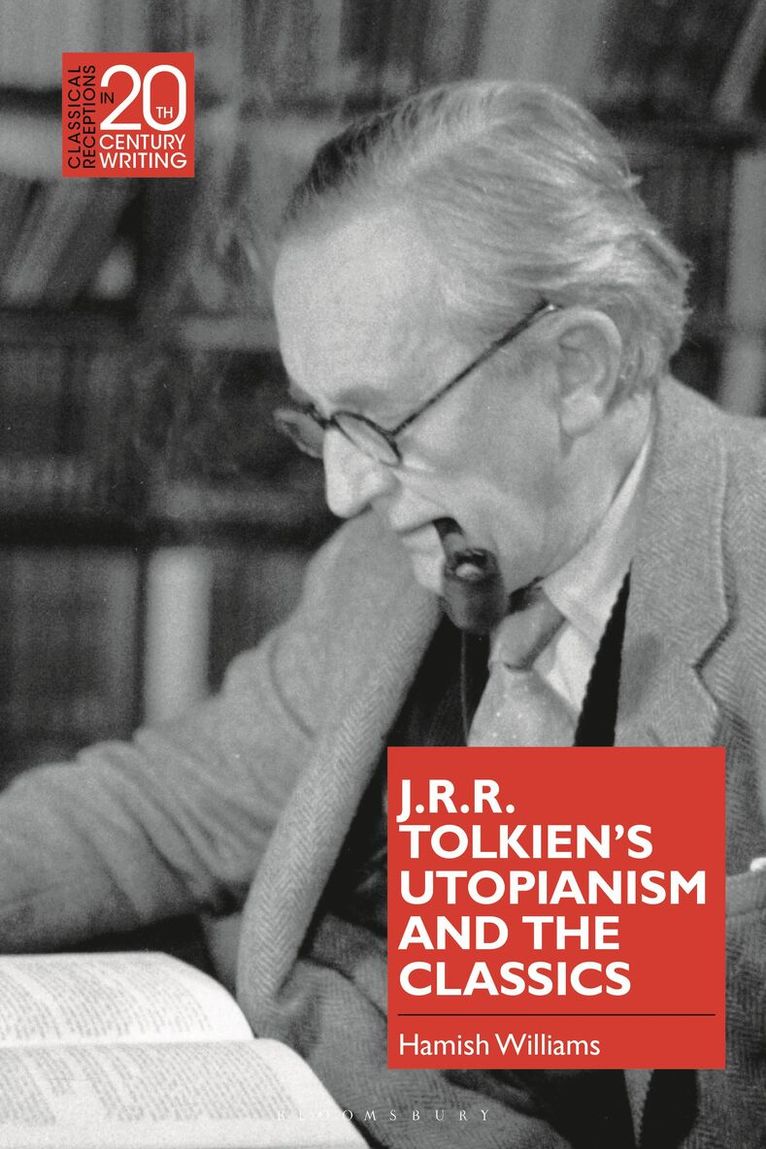
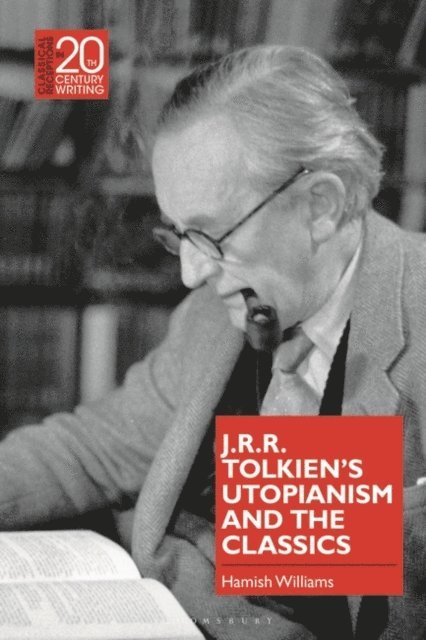
This book opens up new perspectives on the English fantasy writer J.R.R. Tolkien, arguing that he was an influential thinker of utopianism in 20th-century fiction and that his scrutiny of utopias can be assessed through his dialogue with antiquity. Tolkien’s engagement with the ancient world often reflects an interest in retrotopianism: his fictional places – cities, forests, homes – draw on a rich (post-)classical narrative imagination of similar spaces. Importantly for Tolkien, such narratives entail ‘eutopian’ thought experiments: the decline and fall of distinctly ‘classical’ communities provide an utopian blueprint for future political restorations; the home as oikos becomes a space where an ideal ethical reciprocity between host and guest can be sought; the ‘ancient forest’ is an ambiguous, unsettling site where characters can experience necessary forms of awakening. From these perspectives, tokens of Platonic moderation, Augustan restoration, Homeric xenophilia, and the Ovidian material sublime are evident in Tolkien’s writing. Likewise, his retrotopianism also always entails a rewriting of ancient narratives in post-classical and modern terms. This study then explores how Tolkien’s use of the classical past can help us to align classical and utopian studies, and thus to reflect on the ranges and limits of utopianism in classical literature and thought.
469 kr
Skickas inom 10-15 vardagar
This book opens up new perspectives on the English fantasy writer J.R.R. Tolkien, arguing that he was an influential thinker of utopianism in 20th-century fiction and that his scrutiny of utopias can be assessed through his dialogue with antiquity. Tolkien’s engagement with the ancient world often reflects an interest in retrotopianism: his fictional places – cities, forests, homes – draw on a rich (post-)classical narrative imagination of similar spaces. Importantly for Tolkien, such narratives entail ‘eutopian’ thought experiments: the decline and fall of distinctly ‘classical’ communities provide an utopian blueprint for future political restorations; the home as oikos becomes a space where an ideal ethical reciprocity between host and guest can be sought; the ‘ancient forest’ is an ambiguous, unsettling site where characters can experience necessary forms of awakening. From these perspectives, tokens of Platonic moderation, Augustan restoration, Homeric xenophilia, and the Ovidian material sublime are evident in Tolkien’s writing. Likewise, his retrotopianism also always entails a rewriting of ancient narratives in post-classical and modern terms. This study then explores how Tolkien’s use of the classical past can help us to align classical and utopian studies, and thus to reflect on the ranges and limits of utopianism in classical literature and thought.
Ancient Sea
The Utopian and Catastrophic in Classical Narratives and their Reception
Inbunden, Engelska, 2023
1 865 kr
Skickas inom 7-10 vardagar
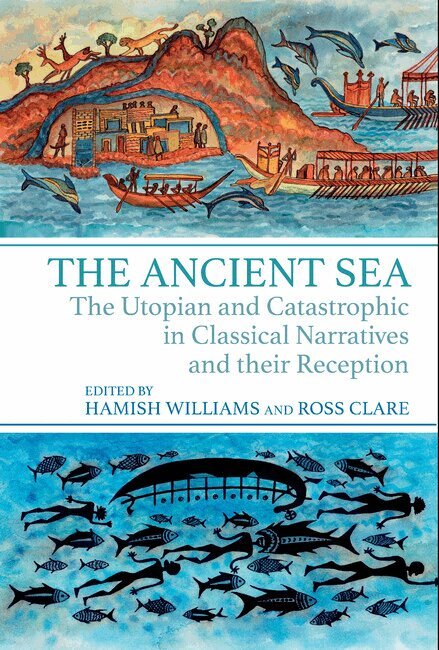
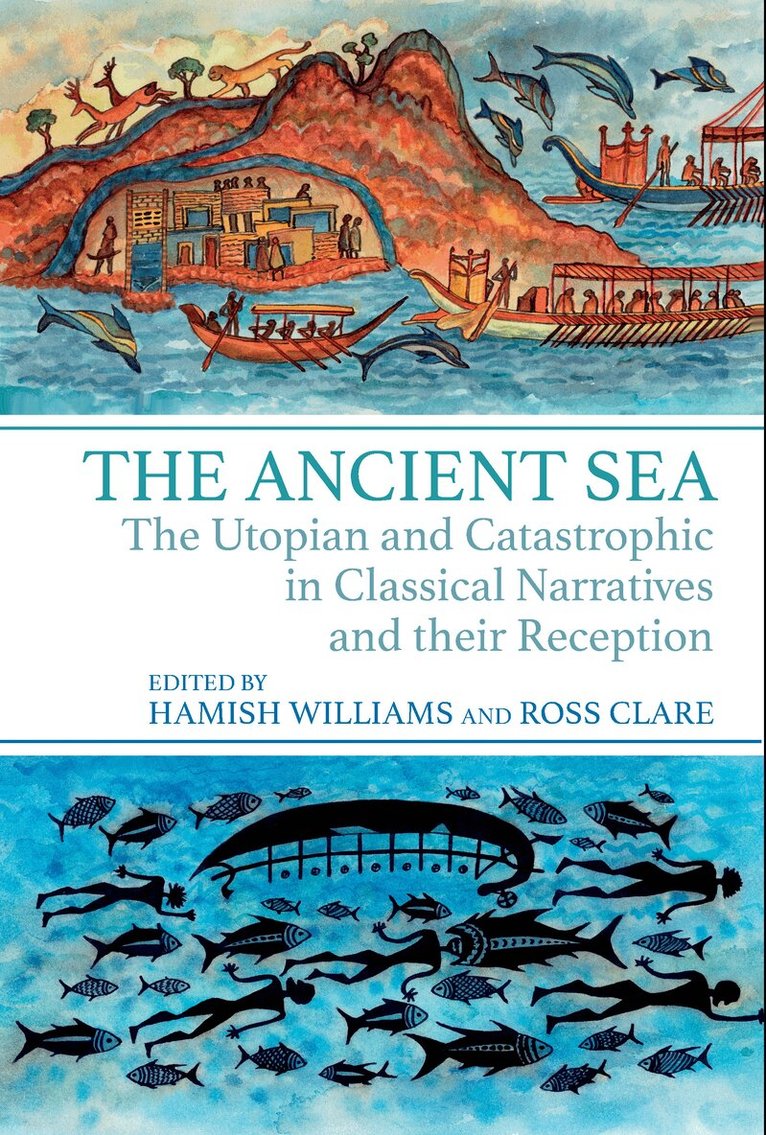
In the ancient Mediterranean world, the sea was an essential domain for trade, cultural exchange, communication, exploration, and colonisation. In tandem with the lived reality of this maritime space, a parallel experience of the sea emerged in narrative representations from ancient Greece and Rome, of the sea as a cultural imaginary. This imaginary seems often to oscillate between two extremes: the utopian and the catastrophic; such representations can be found in narratives from ancient history, philosophy, society, and literature, as well as in their post-classical receptions.Utopia can be found in some imaginary island paradise far away and across the distant sea; the sea can hold an unknown, mysterious, divine wealth below its surface; and the sea itself as a powerful watery body can hold a liberating potential. The utopian quality of the sea and seafaring can become a powerful metaphor for articulating political notions of the ideal state or for expressing an individual’s sense of hope and subjectivity. Yet the catastrophic sea balances any perfective imaginings: the sea threatens coastal inhabitants with floods, tsunamis, and earthquakes and sailors with storms and the accompanying monsters. From symbolic perspectives, the catastrophic sea represents violence, instability, the savage, and even cosmological chaos.The twelve papers in this volume explore the themes of utopia and catastrophe in the liminal environment of the sea, through the lens of history, philosophy, literature and classical reception.Contributors: Manuel Álvarez-Martí-Aguilar, Vilius Bartninkas, Aaron L. Beek, Ross Clare, Gabriele Cornelli, Isaia Crosson, Ryan Denson, Rhiannon Easterbrook, Emilia Mataix Ferrándiz, Georgia L. Irby, Simona Martorana, Guy Middleton, Hamish Williams.
Ancient Sea
The Utopian and Catastrophic in Classical Narratives and their Reception
Häftad, Engelska, 2024
582 kr
Skickas inom 7-10 vardagar
In the ancient Mediterranean world, the sea was an essential domain for trade, cultural exchange, communication, exploration, and colonisation. In tandem with the lived reality of this maritime space, a parallel experience of the sea emerged in narrative representations from ancient Greece and Rome, of the sea as a cultural imaginary. This imaginary seems often to oscillate between two extremes: the utopian and the catastrophic; such representations can be found in narratives from ancient history, philosophy, society, and literature, as well as in their post-classical receptions.Utopia can be found in some imaginary island paradise far away and across the distant sea; the sea can hold an unknown, mysterious, divine wealth below its surface; and the sea itself as a powerful watery body can hold a liberating potential. The utopian quality of the sea and seafaring can become a powerful metaphor for articulating political notions of the ideal state or for expressing an individual’s sense of hope and subjectivity. Yet the catastrophic sea balances any perfective imaginings: the sea threatens coastal inhabitants with floods, tsunamis, and earthquakes and sailors with storms and the accompanying monsters. From symbolic perspectives, the catastrophic sea represents violence, instability, the savage, and even cosmological chaos.The twelve papers in this volume explore the themes of utopia and catastrophe in the liminal environment of the sea, through the lens of history, philosophy, literature and classical reception.Contributors: Manuel Álvarez-Martí-Aguilar, Vilius Bartninkas, Aaron L. Beek, Ross Clare, Gabriele Cornelli, Isaia Crosson, Ryan Denson, Rhiannon Easterbrook, Emilia Mataix Ferrándiz, Georgia L. Irby, Simona Martorana, Guy Middleton, Hamish Williams.
411 kr
Skickas inom 5-8 vardagar
221 kr
Skickas inom 5-8 vardagar
318 kr
Skickas inom 5-8 vardagar