Hannah Skoda - Böcker
Visar alla böcker från författaren Hannah Skoda. Handla med fri frakt och snabb leverans.
7 produkter
7 produkter
804 kr
Skickas
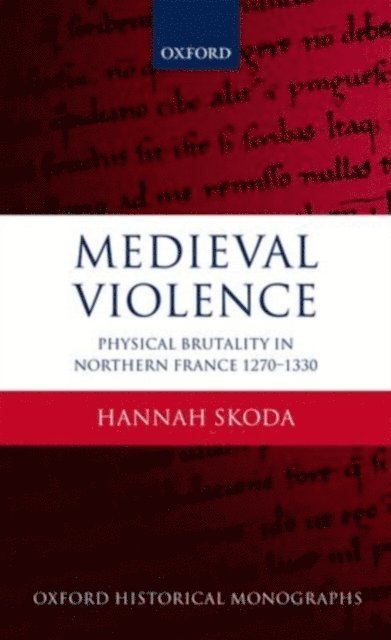
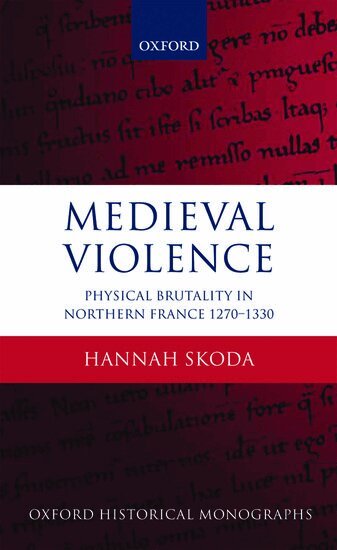
Medieval Violence provides a detailed analysis of the practice of medieval brutality, focusing on a thriving region of northern France in the late thirteenth and early fourteenth centuries. It examines how violence was conceptualised in this period, and uses this framework to investigate street violence, tavern brawls, urban rebellions, student misbehaviour, and domestic violence. The interactions between these various forms of violence are examined in order to demonstrate the complex and communicative nature of medieval brutality. What is often dismissed as dysfunctional behaviour is shown to have been highly strategic and socially integral. Violence was a performance, dependent upon the spaces in which it took place. Indeed, brutality was contingent upon social and cultural structures. At the same time, the common stereotype of the thoughtlessly brutal Middle Ages is challenged, as attitudes towards violence are revealed to have been complex, troubled, and ambivalent. Whether violence could function effectively as a form of communication which could order and harmonise society, or whether it inevitably degenerated into chaotic disorder where meaning was multivalent and incomprehensible, remained a matter of ongoing debate in a variety of contexts. Using a variety of source material, including legal records, popular literature, and sermons, Hannah Skoda explores experiences of, and attitudes towards, violence, and highlights profound contemporary ambiguity concerning its nature and legitimacy.
1 735 kr
Skickas inom 3-6 vardagar
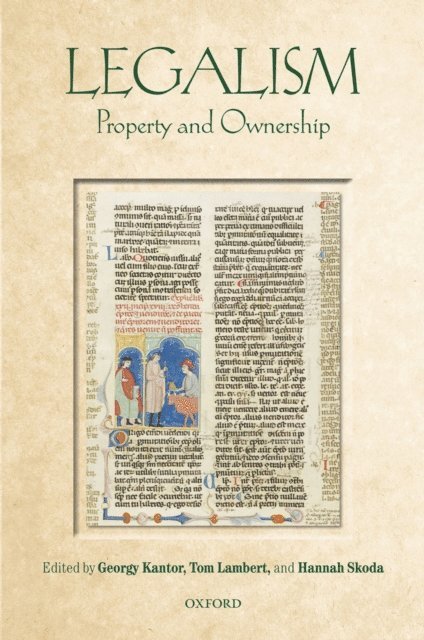
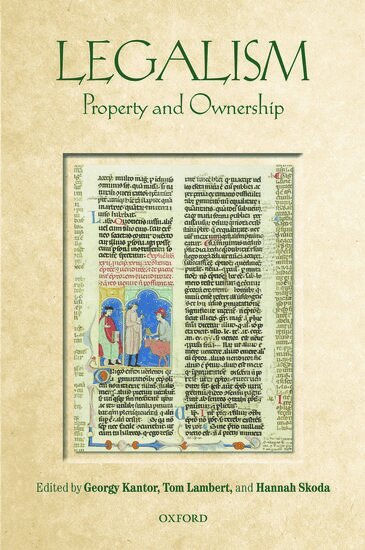
In this volume, ownership is defined as the simple fact of being able to describe something as 'mine' or 'yours', and property is distinguished as the discursive field which allows the articulation of attendant rights, relationships, and obligations. Property is often articulated through legalism as a way of thinking that appeals to rules and to generalizing concepts as a way of understanding, responding to, and managing the world around one. An Aristotelian perspective suggests that ownership is the natural state of things and a prerequisite of a true sense of self. An alternative perspective from legal theory puts law at the heart of the origins of property. However, both these points of view are problematic in a wider context, the latter because it rests heavily on Roman law. Anthropological and historical studies enable us to interrogate these assumptions. The articles here, ranging from Roman provinces to modern-day piracy in Somalia, address questions such as: How are legal property regimes intertwined with economic, moral-ethical, and political prerogatives? How far do the assumptions of the western philosophical tradition explain property and ownership in other societies? Is the 'bundle of rights' a useful way to think about property? How does legalism negotiate property relationships and interests between communities and individuals? How does the legalism of property respond to the temporalities and materialities of the objects owned? How are property regimes managed by states, and what kinds of conflicts are thus generated? Property and ownership cannot be reduced to natural rights, nor do they straightforwardly reflect power relations: the rules through which property is articulated tend to be conceptually subtle. As the fourth volume in the Legalism series, this collection draws on common themes that run throughout the first three volumes: Legalism: Anthropology and History, Legalism: Community and Justice, and Legalism: Rules and Categories consolidating them in a framework that suggests a new approach to legal concepts.
2 528 kr
Skickas inom 5-8 vardagar
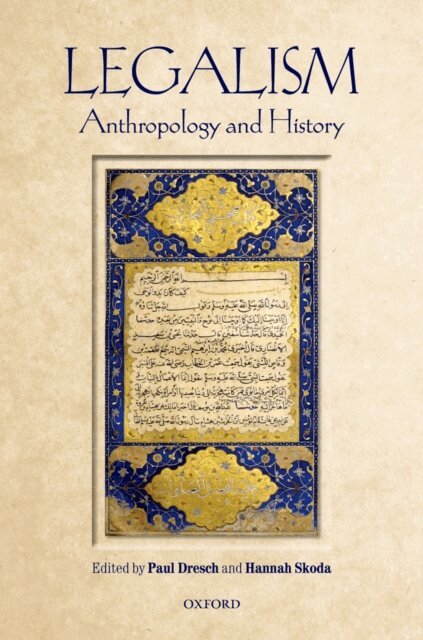
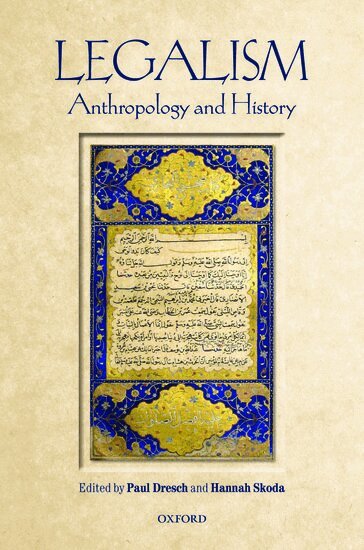
Law and law-like institutions are visible in human societies very distant from each other in time and space. When it comes to observing and analysing such social constructs historians, anthropologists, and lawyers run into notorious difficulties in how to conceptualize them. Do they conform to a single category of 'law'? How are divergent understandings of the nature and purpose of law to be described and explained? Such questions reach to the heart of philosophical attempts to understand the nature of law, but arise whenever we are confronted by law-like practices and concepts in societies not our own.In this volume leading historians and anthropologists with an interest in law gather to analyse the nature and meaning of law in diverse societies. They start from the concept of legalism, taken from the anthropologist Lloyd Fallers, whose 1960s work on Africa engaged, unusually, with jurisprudence. The concept highlights appeal to categories and rules. The degree to which legalism in this sense informs people's lives varies within and between societies, and over time, but it can colour equally both 'simple' and 'complex' law. Breaking with recent emphases on 'practice', nine specialist contributors explore, in a wide-ranging set of cases, the place of legalism in the workings of social life.The essays make obvious the need to question our parochial common sense where ideals of moral order at other times and places differ from those of modern North Atlantic governance. State-centred law, for instance, is far from a 'central case'. Legalism may be 'aspirational', connecting people to wider visions of morality; duty may be as prominent a theme as rights; and rulers from thirteenth-century England to sixteenth-century Burma appropriate, as much they impose, a vision of justice as consistency. The use of explicit categories and rules does not reduce to simple questions of power.The cases explored range from ancient Asia Minor to classical India, and from medieval England and France to Saharan oases and southern Arabia. In each case they assume no knowledge of the society or legal system discussed. The volume will appeal not only to historians and anthropologists with an interest in law, but to students of law engaged in legal theory, for the light it sheds on the strengths and limitations of abstract legal philosophy.
1 720 kr
Skickas inom 5-8 vardagar
Medieval Violence provides a detailed analysis of the practice of medieval brutality, focusing on a thriving region of northern France in the late thirteenth and early fourteenth centuries. It examines how violence was conceptualised in this period, and uses this framework to investigate street violence, tavern brawls, urban rebellions, student misbehaviour, and domestic violence. The interactions between these various forms of violence are examined in order to demonstrate the complex and communicative nature of medieval brutality. What is often dismissed as dysfunctional behaviour is shown to have been highly strategic and socially integral. Violence was a performance, dependent upon the spaces in which it took place. Indeed, brutality was contingent upon social and cultural structures. At the same time, the common stereotype of the thoughtlessly brutal Middle Ages is challenged, as attitudes towards violence are revealed to have been complex, troubled, and ambivalent. Whether violence could function effectively as a form of communication which could order and harmonise society, or whether it inevitably degenerated into chaotic disorder where meaning was multivalent and incomprehensible, remained a matter of ongoing debate in a variety of contexts. Using a variety of source material, including legal records, popular literature, and sermons, Hannah Skoda explores experiences of, and attitudes towards, violence, and highlights profound contemporary ambiguity concerning its nature and legitimacy.
2 768 kr
Skickas inom 7-10 vardagar
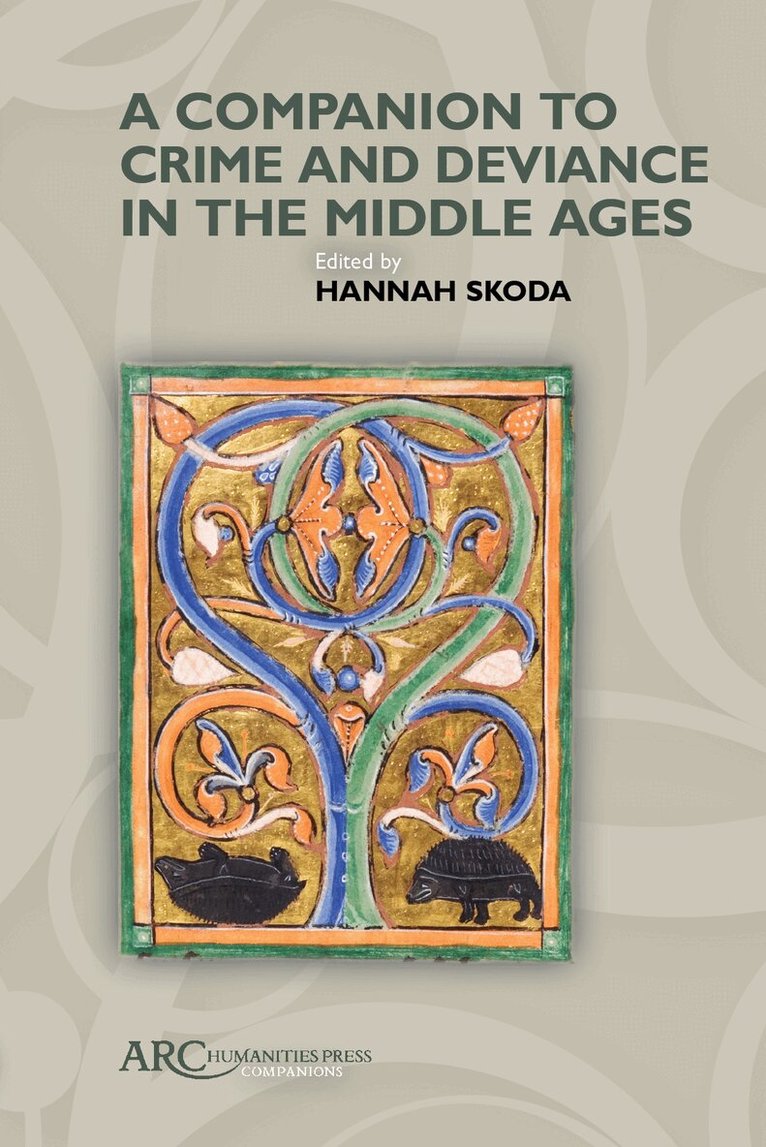
This reference work examines the ways in which some medieval behaviours and identities were categorized as criminal or deviant. It also explores the implications of modern demonization of the Middle Ages. As well as discussing constructions of deviance, this book further explores the behaviours and identities which provoked these labels and processes. The model is one of reciprocity between behaviours and processes of demonization and criminalization. Each authoritative essay engages carefully with this approach, examining behaviours, the ways they were demonized, and the relationship between the two processes. The three parts of the volume are centred around forms of discursive and normative power—religious ideologies, political ideologies, and legalism. The authors also explore issues of political discourse, spiritual censure, justice and punishment, and the construction of taboos.
589 kr
Skickas inom 7-10 vardagar
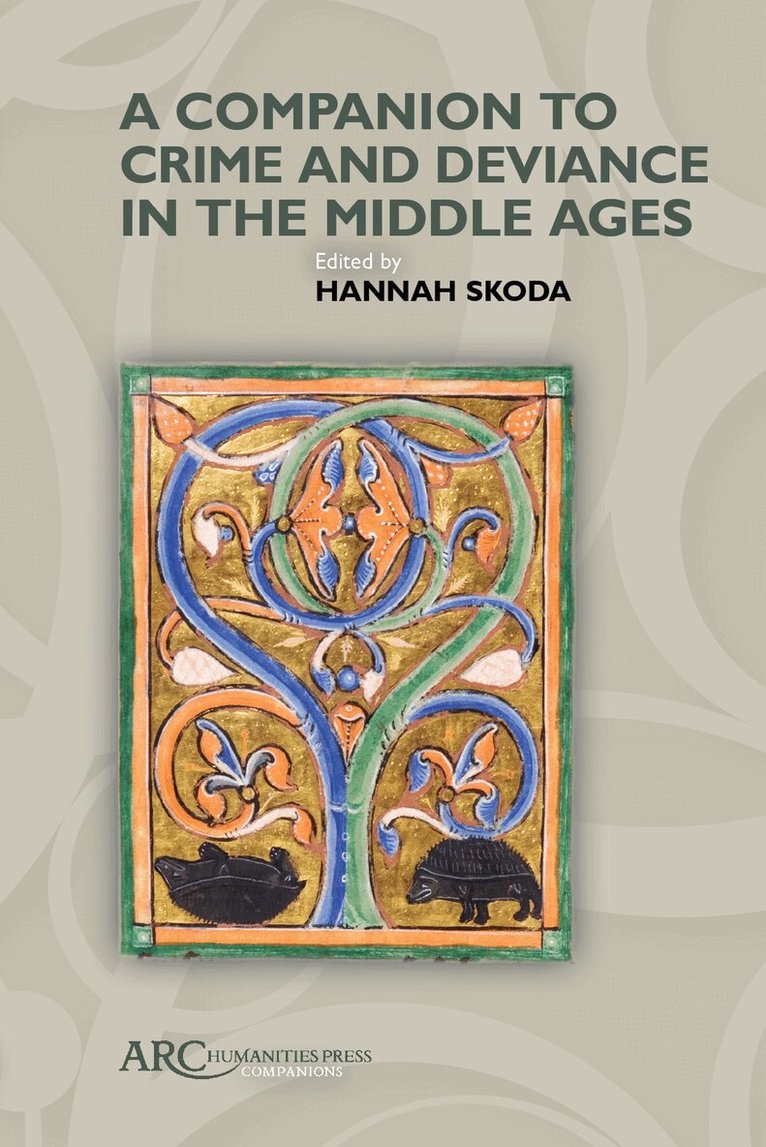
This reference work examines the ways in which some medieval behaviours and identities were categorized as criminal or deviant. It also explores the implications of modern demonization of the Middle Ages. As well as discussing constructions of deviance, this book further explores the behaviours and identities which provoked these labels and processes. The model is one of reciprocity between behaviours and processes of demonization and criminalization. Each authoritative essay engages carefully with this approach, examining behaviours, the ways they were demonized, and the relationship between the two processes. The three parts of the volume are centred around forms of discursive and normative power—religious ideologies, political ideologies, and legalism. The authors also explore issues of political discourse, spiritual censure, justice and punishment, and the construction of taboos.
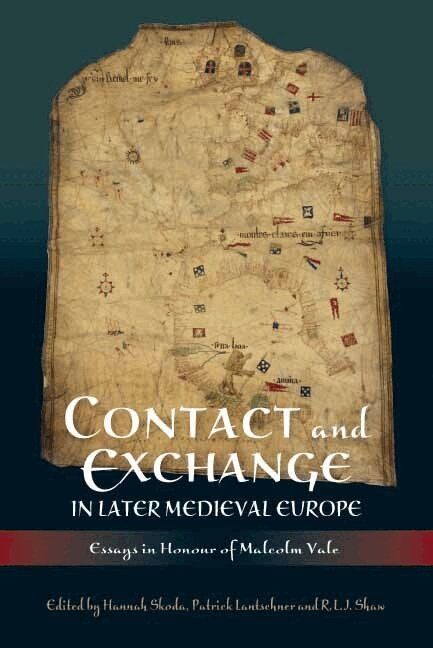
Contact and Exchange in Later Medieval Europe
Essays in Honour of Malcolm Vale
Inbunden, Engelska, 2012
1 192 kr
Skickas inom 7-10 vardagar
The complexity of the interplay and relationships over various borders in medieval Europe is here fully teased out.The processes by which ideas, objects, texts and political thought and experience moved across boundaries in the Middle Ages form the focus of this book, which also seeks to reassess the nature of the boundaries themselves; it thus appropriately reflects a major theme of Dr Malcolm Vale's work, which the essays collected here honour. They suggest ways of breaking down established historiographical paradigms of Europe as a set of distinct polities, achieving a more nuanced picture in which people and objects were constantly moving, and challenging previous conceptions of units and borders.The first section examines the construction of boundaries and units in the later Middle Ages, via topics ranging from linguistic units to social stratifications, and geographically from the Netherlands and Scotland to Gascony and the Iberian peninsula; it reveals how much the relationship between exchange and boundaries was reciprocal. The second section considers the mechanisms by which it took place, from West Africa to Italy and Flanders, and discusses the actual exchange of people, texts, and unusual artefacts. Overall, the essays bear witness to the constant interplay and interconnections throughout medieval Europe and beyond. Contributors: Paul Booth, Maria João Violante Branco, Rita Costa-Gomes, Mario Damen, Jan Dumolyn, Jean Dunbabin, Jean-PhilippeGenet, Michael Jones, Maurice Keen, Frédérique Lachaud, Patrick Lantschner, Guilhem Pépin, R.L.J. Shaw, Hannah Skoda, Erik Spindler, John Watts.