Hannah Waite - Böcker
Visar alla böcker från författaren Hannah Waite. Handla med fri frakt och snabb leverans.
4 produkter
4 produkter
465 kr
Skickas inom 5-8 vardagar
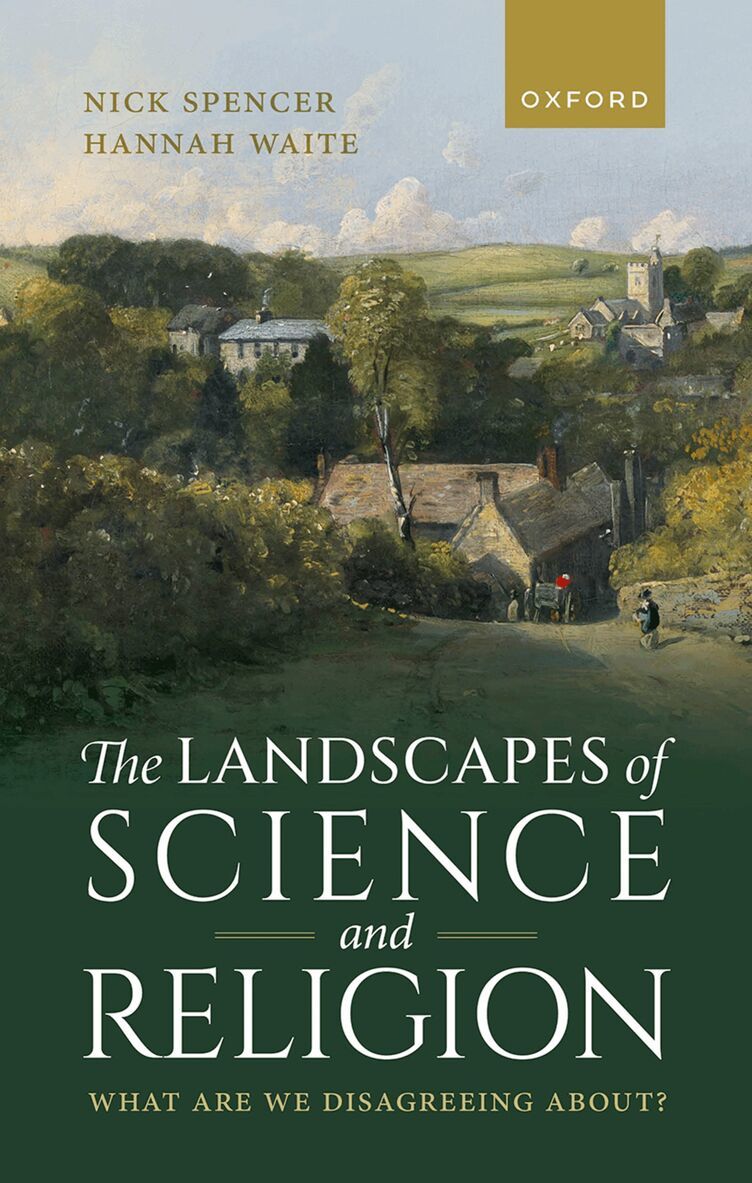
The relationship between science and religion has long been a heated debate and is becoming an ever more popular topic. The scientific capacity to manipulate and change humans and their environment through genetic engineering, life extension, and AI is going to take a huge leap forward in the twenty-first century, provoking endless debates around humans “playing God”.But what do we mean by this? Asking this question is surprisingly hard work. Attempts to 'essentialise' science, let alone religion, quickly run into trouble. Where are the boundaries? Whose definition of science is definitive? Which concept of religious is the authoritative one? Ultimately, neither “science” nor “religion” can be pinned down to one single meaning or definition. Rather, they encompass a family of definitions that relate to one another in a complex web of shifting ways. Drawing on extensive research with over a hundred leading thinkers in the UK — including Martin Rees, Brian Cox, Susan Greenfield, A.C. Grayling, Ray Tallis, Linda Woodhead, Steve Bruce, Adam Rutherford, Robin Dunbar, Francesca Stavrakopoulou, and Iain McGilchrist — The Landscapes of Science and Religion takes the much-needed step of asking what science and religion actually are, before turning to the familiar question of how they relate to one another.Building on this, by paying particular attention to those who sense some form of conflict here, Spencer and Waite explore where the perceived conflict really lies. What exactly are people disagreeing about when they disagree about science and religion, and what, if anything, can we do to improve that disagreement and bring about a fruitful dialogue between these two important human endeavours.
208 kr
Skickas
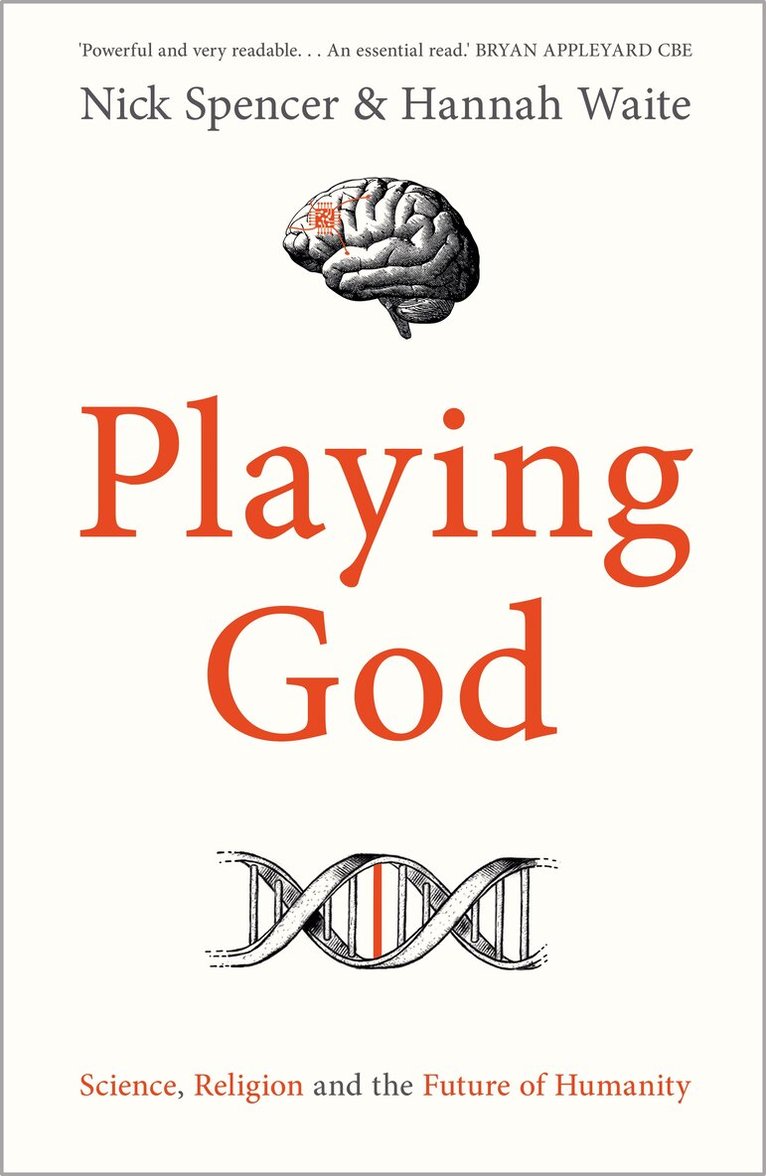
Could science one day 'defeat death'?What would alien contact mean for humanity?Has medicine finally found a cure for sadness?Will AI replace us?For too long, the 'science and religion' debate has fixated on creation, evolution, cosmology, miracles and quantum theory. But this, argue Nick Spencer and Hannah Waite, is a mistake. Religious belief has survived, and thrived, under many different models of the universe. It was never intended to be a competing explanation for the science of any age. Where science and religion really do come together - sometimes furiously, sometimes fruitfully - is over the status and nature of the human. And that has never been more important than today.Whether it's the quest for immortality or the search for alien life, the treatment of pandemics or 'animal personhood', AI or mental health, abortion or genetic editing, science is making advances that are posing huge questions about what it means to be human, whether we should change ourselves, and how far we should 'play God'.These developments are only going to grow in significance. Playing God brings readers up to date with the latest developments but also draws out their moral and religious dimensions. In so doing, it shows how the future of science and religion is inextricably tied up with the future of humanity.
188 kr
Skickas
Could science one day 'defeat death'?What would alien contact mean for humanity?Has medicine finally found a cure for sadness?Will AI replace us?For too long, the 'science and religion' debate has fixated on creation, evolution, cosmology, miracles and quantum theory. But this, argue Nick Spencer and Hannah Waite, is a mistake. Religious belief has survived, and thrived, under many different models of the universe. It was never intended to be a competing explanation for the science of any age. Where science and religion really do come together - sometimes furiously, sometimes fruitfully - is over the status and nature of the human. And that has never been more important than today.Whether it's the quest for immortality or the search for alien life, the treatment of pandemics or 'animal personhood', AI or mental health, abortion or genetic editing, science is making advances that are posing huge questions about what it means to be human, whether we should change ourselves, and how far we should 'play God'.These developments are only going to grow in significance. Playing God brings readers up to date with the latest developments but also draws out their moral and religious dimensions. In so doing, it shows how the future of science and religion is inextricably tied up with the future of humanity.
385 kr
Kommande
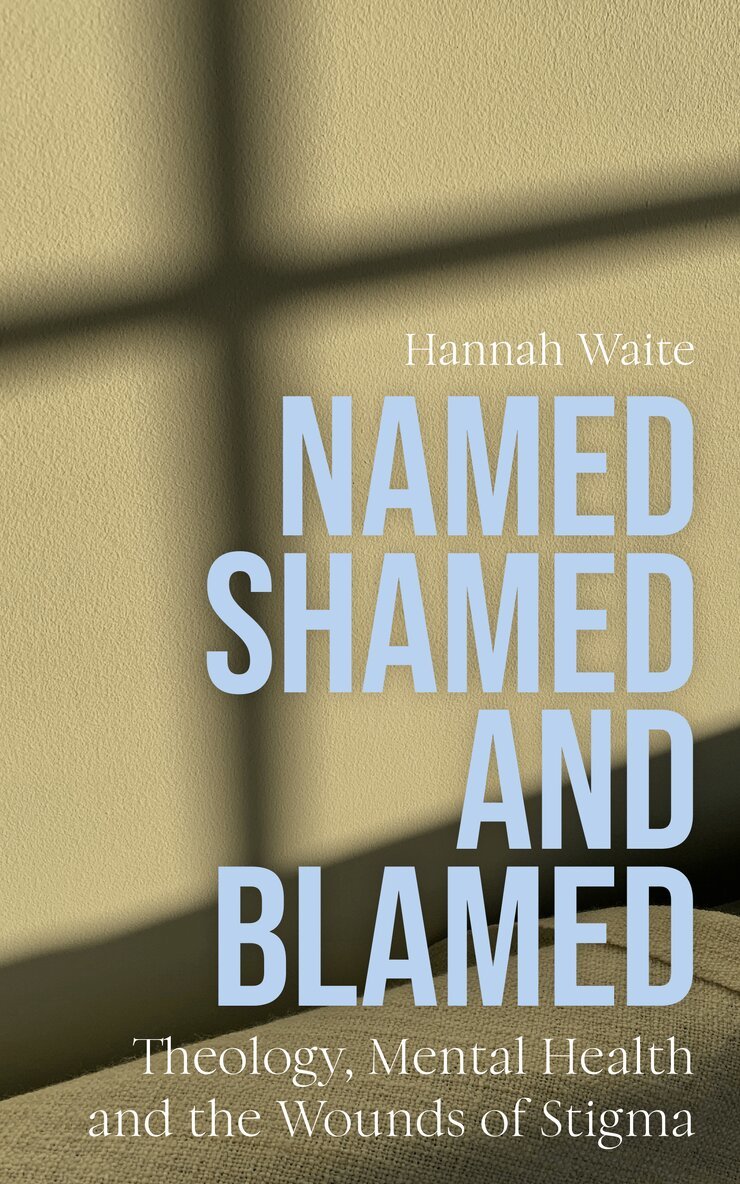
What happens when faith communities become places of stigma rather than sanctuary?Named, Shamed and Blamed explores this urgent question by introducing the concept of ‘spiritual stigma’ and its profound impact. It reveals how religious language, practices and communities can intensify shame and exclusion for those facing mental health challenges – particularly individuals with bipolar disorder. Drawing on lived experience, the book combines empirical insight with theological reflection to show how stigma creates significant forms of poverty, oppression and injustice. It critiques harmful narratives around sin, suffering and healing, and offers reimagined responses rooted in liberation theology, compassion and justice. Written for theologians, faith leaders, mental health professionals, and all those concerned with belonging, it urges the Church to confront stigma as a theological issue and to cultivate communities that embrace those on the margins as central to the body of Christ, offering a vision of hope and transformation.