Hannah Williams - Böcker
Visar alla böcker från författaren Hannah Williams. Handla med fri frakt och snabb leverans.
3 produkter
3 produkter
705 kr
Skickas inom 10-15 vardagar
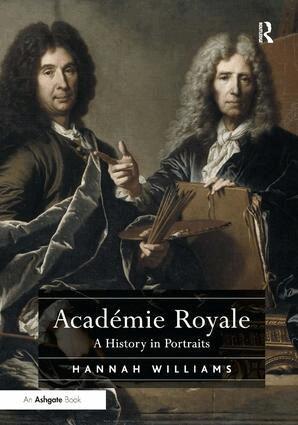
From its establishment in 1648 until its disbanding in 1793 after the French Revolution, the Académie Royale de Peinture et de Sculpture was the centre of the Parisian art world. Taking the reader behind the scenes of this elite bastion of French art theory, education, and practice, this engaging study uncovers the fascinating histories - official and unofficial - of that artistic community. Through an innovative approach to portraits - their values, functions, and lives as objects - this book explores two faces of the Académie. Official portraits grant us insider access to institutional hierarchies, ideologies, rituals, customs, and everyday experiences in the Académie's Louvre apartments. Unofficial portraits in turn reveal hidden histories of artists' personal relationships: family networks, intimate friendships, and bitter rivalries. Drawing on both art-historical and anthropological frames of analysis, this book offers insightful interpretations of portraits read through and against documentary evidence from the archives to create a rich story of people, places, and objects. Theoretically informed, rigorously researched, and historically grounded, this book sheds new light on the inner workings of the Académie. Its discoveries and compelling narrative make an invaluable and accessible contribution to our understanding of this pre-eminent European institution and the social lives of artists in early modern Paris.
2 150 kr
Skickas inom 10-15 vardagar
From its establishment in 1648 until its disbanding in 1793 after the French Revolution, the Académie Royale de Peinture et de Sculpture was the centre of the Parisian art world. Taking the reader behind the scenes of this elite bastion of French art theory, education, and practice, this engaging study uncovers the fascinating histories - official and unofficial - of that artistic community. Through an innovative approach to portraits - their values, functions, and lives as objects - this book explores two faces of the Académie. Official portraits grant us insider access to institutional hierarchies, ideologies, rituals, customs, and everyday experiences in the Académie's Louvre apartments. Unofficial portraits in turn reveal hidden histories of artists' personal relationships: family networks, intimate friendships, and bitter rivalries. Drawing on both art-historical and anthropological frames of analysis, this book offers insightful interpretations of portraits read through and against documentary evidence from the archives to create a rich story of people, places, and objects. Theoretically informed, rigorously researched, and historically grounded, this book sheds new light on the inner workings of the Académie. Its discoveries and compelling narrative make an invaluable and accessible contribution to our understanding of this pre-eminent European institution and the social lives of artists in early modern Paris.
514 kr
Skickas inom 7-10 vardagar
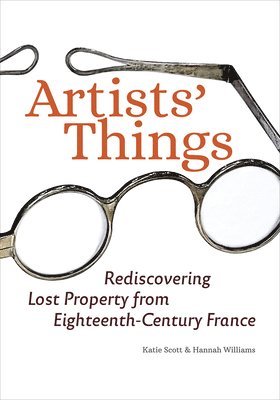
Artists are makers of things. Yet it is a measure of the disembodied manner in which we generally think about artists that we rarely consider the everyday items they own. This innovative book looks at objects that once belonged to artists, revealing not only the fabric of the eighteenth-century art world in France but also unfamiliar-and sometimes unexpected-insights into the individuals who populated it, including Jean-Antoine Watteau, Francois Boucher, Jean-Baptiste Greuze, and Elisabeth Vigee-LeBrun.From the curious to the mundane, from the useful to the symbolic, these items have one thing in common: they have all been eclipsed from historical view. Some of the objects still exist, like Jean-Honore Fragonard's color box and Jacques-Louis David's table. Others survive only in paintings, such as Jean-Simeon Chardin's cistern in his Copper Drinking Fountain, or in documents, like Francois Lemoyne's sword, the instrument of his suicide. Several were literally lost, including pastelist Jean-Baptiste Perronneau's pencil case. In this fascinating book, the authors engage with fundamental historical debates about production, consumption, and sociability through the lens of material goods owned by artists