Hans Kundnani – författare
Visar alla böcker från författaren Hans Kundnani. Handla med fri frakt och snabb leverans.
8 produkter
8 produkter
Inbunden, Engelska, 2015
917 kr
Skickas inom 3-6 vardagar
Häftad, Engelska, 2017
819 kr
Skickas inom 3-6 vardagar
Häftad, Engelska, 2023
206 kr
Skickas inom 7-10 vardagar
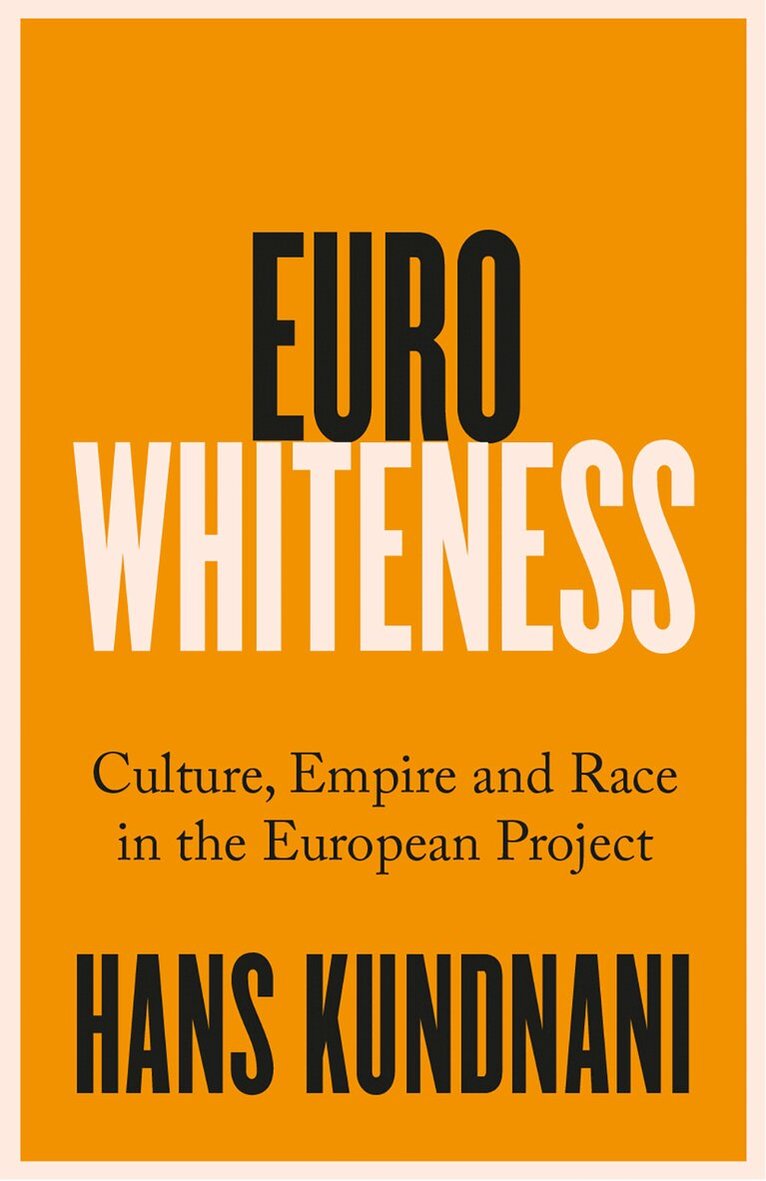
An alternative account of the EU as a racialised project The European Union is often seen as a cosmopolitan rejection of violent nationalism. Yet the idea of Europe has a long, problematic history—in medieval times, it was synonymous with Christianity; in the modern era, it became associated with ‘whiteness’. Eurowhiteness exposes the EU as a vehicle for imperial amnesia. Narratives of European integration emphasise the lessons of war and the Holocaust, but not the lessons of colonial history. The EU is about power as much as peace—and civic ideas of Europe are being displaced by ethnic and cultural ones. Since the 2015 refugee crisis, whiteness has become even more central to European identity—a troubling new turn in Europe’s long civilisational project. It is time to confront the relationship between ideas of Europe and ideas of race.
E-bok
Engelska, 2025153 kr
Läs direkt efter köp
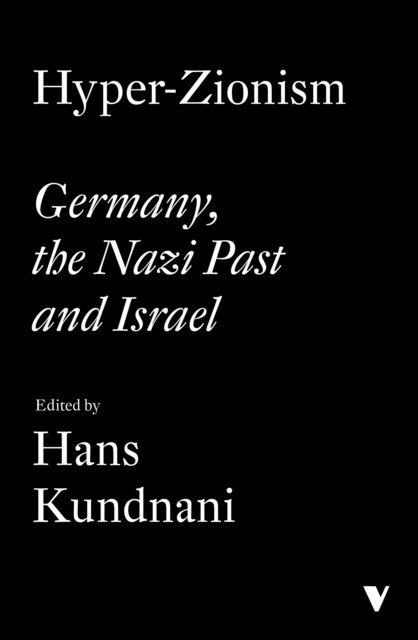
Germany remains unmatched across Europe in its unconditional support for the Israeli state. Since October 7, 2023, the German state has particularly distinguished itself in its brutal repression of anyone who dares to speak out against Israel's crimes in Palestine. What is going on? In this urgent collection, leading authors including Hans Kundnani, Nahed Samour, Adam Tooze, and Dirk Moses, explore Germany's pathological commitment to the state of Israel. The book investigates the many levels at which Germany's "e;hyper-Zionism"e; operates, with essays on the country's memory culture - Erinnerungskultur - around the Holocaust and its effect on Arab and Muslim Germans, the state's protection of Israel as a foundational staatsr,son, and the self-destruction of German cultural institutions in the name of defending Israel. The collection also probes the twin phenomena of philo- and antisemitism that permeate contemporary German institutions. The situation in Germany reverberates across Europe and beyond. Hyper-Zionism shows how history, politics and bad faith conspire to create a stifling culture of suppression, silencing and violence.
E-bok
Engelska, 2023167 kr
Läs direkt efter köp
An alternative account of the EU as a racialised projectThe European Union is often seen as a cosmopolitan rejection of violent nationalism. Yet the idea of Europe has a long, problematic history—in medieval times, it was synonymous with Christianity; in the modern era, it became associated with ‘whiteness’.Eurowhiteness exposes the EU as a vehicle for imperial amnesia. Narratives of European integration emphasise the lessons of war and the Holocaust, but not the lessons of colonial history. The EU is about power as much as peace—and civic ideas of Europe are being displaced by ethnic and cultural ones.Since the 2015 refugee crisis, whiteness has become even more central to European identity—a troubling new turn in Europe’s long civilisational project. It is time to confront the relationship between ideas of Europe and ideas of race.
Häftad, Engelska, 2009
305 kr
Skickas inom 11-20 vardagar
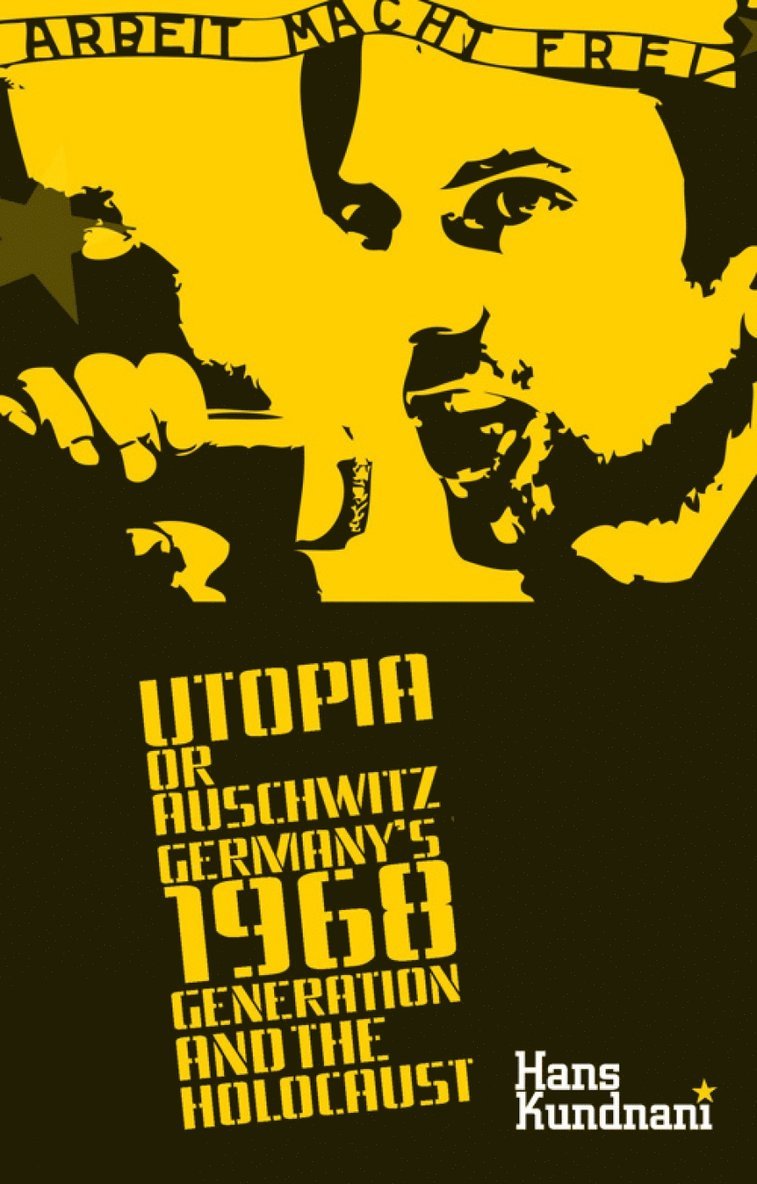
One thing above all separated the radical students who demonstrated on the streets of West Berlin and Frankfurt in 1968 from their counterparts in Berkeley or New York. In the US, the baby boomers grew up in the shadow of what Tom Brokaw called the greatest generation. In its place, Germany had the so-called Auschwitz generation. What became known in Germany as the '68 generation' or just the Achtundsechziger had grown up knowing that their mothers and fathers were directly or indirectly responsible for Nazism and in particular for the Holocaust. Germany's 1968 generation did not merely dream of a better world as some of their contemporaries in other countries did; they felt compelled to act to save Germany from itself. It was an all-or-nothing choice: Utopia or Auschwitz. Kundnani shows that the struggle of Germany's '68 generation also had a darker side. Although the 'Achtundsechziger' imagined their struggle against capitalism in West Germany as 'resistance' against Nazism, they also had a tendency to see Auschwitz everywhere and, by using images and metaphors connected with Nazism to describe events in other parts of the world, they relativized Nazism and in particular the Holocaust. Even more disturbingly, despite the anti-fascist rhetoric of the 'Achtundsechziger', there were also anti-Semitic and nationalist currents in the West German New Left that grew out of the student movement. "Utopia or Auschwitz" traces the political journey of Germany's post-war generation and examines the influence that its ambivalent attitude to the Nazi past had on the foreign policy of the 'red-green' government between 1998 and 2005, which included several former members of the student movement like Joschka Fischer. The red-green government's schizophrenic foreign policy, manifested its response to the crises in Kosovo, Afghanistan and Iraq, reflected the 1968 generation's ambivalent attitude to the Nazi past.
Häftad, Engelska, 2016
219 kr
Skickas inom 7-10 vardagar
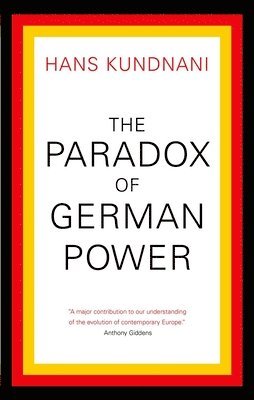
A 'German Europe' seems to have emerged from the euro crisis. During the last few years, Chancellor Angela Merkel has been compared with Hitler in the European media and on the streets of European capitals. There has been much debate about German 'hegemony' and some have even perceived the emergence of a kind of German 'empire' within Europe. And yet Germany is clearly a different country than it was in the nineteenth or early twentieth centuries. So is there a new 'German question' and, if so, what is it? In The Paradox of German Power Hans Kundnani explores the transformation of Germany since re-unification in 1990 and puts it in the context of Germany's pre-1945 history. He examines a series of tensions in German foreign policy - between continuity and change, between 'normality' and 'abnormality', between economics and politics, and between Europe and the world - and concludes that the 'German question' has reemerged in geo economic form.
Häftad, Engelska, 2023
329 kr
Skickas inom 10-15 vardagar
This open access book aims to emphasize the potential for Japan, Europe and Indo-Pacific countries including the US to respond to shared domestic and international challenges on finding joint ways to uphold and develop the liberal international order (LIO) in the Asian Pacific region and the world. It explores how these countries and the region (the EU) can work together to promote solidarity and cooperation to advance democratic standards and rules-based norms globally.The US understands the LIO in a political sense and centers its focus on democracy, aiming to build a coalition of democracies opposed to China and Russia which represent a kind of authoritarian axis. The US aims both to defend the LIO and respond to the China challenge and to build a coalition of countries that will do both. In contrast European countries aim at defending the “rules-based order”—a term preferred because they fear that the concept of the LIO might alienate or antagonize non-democratic countries. They face a dilemma between working with China to reform the LIO or, in seeking to defend it from China, excluding China. Germany and France differ regarding whether to play a passive or active role in the Indo-Pacific, the former choosing to preserve peace and stability for continued exports, and, until recently, doing little to contribute to security. Its views echo those of the ASEAN countries, which are unable or unwilling to take an active role in protecting the LIO. On the contrary France, along with the UK, actively carries out presence operations in the Indo-Pacific. Rather than upholding US dominance, France supports a multipolar order that will also reduce China’s influence in the region, with France acting as a balancing power and offering an alternative to the choice between China and the United States. Japan and India show interest in European views with the former leaning more toward its allies, the US and AUKUS, and the latter seeing Europe less as an alternativeto the status quo and more as a complement of QUAD. This book concludes that the US needs to build coalitions rather than forcing allies and neighbors to choose sides, while Japan, Asian countries, and Europeans should more actively reform the LIO.