• Fri frakt över 249 kr
  • •
  • Snabba leveranser
  • •
  • Billiga böcker
Kundservice

Du är på sajten för privatpersoner.

Företag, bibliotek eller offentlig verksamhet?

Du handlar på classic.bokus.com, där alla dina funktioner finns intakta.
Till classic.bokus.com
Bokus logotyp. Gå till startsidan.
  • Erbjudanden
  • Nyheter
  • Student
  • Topplistor
  • Barn & ungdom
  • Bokus Play
  • E-böcker
  • Pocketböcker
  • Spel & pussel

10% rabatt på allt med kod: NYSTART10 →

Sidfot

Mina sidor

    Hjälp

    • Kundservice
    • Vanliga frågor och svar
    • Frakt och leverans
    • Retur vid ångerrätt
    • Reklamera vara
    • Betalning
    • Köpvillkor
    • Allmänna villkor
    • Information om webbplatsens tillgänglighet

    Om Bokus

    • Om oss
    • Pressrum
    • För studenter
    • För företag
    • För bibliotek och offentlig verksamhet
    • För leverantörer
    • Hållbarhet

    Populärt

    • Aktuella erbjudanden
    • Presentkort
    • Studentlitteratur
    • Nya böcker
    • Topplistor
    • Signerade böcker
    • Engelska böcker

    Inspiration

    • Boktips
    • BookTok
    • Populära bokserier
    • Barnbokskaraktärer
    • Populära författare
    Logotyp för Bokus
    Följ oss på Facebook (extern länk)Följ oss på Instagram (extern länk)Följ oss på YouTube (extern länk)Följ oss på TikTok (extern länk)
    bokus @ CookiesAnpassa cookiesIntegritetspolicyKöpvillkor
    Till Citymail hemsida (extern länk)Till Budbee hemsida (extern länk)Till Postnord hemsida (extern länk)Till Schenker hemsida (extern länk)Till Early Bird hemsida (extern länk)Till Walleys hemsida (extern länk)
    1. Historia och arkeologi
    2. Historia
    3. Europas historia

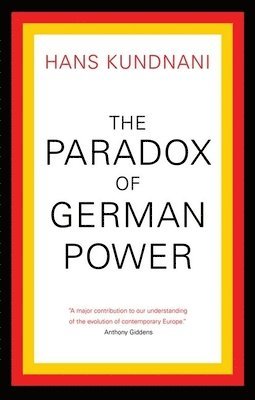
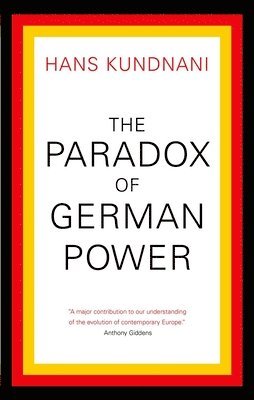
    Paradox of German Power

    AvHans Kundnani

    Häftad, Engelska, 2016

    219 kr

    Beställningsvara. Skickas inom 7-10 vardagar. Fri frakt över 249 kr.

    Fler format och utgåvor

    Inbunden

    902 kr

    Häftad

    806 kr

    Beskrivning

    A 'German Europe' seems to have emerged from the euro crisis. During the last few years, Chancellor Angela Merkel has been compared with Hitler in the European media and on the streets of European capitals. There has been much debate about German 'hegemony' and some have even perceived the emergence of a kind of German 'empire' within Europe. And yet Germany is clearly a different country than it was in the nineteenth or early twentieth centuries. So is there a new 'German question' and, if so, what is it? In The Paradox of German Power Hans Kundnani explores the transformation of Germany since re-unification in 1990 and puts it in the context of Germany's pre-1945 history. He examines a series of tensions in German foreign policy - between continuity and change, between 'normality' and 'abnormality', between economics and politics, and between Europe and the world - and concludes that the 'German question' has reemerged in geo economic form.

    Produktinformation

    • Utgivningsdatum:2016-06-16
    • Mått:136 x 216 x 12 mm
    • Vikt:226 g
    • Format:Häftad
    • Språk:Engelska
    • Antal sidor:176
    • Förlag:C Hurst & Co Publishers Ltd
    • ISBN:9781849047197

    Utforska kategorier

    • Europas historia inom Historia och arkeologi
    • Internationella relationer inom Samhälle och politik

    Mer om författaren

    Hans Kundnani is Editorial Director at the European Council on Foreign Relations, having previously worked as a journalist for The Guardian, The Observer, Financial Times, Prospect and the Times Literary Supplement. He is the author of Utopia or Auschwitz: Germany's 1968 Generation and the Holocaust, also published by Hurst.

    Recensioner i media

    '[Kundnani argues] that today's European Union is seeing a rerun of "the German question" that emerged after the founding of the Prussian empire. This time, Germany is not a military power but an economic one. Its economy is too dominant to preserve a stable balance with its eurozone and EU partners, yet too weak to enforce economic stability from above, he says. He calls it a "geo-economic semi-hegemon", with the potential to cause a bitter and possibly disastrous conflict with its closest partners... his thesis is tempting.'