Hans Oberdiek - Böcker
Visar alla böcker från författaren Hans Oberdiek. Handla med fri frakt och snabb leverans.
3 produkter
3 produkter
1 886 kr
Skickas inom 10-15 vardagar
Technology is no longer confined to the laboratory but has become an established part of our daily lives. Its sophistication offers us power beyond our human capacity which can either dazzle or threaten; it depends who is in control.Living in a Technological Culture challenges traditionally held assumptions about the relationship between `man-and-machine'. It argues that contemporary science does not shape technology but is shaped by it. Neither discipline exists in a moral vacuum, both are determined by politics rather than scientific inquiry.By questioning our existing uses of technology, this book opens up wider debate on the shape of things to come and whether we should be trying to change them now. As an introduction to the philosophy of technology this will be valuable to students, but will be equally engaging for the general reader.
657 kr
Skickas inom 10-15 vardagar
Technology is no longer confined to the laboratory but has become an established part of our daily lives. Its sophistication offers us power beyond our human capacity which can either dazzle or threaten; it depends who is in control.Living in a Technological Culture challenges traditionally held assumptions about the relationship between `man-and-machine'. It argues that contemporary science does not shape technology but is shaped by it. Neither discipline exists in a moral vacuum, both are determined by politics rather than scientific inquiry.By questioning our existing uses of technology, this book opens up wider debate on the shape of things to come and whether we should be trying to change them now. As an introduction to the philosophy of technology this will be valuable to students, but will be equally engaging for the general reader.
581 kr
Skickas inom 10-15 vardagar
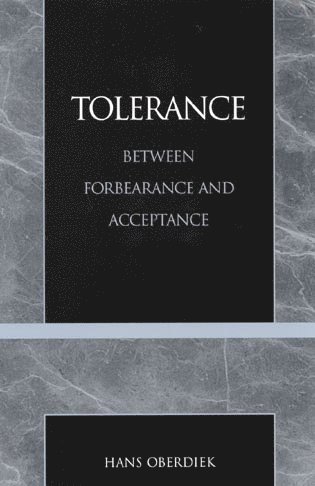
Tolerance, while proving necessary in today's varied world, can be grudgingly given and resentfully received. Toleration may be necessary, but it has little appeal, and certainly cannot serve as either a central or unifying doctrine in a thriving moral or political philosophy. A deeper understanding of what tolerance requires leads us to see that it demands more. Once we inculcate the attitude of tolerance in ourselves and our politics, tolerance can occupy the difficult and contested. It does not make sense, for instance, if we already fully accept a practice; nor does it make sense if what we are asked to tolerate is "intolerable:" we appeal to those inclined to be intolerant to soften their judgement, to grant that what they disapprove can, and should be, permitted. What needs to be done is to show how tolerance is rooted in an appealing moral and political theory. Only then will toleration move beyond either simple expediency or grudging forbearance.