Hans S. Reinders - Böcker
Visar alla böcker från författaren Hans S. Reinders. Handla med fri frakt och snabb leverans.
8 produkter
8 produkter
248 kr
Tillfälligt slut
1 068 kr
Skickas inom 10-15 vardagar
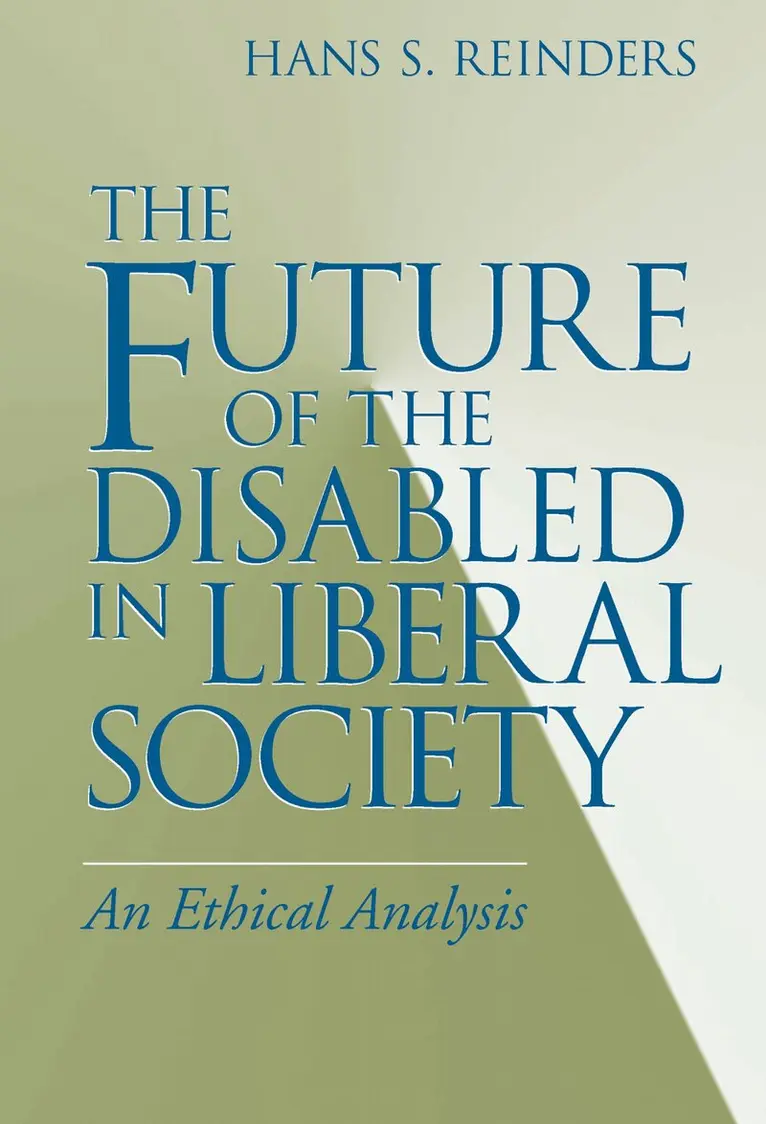
The Future of the Disabled in Liberal Society questions developments in human genetic research from the perspective of persons with mental disabilities and their families. Hans S. Reinders argues that when we use terms such as "disease" and "defect" to describe conditions that genetic engineering might well eliminate, we may also be assuming that disabled lives are deplorable and horrific. Reinders points out that the possibility of preventing disabled lives is at odds with our commitment to the full inclusion of disabled citizens in society. The tension between these different perspectives is of concern to all of us as genetic testing procedures proliferate. Reinders warns that preventative uses of human genetics might even become a threat to the social security and welfare benefits that help support disabled persons and their families. Reinders also argues that this conflict cannot be resolved or controlled on the level of public morality. Because a liberal society makes a commitment to individual freedom and choice, its members can consider the diagnostic and therapeutic uses of human genetics as options available to individual citizens. A liberal society will defend reproductive freedom as a matter of principle. Citizens may select their offspring in accord with their own personal values. Reinders concludes that the future of the mentally disabled in liberal society will depend on the strength of our moral convictions about the value of human life, rather than on the protective force of liberal morality. One of the most important aspects of this book is Reinder's attention to parents who have come to see the task of raising a disabled child as an enriching experience. These are people who change their conceptions of success and control and, therefore, their conceptions of themselves. They come to value their disabled children for what they have to give. Even though disabled children and disabled adults present parents and society with real challenges, the rewards are just as real. This powerful critique of contemporary bioethics is sure to become required reading for those interested in human development, special education, ethics, philosophy, and theology.
299 kr
Skickas inom 10-15 vardagar
The Future of the Disabled in Liberal Society questions developments in human genetic research from the perspective of persons with mental disabilities and their families. Hans S. Reinders argues that when we use terms such as "disease" and "defect" to describe conditions that genetic engineering might well eliminate, we may also be assuming that disabled lives are deplorable and horrific. Reinders points out that the possibility of preventing disabled lives is at odds with our commitment to the full inclusion of disabled citizens in society. The tension between these different perspectives is of concern to all of us as genetic testing procedures proliferate. Reinders warns that preventative uses of human genetics might even become a threat to the social security and welfare benefits that help support disabled persons and their families. Reinders also argues that this conflict cannot be resolved or controlled on the level of public morality. Because a liberal society makes a commitment to individual freedom and choice, its members can consider the diagnostic and therapeutic uses of human genetics as options available to individual citizens. A liberal society will defend reproductive freedom as a matter of principle. Citizens may select their offspring in accord with their own personal values. Reinders concludes that the future of the mentally disabled in liberal society will depend on the strength of our moral convictions about the value of human life, rather than on the protective force of liberal morality. One of the most important aspects of this book is Reinder's attention to parents who have come to see the task of raising a disabled child as an enriching experience. These are people who change their conceptions of success and control and, therefore, their conceptions of themselves. They come to value their disabled children for what they have to give. Even though disabled children and disabled adults present parents and society with real challenges, the rewards are just as real. This powerful critique of contemporary bioethics is sure to become required reading for those interested in human development, special education, ethics, philosophy, and theology.
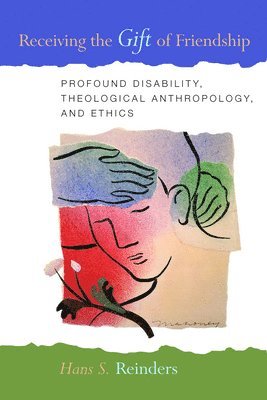
Receiving the Gift of Friendship
Profound Disability, Theological Anthropology, and Ethics
Häftad, Engelska, 2008
437 kr
Skickas inom 3-6 vardagar
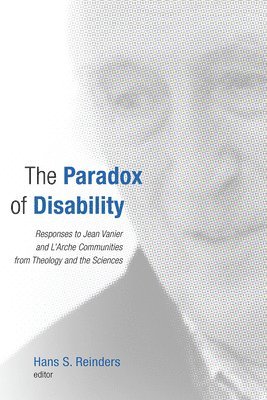
Paradox of Disability
Responses to Jean Vanier and L'Arche Communities from Theology and the Sciences
Häftad, Engelska, 2010
272 kr
Skickas inom 5-8 vardagar
564 kr
Skickas inom 10-15 vardagar
Human disability raises the hardest questions of human existence and leads directly to the problem of causality—the underlying intuition that someone, divine or human, must have been at fault.Christian theology has responded with almost singular attention to Providence, the expression of divine will in the world as the cause of all things. This preoccupation holds captive the Christian imagination, leaving the Church ill equipped to engage the human reality of disability. Theological reflection, argues Hans Reinders, can arise only as a second-order activity that follows after real attention to the experience of disability.Disability, Providence, and Ethics offers a more excellent way to address this difficult subject. Reinders guides readers away from an identification of disability with tragedy—via lament—to the possibility of theological hope and its expression of God's presence. In particular, Reinders reconsiders two of the main traditional sources in Christian thought about Providence, the biblical text of Job and the theological work of John Calvin. Throughout the book, first-person accounts of disability open up biblical texts and Christian theology—rather than the other way around. In the end, a theology of Providence begins with the presence of the Spirit, not with the problem of causality.
247 kr
Skickas inom 5-8 vardagar
379 kr
Skickas inom 5-8 vardagar