Hany Rashwan – Författare
Visar alla böcker från författaren Hany Rashwan. Handla med fri frakt och snabb leverans.
3 produkter
3 produkter
Del 266 - Proceedings of the British Academy
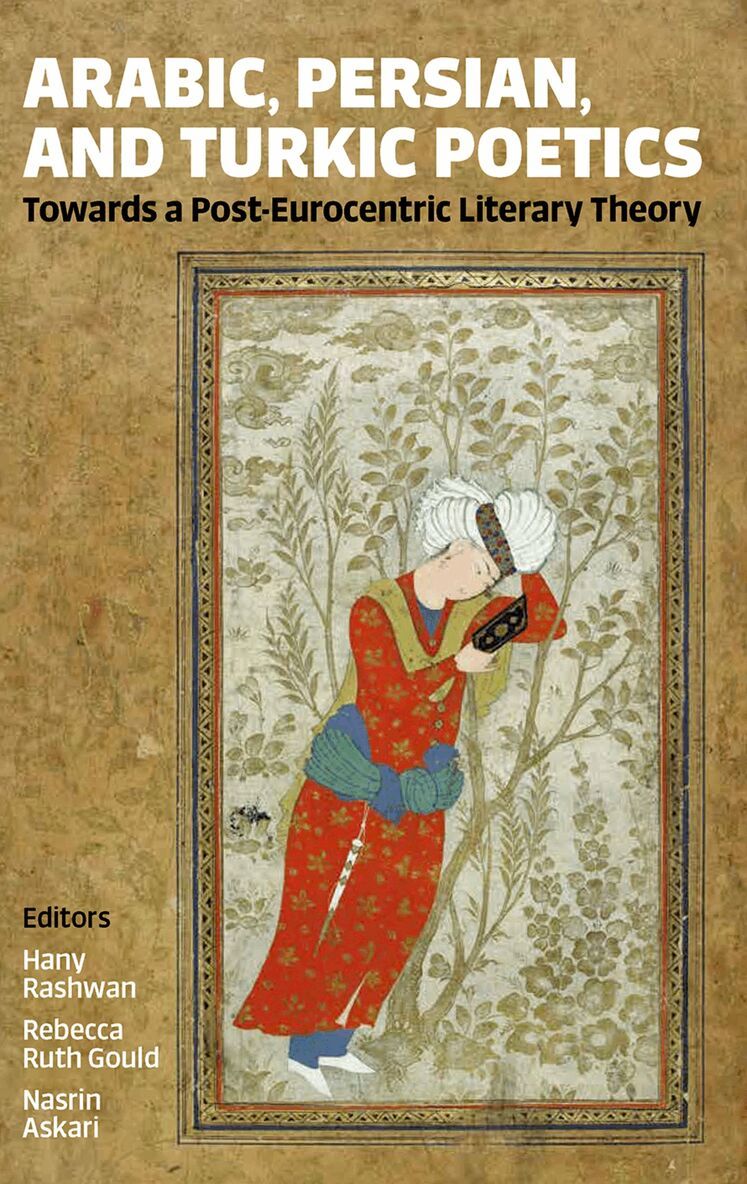
Arabic, Persian, and Turkic Poetics
Towards a Post-Eurocentric Literary Theory
Inbunden, Engelska, 2024
2 228 kr
Skickas inom 7-10 vardagar
Arabic, Persian, and Turkic Poetics: Towards a Post-Eurocentric Literary Theory is a pioneering book that offers a fresh perspective on Arabic, Persian, and Turkic literature in their interrelations. The authors challenge Eurocentric paradigms while creating a framework for exploring these traditions on their own terms. Authored by an international team of scholars, each chapter centres the literary theoretical traditions of their respective literatures, with a focus on the discipline of comparative poetics ('ilm al-balāgha) in the Islamic world. By liberating the study of Islamicate literary texts from Eurocentric theoretical paradigms, the book paves the way for a more inclusive global discourse in literary studies. Specifically, our theoretical roots in comparative poetics and the rhetorical traditions of Arabic, Persian, and Turkic literatures will foster new methods of close reading that are in line with the aesthetic standards intrinsic to these texts and their traditions. Engaging and insightful, this book is essential reading for anyone interested in broadening their understanding of world literature and literary theory.
2 105 kr
Kommande
This volume explores ancient Egyptian writing systems – one of the richest and most enduring image-writing systems in history – from the perspective of its visual aesthetics, rather than from a linguistic or philological perspective.Marking two hundred years since the decipherment of hieroglyphics, it stands as a unique work celebrating this milestone through a renewed focus on the visual dimensions of ancient Egyptian writing. Traditional scholarly approaches in Egyptology often prioritise the linguistic and philological analysis of ancient Egyptian writings over their visual aspects. This volume ushers in a new wave of scholarship focused on rediscovering the visual aesthetics of ancient Egyptian writing, with examples drawn from across the ancient history of Egypt highlighting the visual, artistic, and stylistic elements employed in the creation and presentation of hieroglyphs and their cursive forms such as the hieratic script. These visual aspects encompass diverse essential elements contributing to the overall beauty, harmony, and expressive qualities of written texts in ancient Egypt.Visual Aesthetics of Ancient Egyptian Writing is suitable for students and scholars of ancient Egyptian hieroglyphs, Egyptian art and visual culture, and ancient writing systems more broadly. It is also of interest to those working on comparative aesthetics, and comparative poetics, as well as to those working in comparative philosophy, and textual hermeneutics.
1 010 kr
Kommande
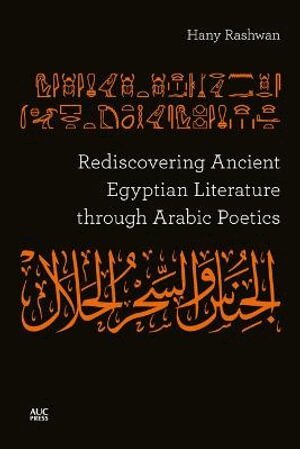
A groundbreaking study of the relationship between ancient Egyptian literary devices and their Arabic counterpartsThis book is the first of its kind to thoroughly and systematically compare ancient Egyptian and Arabic literary devices. Hany Rashwan compares the stylistic Arabic literary device of jinās, or word play, a key literary device pervading medieval and modern Arabic poetry, literary prose, songs, and proverbs, with its counterpart in ancient Egyptian. Through the deployment of Arabic literary and critical methods he therefore makes possible the rediscovery of ancient literary register and tone in a way that has eluded Western scholarship. Since Arabic, along with other Semitic languages, such as Hebrew and Akkadian, belongs, like ancient Egyptian, to the Afro-Asiatic linguistic phylum, this vital study also proposes an Arabic-based textual analytic method as a viable comparative critical method for working across these kindred languages.Rediscovering Ancient Egyptian Literature through Arabic Poetics offers a groundbreaking postcolonial perspective on Egyptological method and theory by challenging the use of Eurocentric literary theories, terms, and concepts, and refreshing the study of ancient Egyptian and Arabic poetics. This innovative approach also speaks to, and challenges, a broader audience, including scholars of comparative poetics, comparative literature, world literature, Arabic poetics, and constructive rhetoric.