Hari Kalva - Böcker
Visar alla böcker från författaren Hari Kalva. Handla med fri frakt och snabb leverans.
4 produkter
4 produkter
1 577 kr
Skickas inom 10-15 vardagar
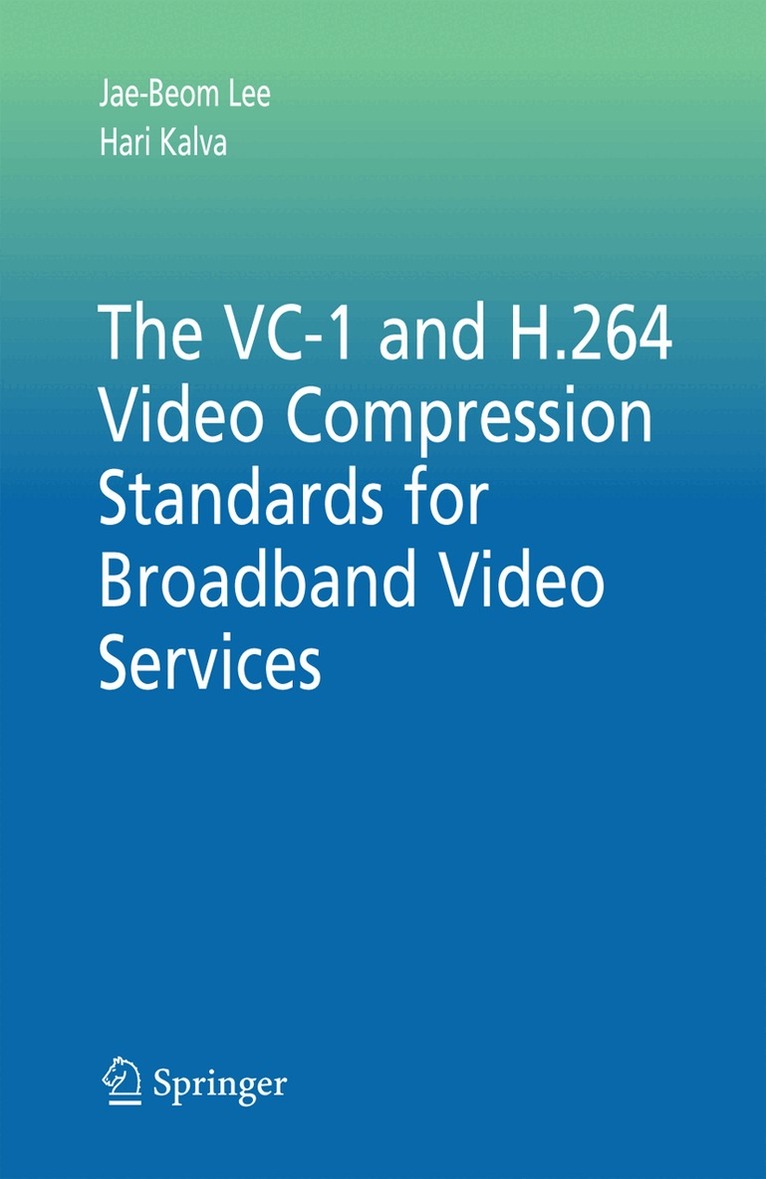
Probably the most interesting and influential class to the authors about video compression was EE E6830 (Digital Image Processing and Understanding) at Columbia University in 1995, offered by adjunct Professors Dr. Netravali, Dr. Haskell and Dr. Puri at AT&T. In the class, they impressed the authors with how such difficult and mysterious statements in video standards could be interpreted/ understood in plain human languages. Since then, the authors had had a dream that similar services could also be provided to interpret difficult video subjects into reasonable level of explanations in the future. The VC-1 standard is fundamentally the same as WMV-9. WMV-x video compression technologies of Microsoft have long been the most popular over the Internet due to popularity of Microsoft Operating Systems. The technologies were published in August 2005 for the first time in a formal SMPTE document in the name of VC-1, and the official standard then was finalized in April 2006. In contrast, the MPEG committee recently standardized the MPEG AVC (H.264) video coding standard, whose first version was officially published in May 2003, and several subsequent amendments and corrigenda then followed until recently. These two are highly efficient compression standards that can make hi- quality video services possible for Digital Storage Media (e.g., Blu-ray DVD or HD DVD) and/or broadband networks applications (e.g., IPTV).
1 095 kr
Skickas inom 10-15 vardagar
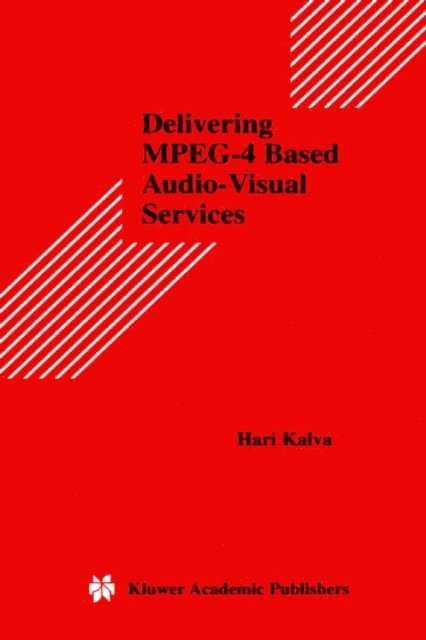
This volume investigates the different aspects of end-to-end multimedia services; content creation, server and service provider, network, and the end-user terminal. Part I provides a comprehensive introduction to digital video communications, MPEG standards, and technologies, and deals with system level issues including standardization and interoperability, user interaction, and the design of a distributed video server. Part II investigates the systems in the context of object-based multimedia services and presents a design for an object-based audio-visual terminal, some of these features having been adopted by the MPEG-4 Systems specification. The book goes on to study the requirements for a file format to represent object-based audio-visual content and the design of one such format. The design introduces new concepts such as direct streaming that are essential for scalable servers. The final part of the book examines the delivery of object-based multimedia presentations and gives optimal algorithms for multiplex-scheduling of object-based audio-visual presentations, showing that the audio-visual object scheduling problem is NP-complete in the strong sense.The problem of scheduling audio-visual objects is similar to the problem of sequencing jobs on a single machine. The book compares these problems and adapts job-sequencing results to audio-visual object scheduling, and provides optimal algorithms for scheduling presentations under resource constraints, such as bandwidth (network constraints) and buffer (terminal constraints). In addition, the book presents algorithms that minimize the resources required for scheduling presentations and the auxiliary capacity required to support interactivity in object-based audio-visual presentations. The text should prove useful reading for researchers and practitioners in the areas of multimedia systems engineering and multimedia computing, network professionals, service providers, and all scientists and technical managers interested in the most up-to-date MPEG standards and technologies.
1 577 kr
Skickas inom 10-15 vardagar
Probably the most interesting and influential class to the authors about video compression was EE E6830 (Digital Image Processing and Understanding) at Columbia University in 1995, offered by adjunct Professors Dr. Netravali, Dr. Haskell and Dr. Puri at AT&T. In the class, they impressed the authors with how such difficult and mysterious statements in video standards could be interpreted/ understood in plain human languages. Since then, the authors had had a dream that similar services could also be provided to interpret difficult video subjects into reasonable level of explanations in the future. The VC-1 standard is fundamentally the same as WMV-9. WMV-x video compression technologies of Microsoft have long been the most popular over the Internet due to popularity of Microsoft Operating Systems. The technologies were published in August 2005 for the first time in a formal SMPTE document in the name of VC-1, and the official standard then was finalized in April 2006. In contrast, the MPEG committee recently standardized the MPEG AVC (H.264) video coding standard, whose first version was officially published in May 2003, and several subsequent amendments and corrigenda then followed until recently. These two are highly efficient compression standards that can make hi- quality video services possible for Digital Storage Media (e.g., Blu-ray DVD or HD DVD) and/or broadband networks applications (e.g., IPTV).
1 064 kr
Skickas inom 10-15 vardagar
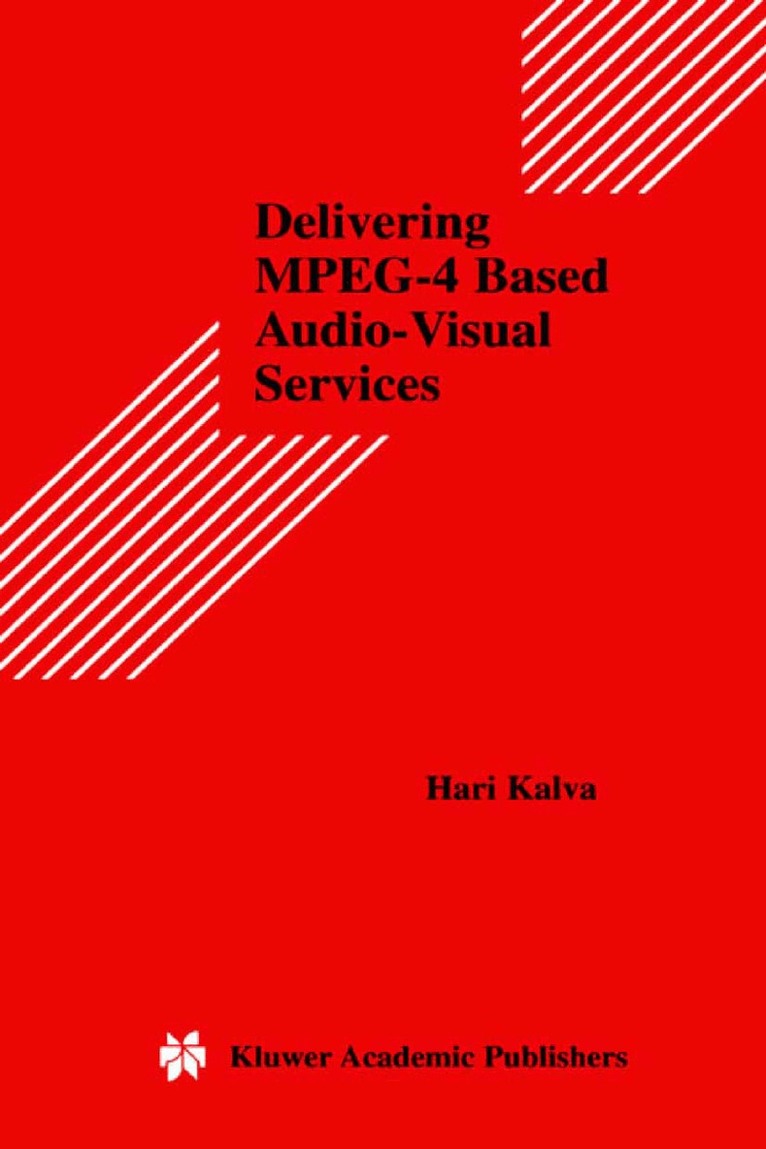
Delivering MPEG-4 Based Audio-Visual Services investigates the different aspects of end-to-end multimedia services; content creation, server and service provider, network, and the end-user terminal. Part I provides a comprehensive introduction to digital video communications, MPEG standards, and technologies, and deals with system level issues including standardization and interoperability, user interaction, and the design of a distributed video server. Part II investigates the systems in the context of object-based multimedia services and presents a design for an object-based audio-visual terminal, some of these features having been adopted by the MPEG-4 Systems specification. The book goes on to study the requirements for a file format to represent object-based audio-visual content and the design of one such format. The design introduces new concepts such as direct streaming that are essential for scalable servers. The final part of the book examines the delivery of object-based multimedia presentations and gives optimal algorithms for multiplex-scheduling of object-based audio-visual presentations, showing that the audio-visual object scheduling problem is NP-complete in the strong sense. The problem of scheduling audio-visual objects is similar to the problem of sequencing jobs on a single machine. The book compares these problems and adapts job-sequencing results to audio-visual object scheduling, and provides optimal algorithms for scheduling presentations under resource constraints, such as bandwidth (network constraints) and buffer (terminal constraints). In addition, the book presents algorithms that minimize the resources required for scheduling presentations and the auxiliary capacity required to support interactivity in object-based audio-visual presentations. Delivering MPEG-4 Based Audio-Visual Services is essential reading for researchers and practitioners in the areas of multimedia systems engineering and multimedia computing, network professionals, service providers, and all scientists and technical managers interested in the most up-to-date MPEG standards and technologies.