Harlan B. Miller - Böcker
Visar alla böcker från författaren Harlan B. Miller. Handla med fri frakt och snabb leverans.
3 produkter
3 produkter
621 kr
Skickas inom 10-15 vardagar
The Limits of Utilitarianism was first published in 1982. Minnesota Archive Editions uses digital technology to make long-unavailable books once again accessible, and are published unaltered from the original University of Minnesota Press editions.Many philosophers have argued that utilitarianism is an unacceptable moral theory and that promoting the general welfare is at best only one of the legitimate goals of public policy. Utilitarian principles seem to place no limits on the extent to which society may legitimately interfere with a person's liberties - provided that such actions can be shown to promote the long-term welfare of its members. These issues have played a central role in discussions of utilitarianism since the time of Bentham and Mill. Despite criticisms, utilitarianism remains the most influential and widely accepted moral theory of recent times.In this volume contemporary philosophers address four aspects of utilitarianism: the principle of utility; utilitarianism vis-à-vis contractarianism; welfare; and voluntary cooperation and helping others. The editors provide an introduction and a comprehensive bibliography that covers all books and articles published in utilitarianism since 1930.
1 064 kr
Skickas inom 10-15 vardagar
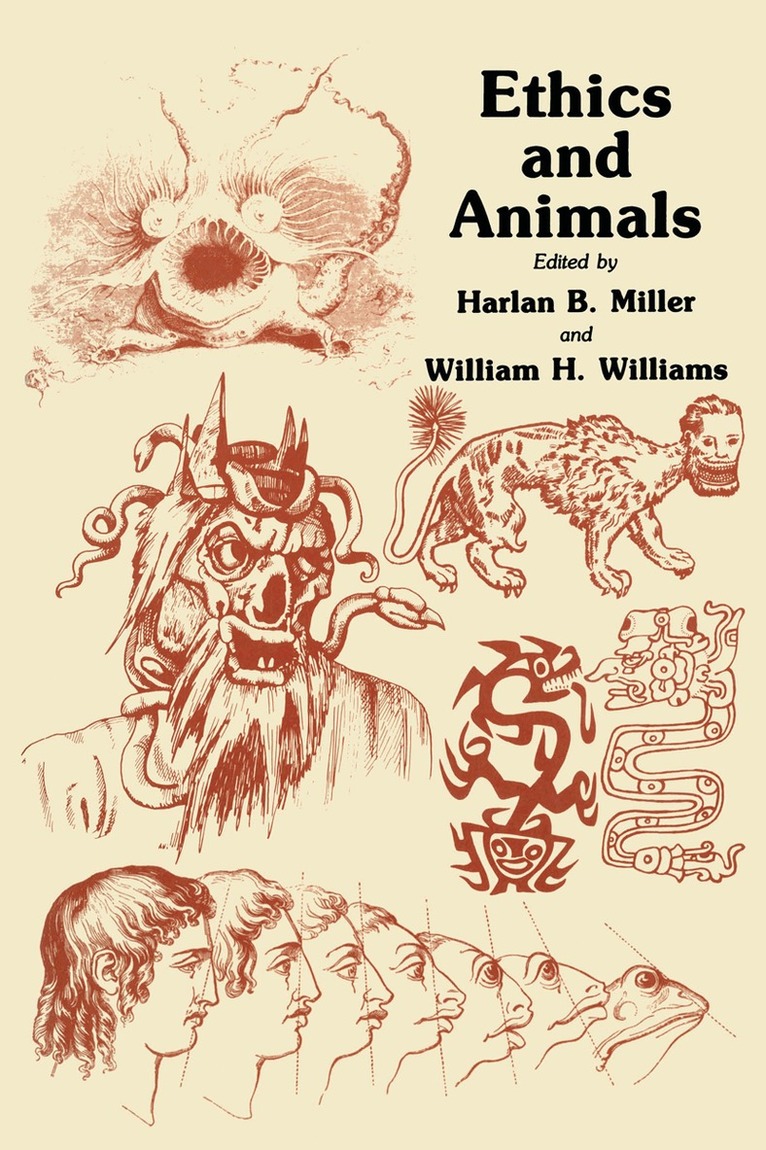
This volume is a collection of essays concerned with the morality of hu man treatment of nonhuman animals. The contributors take very different approaches to their topics and come to widely divergent conclusions. The goal of the volume as a whole is to shed a brighter light upon an aspect of human life-our relations with the other animals-that has recently seen a great increase in interest and in the generation of heat. The discussions and debates contained herein are addressed by the contributors to each other, to the general public, and to the academic world, especially the biological, philosophical, and political parts of that world. The essays are organized into eight sections by topics, each sec tion beginning with a brief introduction linking the papers and the sec tions to one another. There is also a general introduction and an Epilog that suggests alternate possible ways of organizing the material. The first two sections are concerned with the place of animals in the human world: Section I with the ways humans view animals in literature, philosophy, and other parts of human culture, and Section II with the place of animals in human legal and moral community. The next three sections concern comparisons between human and nonhuman animals: Section III on the rights and wrongs of killing, Section IV on the humanity of animals and the animality of humans, and Section V on questions of the conflict of human and animal interests.
1 096 kr
Skickas inom 10-15 vardagar
In this text, a full spectrum of views on how humans ought best to treat non-human animals is presented. The defences of animal rights set out here are based not only on classical ethical principles, but also on firmly grounded scientific notions of evolutionary continuity among species. And, uncommon in works on these themes, there is also a modern defence of the use of animals in research, testing and farming. The contributors - a cohort of animal behaviourists, scientists, philosophers, economists, psychologists, and animal welfare activists - bring equally as wide a diversity of approaches, methodologies, and conclusions to these always moving questions of the human uses of animals. Among the specific topics treated are: animal rights; killing of non-humans; animal suffering; speciesism; animal intelligence; animal experimentation; humans as hunting animals; the limits of moral community; animals as models of the human; moral status of animals; ethics of meat eating; animal liberation; and animals in human law, philosophy, and literature. The survey identifies the key issues in human-animal relationships, sorts out their meanings, and bridges ethical and utilitarian views.It demonstrates unequivocally that those who use animals have serious obligations of care and respect toward them, even while showing that - where human interests go beyond those of other creatures - at least some human interests ought to prevail. All those concerned with animal rights - traditionalists and advocates of animal liberation alike - should find this book a valuable source of insight and understanding into these often difficult problems.