Harriet Ritvo - Böcker
Visar alla böcker från författaren Harriet Ritvo. Handla med fri frakt och snabb leverans.
6 produkter
6 produkter
234 kr
Skickas inom 7-10 vardagar
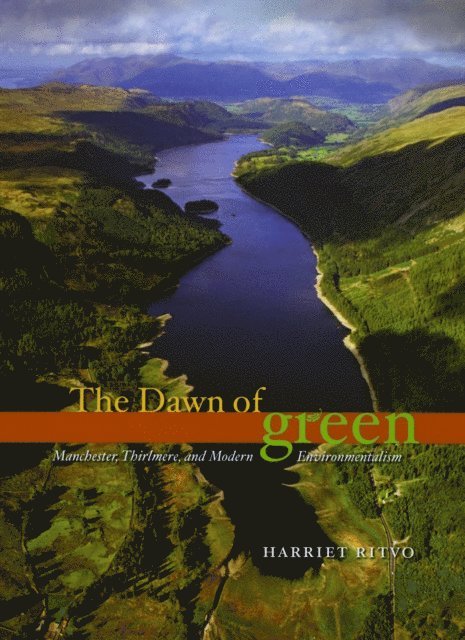
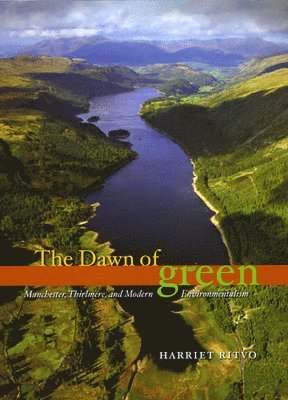
Located in the heart of England's Lake District, Thirlmere, with its placid sheen, surrounding evergreens, and apparent lack of pollution or development, seems to epitomize the unadulterated bucolic ideal. But under its calm surface lurks the enduring legacy of a nineteenth-century conflict that pitted industrial progress against natural conservation - and helped launch the environmental movement as we know it. Purchased by the city of Manchester in the 1870s, Thirlmere was dammed and converted into a reservoir, its water piped one hundred miles south to the burgeoning industrial center and its workforce. This feat of civil engineering - and of natural resource diversion - inspired one of the first environmental struggles of modern times. "The Dawn of Green" recreates the battle for Thirlmere and the clashes between conservationists who wished to preserve the lake and developers eager to meet the needs of industry and a growing urban population.Bringing to vivid life the colorful and strong-minded characters who populated both sides of the debate, noted historian Harriet Ritvo revisits notions of the natural promulgated by Romantic poets, recreationists, resource managers, and industrial developers to establish Thirlmere as the template for subsequent - and continuing - environmental struggles. A century after Thirlmere, the demand for water and the control of water rights are among the most pressing political, humanitarian, and environmental concerns of our time. By investigating Victorian ideas about industry, development, and technology, Ritvo shows how the lessons learned in the Lake District can inform and guide modern environmental and conservation campaigns.
186 kr
Skickas inom 7-10 vardagar
Located in the heart of England's Lake District, the placid waters of Thirlmere seem to be the embodiment of pastoral beauty. But under their calm surface lurks the legacy of a nineteenth-century conflict that pitted industrial progress against natural conservation - and helped launch the environmental movement as we know it. Purchased by the city of Manchester in the 1870s, Thirlmere was dammed and converted into a reservoir, its water piped one hundred miles south to the burgeoning industrial city and its workforce. This feat of civil engineering - and of natural resource diversion - inspired one of the first environmental struggles of modern times. "The Dawn of Green" re-creates the battle for Thirlmere and the clashes between conservationists who wished to preserve the lake and developers eager to supply the needs of a growing urban population.Bringing to vivid life the colorful and strong-minded characters who populated both sides of the debate, noted historian Harriet Ritvo revisits notions of the natural promulgated by romantic poets, recreationists, resource managers, and industrial developers to establish Thirlmere as the template for subsequent - and continuing - environmental struggles.
395 kr
Skickas inom 10-15 vardagar
When we think about the Victorian age, we usually envision people together with animals: the Queen and her pugs, the sportsman with horses and hounds, the big game hunter with his wild kill, the gentleman farmer with a prize bull. Harriet Ritvo here gives us a vivid picture of how animals figured in English thinking during the nineteenth century and, by extension, how they served as metaphors for human psychological needs and sociopolitical aspirations.Victorian England was a period of burgeoning scientific cattle breeding and newly fashionable dog shows; an age of Empire and big game hunting; an era of reform and reformers that saw the birth of the Royal SPCA. Ritvo examines Victorian thinking about animals in the context of other lines of thought: evolution, class structure, popular science and natural history, imperial domination. The papers and publications of people and organizations concerned with agricultural breeding, veterinary medicine, the world of pets, vivisection and other humane causes, zoos, hunting at home and abroad, all reveal underlying assumptions and deeply held convictions—for example, about Britain’s imperial enterprise, social discipline, and the hierarchy of orders, in nature and in human society.Thus this book contributes a new new topic of inquiry to Victorian studies; its combination of rhetorical analysis with more conventional methods of historical research offers a novel perspective on Victorian culture. And because nineteenth-century attitudes and practices were often the ancestors of contemporary ones, this perspective can also inform modern debates about human–animal interactions.
362 kr
Skickas inom 10-15 vardagar
"Cats is 'dogs,' and rabbits is 'dogs,' and so's parrots; but this `ere 'tortis' is a insect," a porter explains to an astonished traveler in a nineteenth-century Punch cartoon. Railways were not the only British institution to schematize the world. This enormously entertaining book captures the fervor of the Victorian age for classifying and categorizing every new specimen, plant or animal, that British explorers and soldiers and sailors brought home. As she depicts a whole complex of competing groups deploying rival schemes and nomenclatures, Harriet Ritvo shows us a society drawing and redrawing its own boundaries and ultimately identifying itself.The experts (whether calling themselves naturalists, zoologists, or comparative anatomists) agreed on their superior authority if nothing else, but the laymen had their say--and Ritvo shows us a world in which butchers and artists, farmers and showmen vied to impose order on the wild profusion of nature. Sometimes assumptions or preoccupations overlapped; sometimes open disagreement or hostility emerged, exposing fissures in the social fabric or contested cultural territory. Of the greatest interest were creatures that confounded or crossed established categories; in the discussions provoked by these mishaps, monstrosities, and hybrids we can see ideas about human society--about the sexual proclivities of women, for instance, or the imagined hierarchy of nations and races.A thoroughly absorbing account of taxonomy--as zoological classification and as anthropological study--The Platypus and the Mermaid offers a new perspective on the constantly shifting, ever suggestive interactions of scientific lore, cultural ideas, and the popular imagination.
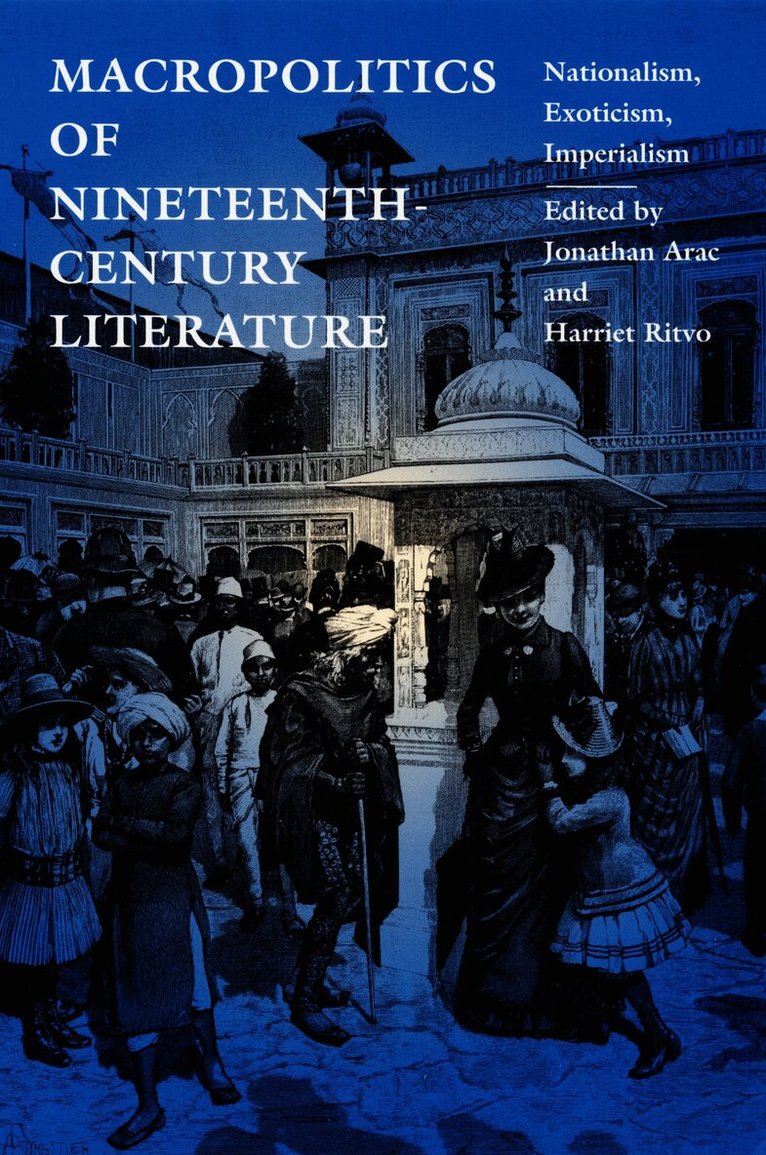
Macropolitics of Nineteenth-Century Literature
Nationalism, Exoticism, Imperialism
Inbunden, Engelska, 1991
1 174 kr
Skickas inom 10-15 vardagar
In contrast to the micropolitics of Foucault, macropolitics emphasizes that political transformations at the level of the state have great importance for many developments in nineteenth-century writing.
Macropolitics of Nineteenth-Century Literature
Nationalism, Exoticism, Imperialism
Häftad, Engelska, 1995
325 kr
Skickas inom 7-10 vardagar
Increasingly in the last decade, macropolitics-a consideration of political transformations at the level of the state-has become a focus for cultural inquiry. From the macropolitical perspective afforded by contemporary postcolonial studies, the essays in this collection explore the relationship between politics and culture by examining developments in a wide range of nineteenth-century writing. The dozen essays gathered here span the entire era of colonization and discuss the British Isles, Europe, the United States, India, the Caribbean, and Africa. Addressing the works of Wordsworth, Shelley, Dickens, Melville, Flaubert, Conrad, and Charlotte BrontË, as well as explorers’ reports, Bible translations, popular theater, and folklore, the contributors consider such topics as the political function of aesthetic containment, the redefinitions of nationality under the pressure of imperial ambition, and the coexistence of imperial and revolutionary tendencies. New historical data and new interpretive perspectives alter our conception of established masterpieces and provoke new understandings of the political and cultural context within which these works emerged. This anthology demonstrates that the macropolitical concept of imperialism can provide a new understanding of nineteenth-century cultural production by integrating into a single process the well-established topics of nationalism and exoticism. First published in 1991 (University of Pennsylvania Press), Macropolitics of Nineteenth-Century Literature is now available in paperback. Offering agenda-setting essays in cultural and Victorian studies, it will be of interest to students and scholars of British and American literature, literary theory, and colonial and postcolonial studies.Contributors. Jonathan Arac, Chris Bongie, Wai-chee Dimock, Bruce Greenfield, Mark Kipperman, James F. Knapp, Loren Kruger, Lisa Lowe, Susan Meyer, Jeff Nunokawa, Harriet Ritvo, Marlon B. Ross, Nancy Vogeley, Sue Zemka