H.C. Thomas – författare
Visar alla böcker från författaren H.C. Thomas. Handla med fri frakt och snabb leverans.
6 produkter
6 produkter
Inbunden, Engelska, 1993
1 669 kr
Skickas inom 10-15 vardagar
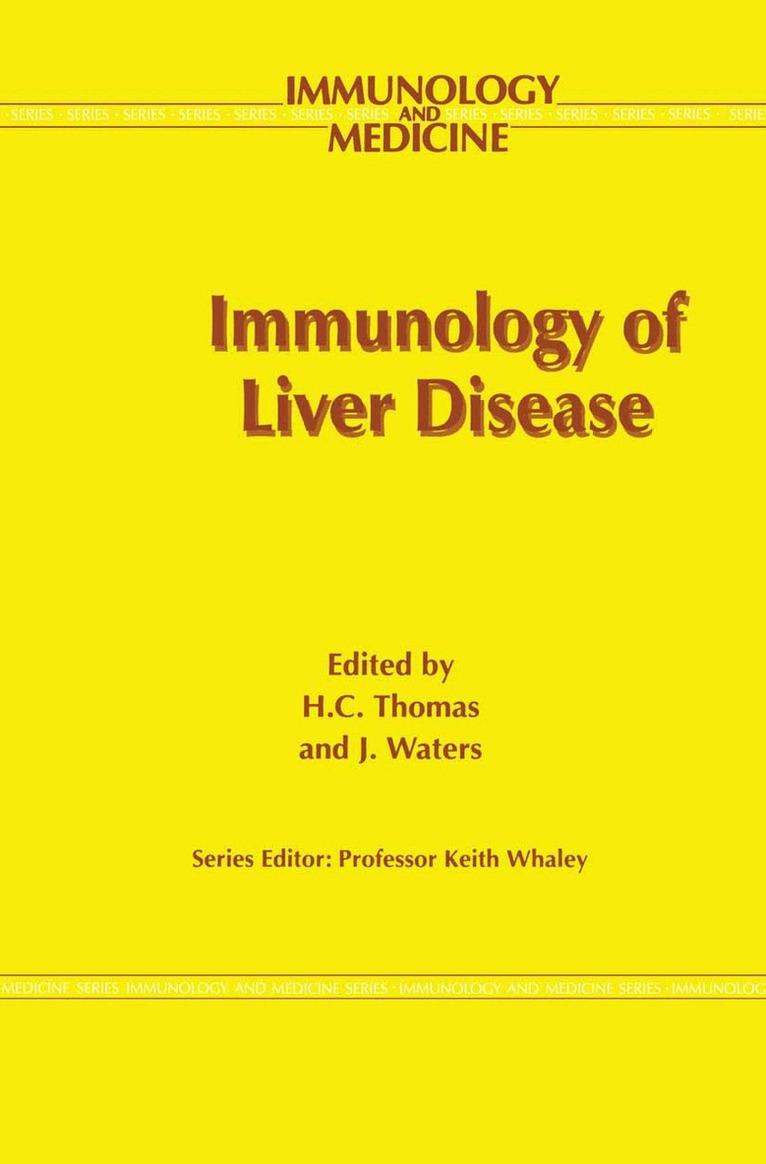
The contributions to this book examine the role of the immune response in liver disease. The book is divided into three sections and there are two introductory chapters: one discussing viral immunopathology and the other autoimmune disease. Three chapters are devoted to viral hepatitis infections, the immune responses engendered by each virus and the pathogenesis of the diseases they cause. One author reviews the use of immunotherapy in hepatocellular carcinoma. Two chapters then review the recent advances in the identification and characterization of autoantibodies and their cytoplasmic antigens. These concentrate on current experimental approaches using molecular biological techniques to identify the structures recognized by disease-specific autoantibodies. The third section has a chapter reviewing the immune mechanisms in alcoholic liver disease and a chapter examining the immune reactions provoked by hepatotoxic drugs.
E-bok
PDF, Engelska, 2013756 kr
Läs direkt efter köp
Since photosynthetic performance is a fundamental determinant of yield in the vast majority of crops, an understanding of the factors limiting photosynthetic productivity has a crucial role to play in crop improvement programmes.Photosynthesis, unlike the majority of physiological processes in plants, has been the subject of extensive studies at the molecular level for many years. This reductionist approach has resulted in the development of an impressive and detailed understanding of the mechanisms of light capture, energy transduction and carbohydrate biosynthesis, processes that are clearly central to the success of the plant and the productivity of crops.This volume examines in the widest context the factors determining the photosynthetic performance of crops. The emphasis throughout the book is on the setting for photosynthesis rather than the fundamental process itself.The book will prove useful to a wide range of plant scientists, and will encourage a more rapid integration of disciplines in the quest to understand and improve the productivity of crops by the procedures of classical breeding and genetic manipulation.
Häftad, Engelska, 1982
1 124 kr
Skickas inom 10-15 vardagar
Howard C. Thomas In normal subjects the regulatory apparatus of the immune system permits responses to foreign antigens but suppresses those directed to "self' components. Autoimmune disease occurs as a failure ofthis system either as a result of a primary defect in the regulatory apparatus (primary autoimmunization) or because of a change in the antigenicity of the tissues (secondary autoimmunization). Autoaggressive reactions are characterised by the presence of autoantibodies. When these are directed to membrane displayed antigens (Fig. 1) they are probably of importance in the lysis of hepatocytes. Those directed to cytoplasmic antigens may be useful diagnostically but are of unknown pathogenic significance. When no extrinsic aetiological factor can be identified, the process is assumed to be the result of a failure ofthe regulatory system, allowing the spontaneous expansion of a clone of autoreactive lymphocytes. The defect may be generalised or specific to certain groups of self-antigens and thus the autoimmune disease may be either multi- or unisystemic. The recent development of techniques to enumerate and measure the functional activity of the suppressor lymphocytes which control the effector limbs of the immune system has enabled investigators to test whether the various purported autoimmune diseases do have as their basis a generalised defect in immunoregu lation. Assessment of antigen-specific immunoregulatory function is, however, not yet readily available. liver Membrane I Antigen (LIM) I Liver I HLA, A, B, C, Sensitisation to Specific -;::!IIIL. .
E-bok
PDF, Engelska, 20121 408 kr
Läs direkt efter köp
Howard C. Thomas In normal subjects the regulatory apparatus of the immune system permits responses to foreign antigens but suppresses those directed to "self'' components. Autoimmune disease occurs as a failure ofthis system either as a result of a primary defect in the regulatory apparatus (primary autoimmunization) or because of a change in the antigenicity of the tissues (secondary autoimmunization). Autoaggressive reactions are characterised by the presence of autoantibodies. When these are directed to membrane displayed antigens (Fig. 1) they are probably of importance in the lysis of hepatocytes. Those directed to cytoplasmic antigens may be useful diagnostically but are of unknown pathogenic significance. When no extrinsic aetiological factor can be identified, the process is assumed to be the result of a failure ofthe regulatory system, allowing the spontaneous expansion of a clone of autoreactive lymphocytes. The defect may be generalised or specific to certain groups of self-antigens and thus the autoimmune disease may be either multi- or unisystemic. The recent development of techniques to enumerate and measure the functional activity of the suppressor lymphocytes which control the effector limbs of the immune system has enabled investigators to test whether the various purported autoimmune diseases do have as their basis a generalised defect in immunoregu lation. Assessment of antigen-specific immunoregulatory function is, however, not yet readily available. liver Membrane I Antigen (LIM) I Liver I HLA, A, B, C, Sensitisation to Specific -;::!IIIL. .
Del 21 - Immunology and Medicine
Immunology of Liver Disease
Häftad, Engelska, 2012
1 682 kr
Skickas inom 10-15 vardagar
The role of the immune response in both the pathology of liver disease and in the modulation ofliver injury has been the subject of intense research. This book aims to present the current understanding of the involvement of the immune response in liver disease. The first chapters examine the role of the immune response in viral infections of the liver. These viruses cause hepatitis of varying severity and it is thought that many of the mechanisms responsible for liver cell injury are immunologically mediated. In addition three of these viruses, hepatitic B, C, and D, are associated with persistent infection and chronic liver disease. The role of the immune response in viral persistence is discussed. Further chapters are devoted to the three major autoimmune liver diseases which are thought to be the result of loss of tolerance to autologous liver tissue. There has been much recent research on cellular immune responses in these diseases but knowledge of the immunological processes which lead to the breakdown of tolerance and the mechanisms of tissue damage are limited. Other research has concentrated on the identification of the antigens which are the targets of this immune response. Linkage disequilibrium between MHC alleles and autoimmune diseases has suggested a role for immunogenetic factors.
E-bok
PDF, Engelska, 20122 036 kr
Läs direkt efter köp
The role of the immune response in both the pathology of liver disease and in the modulation ofliver injury has been the subject of intense research. This book aims to present the current understanding of the involvement of the immune response in liver disease. The first chapters examine the role of the immune response in viral infections of the liver. These viruses cause hepatitis of varying severity and it is thought that many of the mechanisms responsible for liver cell injury are immunologically mediated. In addition three of these viruses, hepatitic B, C, and D, are associated with persistent infection and chronic liver disease. The role of the immune response in viral persistence is discussed. Further chapters are devoted to the three major autoimmune liver diseases which are thought to be the result of loss of tolerance to autologous liver tissue. There has been much recent research on cellular immune responses in these diseases but knowledge of the immunological processes which lead to the breakdown of tolerance and the mechanisms of tissue damage are limited. Other research has concentrated on the identification of the antigens which are the targets of this immune response. Linkage disequilibrium between MHC alleles and autoimmune diseases has suggested a role for immunogenetic factors.