Heather E. Price – författare
Visar alla böcker från författaren Heather E. Price. Handla med fri frakt och snabb leverans.
4 produkter
4 produkter
E-bok
PDF, Engelska, 2016430 kr
Läs direkt efter köp
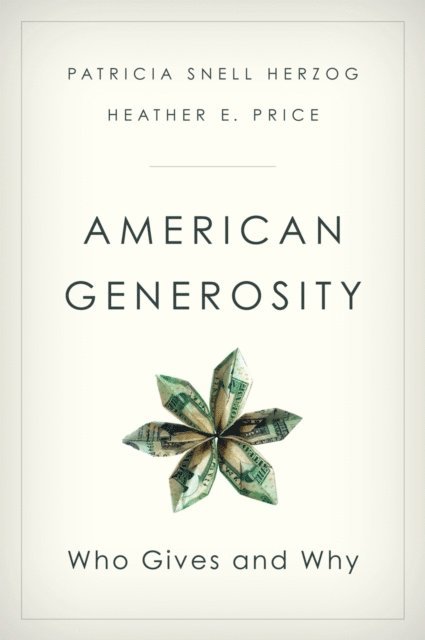
American charitable giving veers from the hyperbolically generous to the hyperbolically stingy. On some days, no one has a quarter to spare; in times of disaster, Americans will put their lives on hold to build houses for those displaced by hurricanes. The crucial question of who gives and why they do it lies at the heart of American Generosity.Patricia Snell Herzog and Heather E. Price, sociologists who focus on philanthropy, draw on findings from the groundbreaking Science of Generosity initiative, which combines a nationally representative survey of adult Americans with in-depth interviews and case studies. For most Americans, they find, the important forms of giving are: donating money, volunteering time, and taking political action. Focusing on these three types of activity, the authors go on to examine and analyze multiple dimensions of resources, social status, regional cultural norms, different approaches to giving, social-psychological orientation, and the relational contexts of generosity. Herzog and Price conclude that giving is supported by "circles of generosity," which ripple outward in their reach to targets of giving. The book offers not just analysis, but practical tips for readers who want to increase their own giving, for parents modeling giving to their children, spouses desiring alignment in their giving, and friends and community members seeking to support giving by others. The authors also provide explicit fundraising ideas for nonprofits, foundations, and religious leaders.Thought-provoking and accessibly written, American Generosity lays out a broad yet nuanced explanation of giving that sheds important new light on a topic that touches all of us in one way or another.
E-bok
Engelska, 2016430 kr
Läs direkt efter köp
American charitable giving veers from the hyperbolically generous to the hyperbolically stingy. On some days, no one has a quarter to spare; in times of disaster, Americans will put their lives on hold to build houses for those displaced by hurricanes. The crucial question of who gives and why they do it lies at the heart of American Generosity.Patricia Snell Herzog and Heather E. Price, sociologists who focus on philanthropy, draw on findings from the groundbreaking Science of Generosity initiative, which combines a nationally representative survey of adult Americans with in-depth interviews and case studies. For most Americans, they find, the important forms of giving are: donating money, volunteering time, and taking political action. Focusing on these three types of activity, the authors go on to examine and analyze multiple dimensions of resources, social status, regional cultural norms, different approaches to giving, social-psychological orientation, and the relational contexts of generosity. Herzog and Price conclude that giving is supported by "circles of generosity," which ripple outward in their reach to targets of giving. The book offers not just analysis, but practical tips for readers who want to increase their own giving, for parents modeling giving to their children, spouses desiring alignment in their giving, and friends and community members seeking to support giving by others. The authors also provide explicit fundraising ideas for nonprofits, foundations, and religious leaders.Thought-provoking and accessibly written, American Generosity lays out a broad yet nuanced explanation of giving that sheds important new light on a topic that touches all of us in one way or another.
Häftad, Engelska, 2021
274 kr
Skickas
This book walks readers through the stages of the high school college prep pipeline that introduces interlocked structural barriers to students. The author shows how these barriers reinforce segregated structures that unfairly distribute the public good of education to some students and not others. Price argues that the college prep pipeline of Advanced Placement and International Baccalaureate coursework in American high schools constitutes a new form of tracking in the 21st century. Even further, this new tracking introduces a façade of "college readiness" that veils the unequal learning opportunities that send some students out into the college world with pockets full of counterfeit credentials that serve only to reinforce the historically oppressive system. Whether intentional or not, this new form of tracking is embedded in schools across the United States and have lifetime consequences for individual students that reinforce historically racial, ethnic, and spatial inequalities. Book Features:Follows all the stages in the college prep pipeline, from access to curriculum to participation in classes to demonstration of mastery of the course content. Provides a more valid measure of quality by using the national tests of College Board Advanced Placement to compare the learning outcomes of students enrolled in the same classes across the nation. Uses Arizona, Florida, Michigan, and North Carolina as case studies that exemplify the variation in practice and policy across the United States. Compares public districts to charter high schools, showing how the rise in school choice policies hinders integration efforts.
Inbunden, Engelska, 2021
1 314 kr
Skickas inom 11-20 vardagar
This book walks readers through the stages of the high school college prep pipeline that introduces interlocked structural barriers to students. The author shows how these barriers reinforce segregated structures that unfairly distribute the public good of education to some students and not others. Price argues that the college prep pipeline of Advanced Placement and International Baccalaureate coursework in American high schools constitutes a new form of tracking in the 21st century. Even further, this new tracking introduces a façade of "college readiness" that veils the unequal learning opportunities that send some students out into the college world with pockets full of counterfeit credentials that serve only to reinforce the historically oppressive system. Whether intentional or not, this new form of tracking is embedded in schools across the United States and have lifetime consequences for individual students that reinforce historically racial, ethnic, and spatial inequalities. Book Features:Follows all the stages in the college prep pipeline, from access to curriculum to participation in classes to demonstration of mastery of the course content. Provides a more valid measure of quality by using the national tests of College Board Advanced Placement to compare the learning outcomes of students enrolled in the same classes across the nation. Uses Arizona, Florida, Michigan, and North Carolina as case studies that exemplify the variation in practice and policy across the United States. Compares public districts to charter high schools, showing how the rise in school choice policies hinders integration efforts.