Patricia Snell Herzog - Böcker
Visar alla böcker från författaren Patricia Snell Herzog. Handla med fri frakt och snabb leverans.
4 produkter
4 produkter
555 kr
Skickas inom 5-8 vardagar
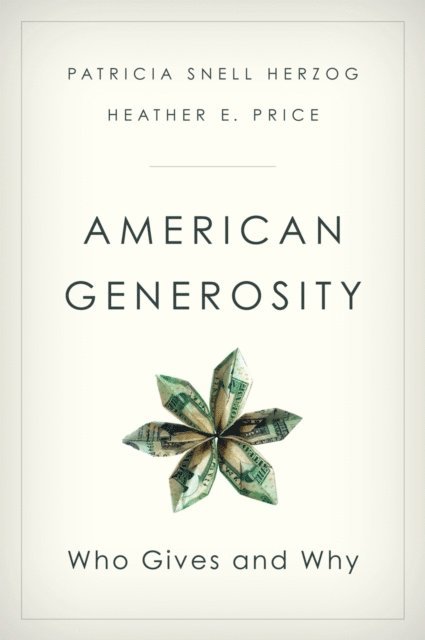
This accessibly written book presents a picture of generosity that is unique in its breadth. American Generosity is distinguished by its comprehensive approach to answering the what, how much, who, where, and why of giving. The authors consider multiple forms of generosity. They focus on three especially important forms of giving: donating money, volunteering time, and taking political action. But they also look at activities like giving blood and bodily organs, material possessions, relational attention, and participation in environmental activism. Their striking and sometimes counterintuitive findings are based on data from the Science of Generosity initiative, which combines a nationally representative survey of adult Americans with in-depth interviews and ethnographies. From the interviews, case studies are selected to illustrate core themes. The analyses examine multiple dimensions of resources, social status, regional cultural norms, different approaches to giving, social-psychological orientation, and the relational contexts of generosity. The authors conclude that giving is supported by "circles of generosity," which ripple outward in their reach to giving targets. The practical implications include tips for readers who want to increase their own giving, and for parents modeling giving to their children, spouses desiring alignment in their giving, and friends and community members seeking to support other people's giving. Also on offer are explicit fundraising ideas for nonprofits, foundations, and religious leaders. In American Generosity we find a broad yet nuanced explanation of giving that transcends the usual categories of sociological study to address the simple but confounding question about charity-who gives and why?
529 kr
Skickas inom 5-8 vardagar
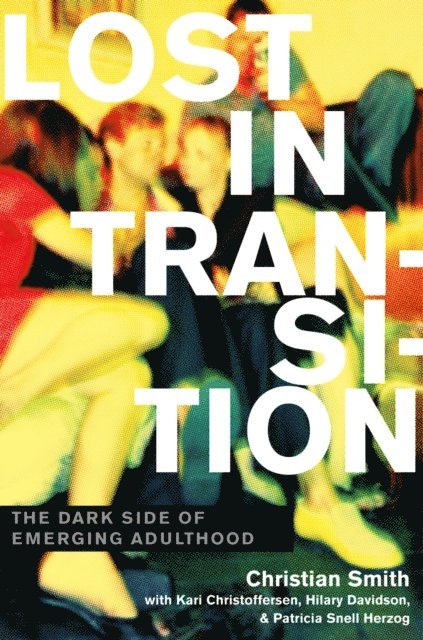
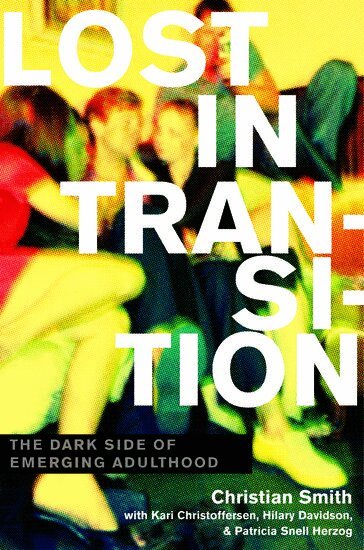
Life for emerging adults is vastly different today than it was for their counterparts even a generation ago. Young people are waiting longer to marry, to have children, and to choose a career direction. As a result, they enjoy more freedom, opportunities, and personal growth than ever before. But the transition to adulthood is also more complex, disjointed, and confusing. In Lost in Transition, Christian Smith and his collaborators draw on 230 in-depth interviews with a broad cross-section of emerging adults (ages 18-23) to investigate the difficulties young people face today, the underlying causes of those difficulties, and the consequences both for individuals and for American society as a whole. Rampant consumer capitalism, ongoing failures in education, hyper-individualism, postmodernist moral relativism, and other aspects of American culture are all contributing to the chaotic terrain that emerging adults must cross. Smith identifies five major problems facing very many young people today: confused moral reasoning, routine intoxication, materialistic life goals, regrettable sexual experiences, and disengagement from civic and political life. The trouble does not lie only with the emerging adults or their poor individual decisions but has much deeper roots in mainstream American culture--a culture which emerging adults have largely inherited rather than created. Older adults, Smith argues, must recognize that much of the responsibility for the pain and confusion young people face lies with them. Rejecting both sky-is-falling alarmism on the one hand and complacent disregard on the other, Smith suggests the need for what he calls "realistic concern"--and a reconsideration of our cultural priorities and practices--that will help emerging adults more skillfully engage unique challenges they face. Even-handed, engagingly written, and based on comprehensive research, Lost in Transition brings much needed attention to the darker side of the transition to adulthood.
1 170 kr
Skickas inom 10-15 vardagar
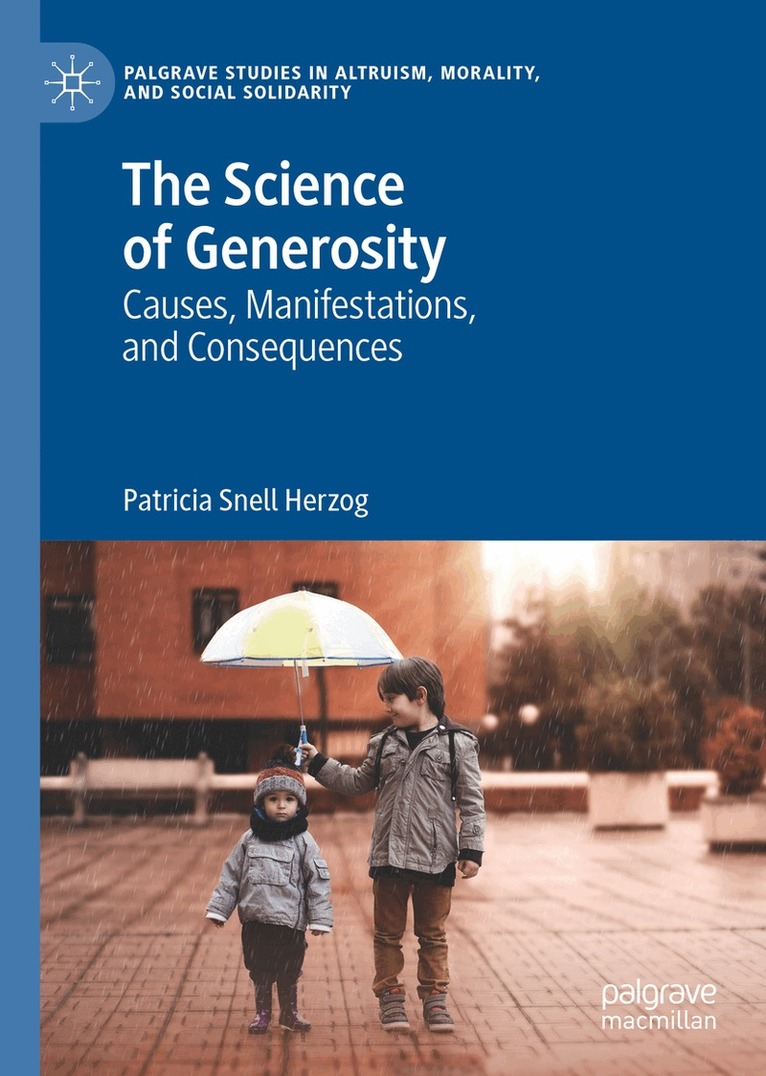
This book advances understanding of the manifestations, causes, and consequences of generosity. Synthesizing the findings of the 14 research projects conducted by the Science of Generosity Initiative and offering an appendix of methods for studying generosity, this comprehensive account integrates insights from disparate disciplines to facilitate a broader understanding of giving—ultimately creating a compendium of not only the latest research in the field of altruistic behaviors, but also a research roadmap for the future. As the author sequentially explores the manifestations, causes, and consequences of generosity, Patricia Snell Herzog here also offers analyses ranging from the micro- to macro-level to paint a full picture of the individual, interpersonal and familial, and collective (inter)actions involved in altruism and generosity. The author concludes with a call to stimulate further interdisciplinary generosity studies, describing the implications for emerging scholars and practitioners across sociology, economics, political science, religious studies, and beyond.
1 170 kr
Skickas inom 10-15 vardagar
This book advances understanding of the manifestations, causes, and consequences of generosity. Synthesizing the findings of the 14 research projects conducted by the Science of Generosity Initiative and offering an appendix of methods for studying generosity, this comprehensive account integrates insights from disparate disciplines to facilitate a broader understanding of giving—ultimately creating a compendium of not only the latest research in the field of altruistic behaviors, but also a research roadmap for the future. As the author sequentially explores the manifestations, causes, and consequences of generosity, Patricia Snell Herzog here also offers analyses ranging from the micro- to macro-level to paint a full picture of the individual, interpersonal and familial, and collective (inter)actions involved in altruism and generosity. The author concludes with a call to stimulate further interdisciplinary generosity studies, describing the implications for emerging scholars and practitioners across sociology, economics, political science, religious studies, and beyond.