Heather Fowler Salamini - Böcker
Visar alla böcker från författaren Heather Fowler Salamini. Handla med fri frakt och snabb leverans.
3 produkter
3 produkter
340 kr
Skickas inom 10-15 vardagar
Inequitable land-tenure patterns and a radical labor movement organized and headed by foreign anarcho-syndicalist leaders created conditions conducive to peasant mobilization in the state of Veracruz during the Mexican Revolution. This study traces the course of the Veracruz peasant movement from its origins in the pre-Revolutionary regime of Porfirio Diaz. Not until 1920, when the radical revolutionary Adalberto Tejeda assumed the governorship, did a favorable political environment emerge for the creation of the League of Agrarian Communities and Peasant Syndicates of the State of Veracruz. During the 1920s, under the patronage of Tejeda and the Communist party, the League grew into a strong power base for the governor. A peasant guerilla force was created to protect the rights of the peasantry, and the League gradually assumed predominance in all branches of state government. The height of the League's power coincided with Tejeda's second term in office (1928-32); under his administration socialist programs were implemented to improve the economic and social status of the rural and urban lower classes.By 1932, when the tejedista movement had become a challenge to the national revolutionary leadership, the central government launched a campaign to disarm and split it.Finally, six years later, the League was forced to merge into the political structure of the official party at the behest of Lazaro Cardenas. One of the first in-depth analyses of peasant movements at the state level, this study focuses on the dynamics of peasant organization and examines the changing nature of peasant leadership over a fifty-year period. In comparing types of organizational techniques used by state and national peasant caudillos, the author views Tejeda and Cardenas in a new historical light. Heather Fowler Salamini, who is an associate professor of history at Bradley University, holds advanced degrees from the University of Toronto (M.A., 1963) and the American University (Ph.D., 1970). Her articles have appeared in Historia Mexicana and Contemporary Mexico (1976).
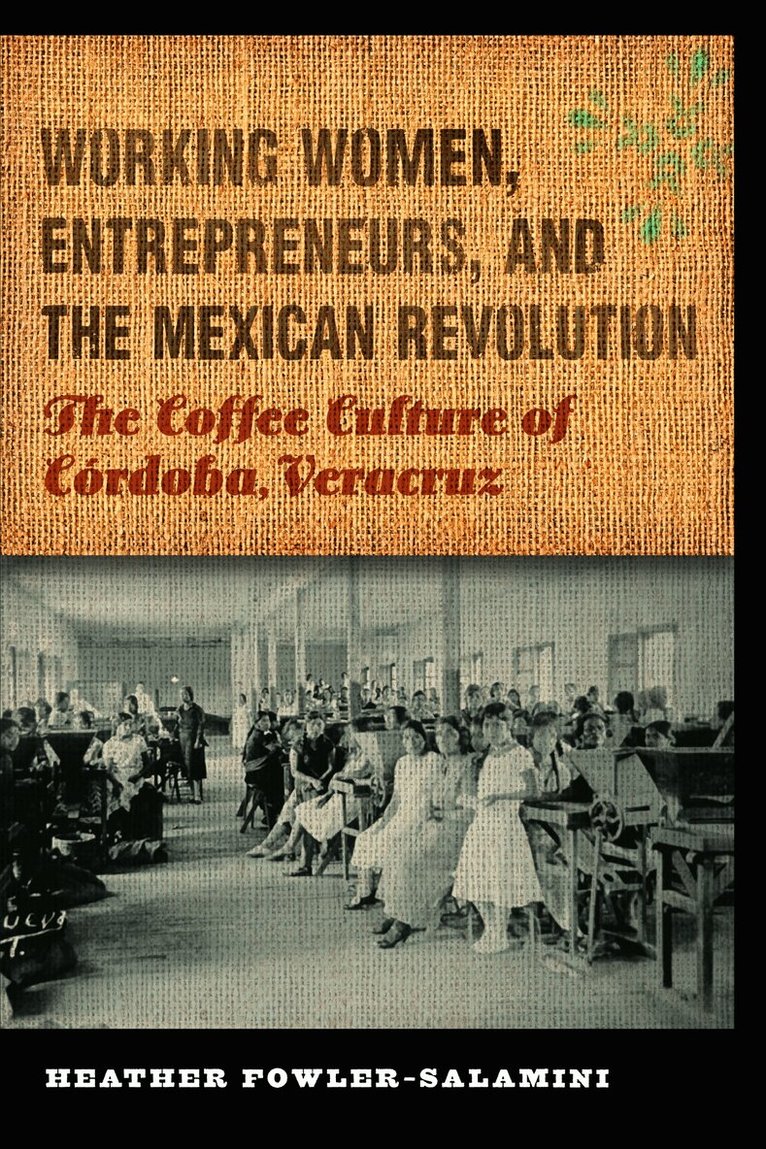
Working Women, Entrepreneurs, and the Mexican Revolution
The Coffee Culture of Córdoba, Veracruz
Häftad, Engelska, 2013
529 kr
Skickas inom 10-15 vardagar
In the 1890s, Spanish entrepreneurs spearheaded the emergence of Córdoba, Veracruz, as Mexico's largest commercial center for coffee preparation and export to the Atlantic community. Seasonal women workers quickly became the major part of the agroindustry's labor force. As they grew in numbers and influence in the first half of the twentieth century, these women shaped the workplace culture and contested gender norms through labor union activism and strong leadership. Their fight for workers' rights was supported by the revolutionary state and negotiated within its industrial-labor institutions until they were replaced by machines in the 1960s.Heather Fowler-Salamini's Working Women, Entrepreneurs, and the Mexican Revolution analyzes the interrelationships between the region's immigrant entrepreneurs, workforce, labor movement, gender relations, and culture on the one hand, and social revolution, modernization, and the Atlantic community on the other between the 1890s and the 1960s. Using extensive archival research and oral-history interviews, Fowler-Salamini illustrates the ways in which the immigrant and women's work cultures transformed Córdoba's regional coffee economy and in turn influenced the development of the nation's coffee agro-export industry and its labor force.
413 kr
Skickas inom 7-10 vardagar
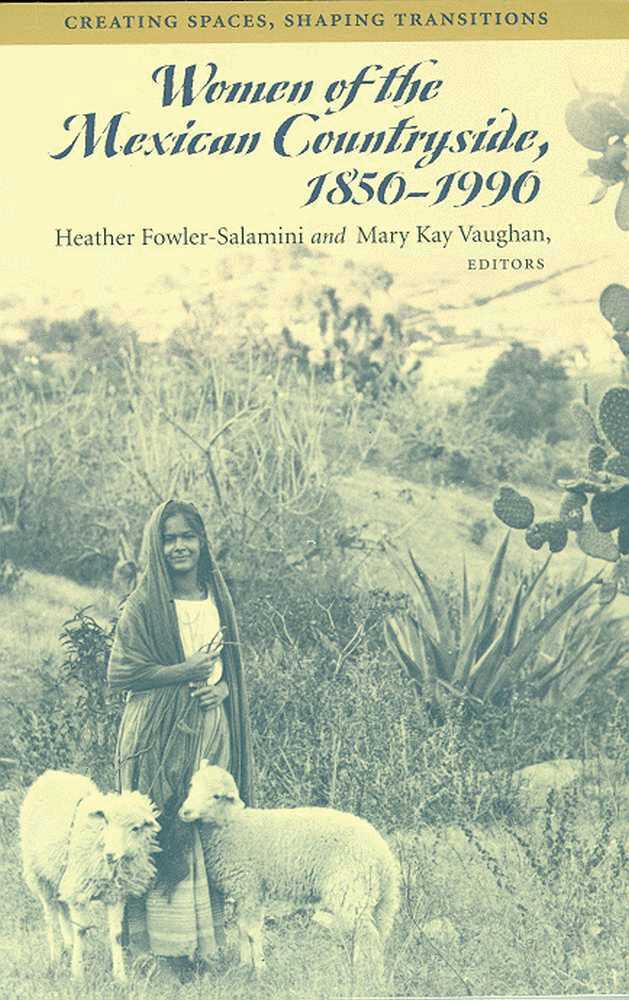
Too often in the history of Mexico, women have been portrayed as marginal figures rather than legitimate participants in social processes. As the twentieth century draws to a close, Mexican women of the countryside can be seen as true historical actors: mothers and heads of households, factory and field workers, community activists, artisans, and merchants. In this new book, thirteen contributions by historians, anthropologists, and sociologistsfrom Mexico as well as the United Stateselucidate the roles of women and changing gender relations in Mexico as rural families negotiated the transition from an agrarian to an industrial society. Drawing on Mexican community studies, gender studies, and rural studies, these essays overturn the stereotypes of Mexican peasant women by exploring the complexity of their lives and roles and examining how these have changed over time. The book emphasizes the active roles of women in the periods of civil war, 1854-76, and the commercialization of agriculture, 1880-1910. It highlights their vigorous responses to the violence of revolution, their increased mobility, and their interaction with state reforms in the period from 1910 to 1940.The final essays focus on changing gender relations in the countryside under the impact of rapid urbanization and industrialization since 1940. Because histories of Latin American women have heretofore neglected rural areas, this volume will serve as a touchstone for all who would better understand women's lives in a region of increasing international economic importance. Women of the Mexican Countryside demonstrates that, contrary to the peasant stereotype, these women have accepted complex roles to meet constantly changing situations. CONTENTS-I Women and Agriculture in Nineteenth-Century Mexico-1. Exploring the Origins of Democratic Patriarchy in Mexico: Gender and Popular Resistance in the Puebla Highlands, 1850-1876, Florencia Mallon-2. "Cheaper Than Machines": Women and Agriculture in Porfirian Oaxaca (1880-1911), Francie R. Chassen-Lopez-3. Gender, Work, and Coffee in Ci??rdoba, Veracruz, 1850-1910, Heather Fowler-Salamini-4. Gender, Bridewealth, and Marriage: Social Reproduction of Peons on Henequen Haciendas in Yucatan (1870-1901), Piedad Peniche Rivero-II Rural Women and Revolution in Mexico-5.The Soldadera in the Mexican Revolution: War and Men's Illusions, Elizabeth Salas-6. Rural Women's Literacy and Education During the Mexican Revolution: Subverting a Patriarchal Event?, Mary Kay Vaughan-7. Dona Zeferina Barreto: Biographical Sketch of an Indian Woman from the State of Morelos, Judith Friedlander-8. Seasons, Seeds, and Souls: Mexican Women Gardening in the American Mesilla (1900-1940), Raquel Rubio Goldsmith-III Rural Women, Urbanization, and Gender Relations-9. Three Microhistories of Women's Work in Rural Mexico, Patricia Arias-10. Intergenerational and Gender Relations in the Transition from a Peasant Economy to a Diversified Economy, Soledad Gonzalez Montes-11. From Metate to Despate: Rural Women's Salaried Labor and the Redefinition of Gendered Spaces and Roles, Gail Mummert-12. Changes in Rural Society and Domestic Labor in Atlixco, Puebla (1940-1990), Maria da Gloria Marroni de Velazquez-13. Antagonisms of Gender and Class in Morelos, Mexico, JoAnn Martin