
Heather Gautney – författare
Visar alla böcker från författaren . Handla med fri frakt och snabb leverans.
5 produkter
5 produkter
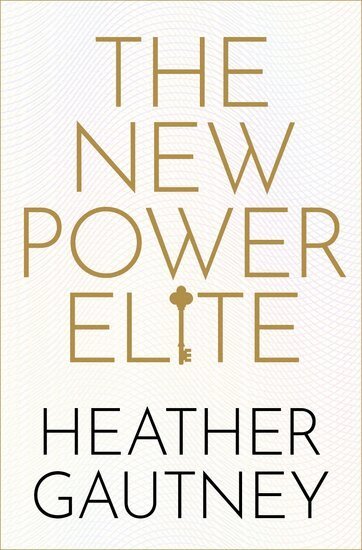
Inbunden, Engelska, 2023
314 kr
Skickas inom 5-8 vardagar
Revisiting C. Wright Mills' classic, an analysis of power structures in the neoliberal era and America's drift toward authoritarianism.In 1956, radical icon C. Wright Mills wrote The Power Elite, a scathing critique of elite power in the United States that has become a classic for generations of nonconformists and students of social and political inequality. With rising rates of inequality and social stratification, Mills' work is now more relevant than ever, revealing a need for a fresh examination of American elitism and the nature of centralized power. In The New Power Elite, Heather Gautney takes up the problem of concentrated political, economic, and military power in America that Mills addressed in his original text and echoes his outrage over the injustices and ruin brought by today's elites. Drawing from years of experience at the highest levels of government and in the entertainment industry, Gautney examines the dynamics of elite power from the postwar period to today and grounds her analysis in political economy, rather than in institutional authority, as Mills did. In doing so, she covers diverse, yet interconnected centers of elite power, from the US State and military apparatus, to Wall Street and billionaires, to celebrities and mass media. Gautney also accounts for changes in global capitalism over the last forty years, arguing that neoliberalism and the centering of the market in political and social life has ushered in ever more extreme forms of violence and exploitation, and a drift toward authoritarianism. A contemporary companion to Mills' work through a fresh critique of elites for the new millennium, The New Power Elite offers a comprehensive look at the structure of American power and its tethers around the world.
E-bok
PDF, Engelska, 2022222 kr
Läs direkt efter köp
Revisiting C. Wright Mills'' classic, an analysis of power structures in the neoliberal era and America''s drift toward authoritarianism.In 1956, radical icon C. Wright Mills wrote The Power Elite, a scathing critique of elite power in the United States that has become a classic for generations of nonconformists and students of social and political inequality. With rising rates of inequality and social stratification, Mills'' work is now more relevant than ever, revealing a need for a fresh examination of American elitism and the nature of centralized power. In The New Power Elite, Heather Gautney takes up the problem of concentrated political, economic, and military power in America that Mills addressed in his original text and echoes his outrage over the injustices and ruin brought by today''s elites. Drawing from years of experience at the highest levels of government and in the entertainment industry, Gautney examines the dynamics of elite power from the postwar period to today and grounds her analysis in political economy, rather than in institutional authority, as Mills did. In doing so, she covers diverse, yet interconnected centers of elite power, from the US State and military apparatus, to Wall Street and billionaires, to celebrities and mass media. Gautney also accounts for changes in global capitalism over the last forty years, arguing that neoliberalism and the centering of the market in political and social life has ushered in ever more extreme forms of violence and exploitation, and a drift toward authoritarianism. A contemporary companion to Mills'' work through a fresh critique of elites for the new millennium, The New Power Elite offers a comprehensive look at the structure of American power and its tethers around the world.
E-bok
Engelska, 2022222 kr
Läs direkt efter köp
Revisiting C. Wright Mills'' classic, an analysis of power structures in the neoliberal era and America''s drift toward authoritarianism.In 1956, radical icon C. Wright Mills wrote The Power Elite, a scathing critique of elite power in the United States that has become a classic for generations of nonconformists and students of social and political inequality. With rising rates of inequality and social stratification, Mills'' work is now more relevant than ever, revealing a need for a fresh examination of American elitism and the nature of centralized power. In The New Power Elite, Heather Gautney takes up the problem of concentrated political, economic, and military power in America that Mills addressed in his original text and echoes his outrage over the injustices and ruin brought by today''s elites. Drawing from years of experience at the highest levels of government and in the entertainment industry, Gautney examines the dynamics of elite power from the postwar period to today and grounds her analysis in political economy, rather than in institutional authority, as Mills did. In doing so, she covers diverse, yet interconnected centers of elite power, from the US State and military apparatus, to Wall Street and billionaires, to celebrities and mass media. Gautney also accounts for changes in global capitalism over the last forty years, arguing that neoliberalism and the centering of the market in political and social life has ushered in ever more extreme forms of violence and exploitation, and a drift toward authoritarianism. A contemporary companion to Mills'' work through a fresh critique of elites for the new millennium, The New Power Elite offers a comprehensive look at the structure of American power and its tethers around the world.
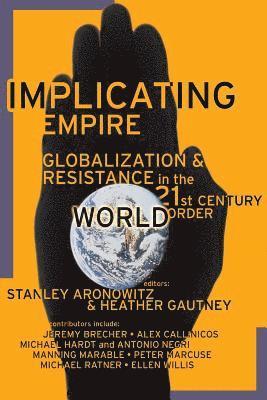
Häftad, Engelska, 2002
221 kr
Skickas inom 10-15 vardagar
Over the past several years, while visible protests against the World Bank and the I.M.F. made front-page news, there has been a growing field of scholarship that looks at the role of globalization for national and international state identities. The first truism of globalization- that we live in an increasingly interconnected world, one in which it is impossible to separate the fate of one nation from that of the others- was dramatically illustrated on September 11, 2001, when the seemingly distant effects of a civil war in Afghanistan so murderously interrupted life in the United States.Implicating Empire is the first book to look at four crucial dimensions of globalization: first, its role vis-à-vis the current war second, the impact of globalization on domestic U.S. policy third, how globalization will necessarily alter national security, both in its definition as well as how it is pursued, and, finally, the future of globalization. Including original essays by Stanley Aronowitz, Ahmed Rashid, Tariq Ali, Manning Marable, Michael Hardt, and Ellen Willis, among others, Implicating Empire will set the agenda for how globalization is debated- and resisted- in the future.
E-bok
Engelska, 2018127 kr
Läs direkt efter köp
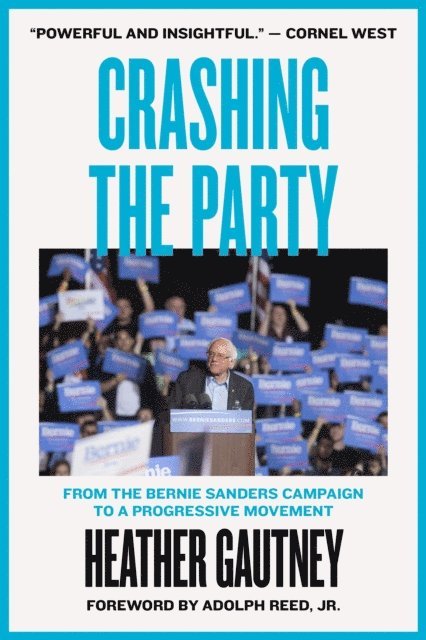
Senator Bernie Sanders won 13 million votes and a majority of young voters in the 2016 Democratic primary, giving a consensus unbeatable party favorite, Hillary Clinton, a shockingly close challenge. He emerged from the presidential election as the most popular politician in the US, despite being a 75-year-old self-professed "democratic socialist." What lessons can be drawn from this surprising but-in the end-losing campaign, and what to make of the direction the Sanders movement has gone since the election?Vermont native Heather Gautney is a senior policy advisor to Bernie Sanders in his Washington, DC office and was a senior researcher on his presidential campaign. The author and editor of several books on social movements and American politics, she brings her scholarly expertise and left politics to bear on the scenes and conflicts she witnessed from inside the campaign and inside the Beltway. This is both an insider''s sympathetic view of the Sanders phenomenon and a skeptical left scholar''s view of its limitations. In reviewing what enabled Sanders to reach out to an unprecedented number of people with a socialist message, she draws lessons about the prospects and perils of building a leftist movement in the United States. Gautney''s reflections on the role that race and class played in this election cycle and analysis of the prospects and perils of the Democratic Party will advance the passionate debate over how to build a progressive opposition to Trump and a lasting left movement in America.