Heather Pulliam - Böcker
Visar alla böcker från författaren Heather Pulliam. Handla med fri frakt och snabb leverans.
3 produkter
3 produkter
1 295 kr
Skickas inom 7-10 vardagar
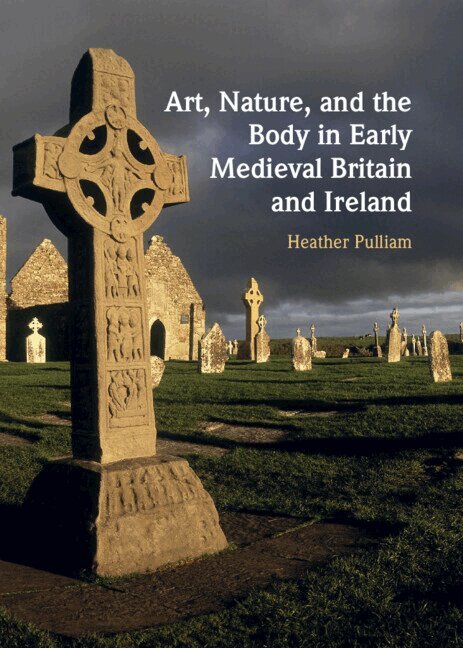
How did the living world - bodies, time, motion, and natural environment - frame the art of early medieval Britain and Ireland? In this study, Heather Pulliam investigates how the early medieval art produced in Britain and Ireland enabled Christian audiences to unite with and be 'dissolved' in an intangible divinity. Using phenomenological and eco-critical methodologies, she probes intersections between art objects, the living world, and the embodied eye. Pulliam analyses a range of objects that vary in scale, form, and function, including book shrines, brooches worn on the body, and reliquaries suspended in satchels. Today, such objects are discussed, displayed, and illustrated as static rather than mobile objects that human bodies wore and that accompanied them as they travelled through landscapes animated by changing weather, seasons, and time. Using the frame as a heuristic device, she questions how art historical studies approach medieval art and offers a new paradigm for understanding the role of sacred objects in popular devotion.
1 204 kr
Skickas
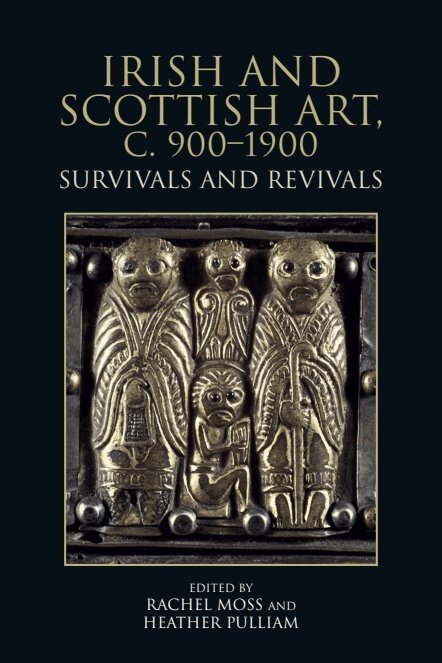
As evidenced by the famed Book of Kells and monumental high crosses, Scotland and Ireland have long shared a distinctive artistic tradition. The story of how this tradition developed and flourished for another millennium through survival, adaptation and revival is less well known. Some works were preserved and repaired as relics, objects of devotion believed to hold magical powers. Respect for the past saw the creation of new artefacts through the assemblage of older parts, or the creation of fakes and facsimiles. Meanings and values attached to these objects, and to places with strong early Christian associations, changed over time but their 'Celtic' and/or 'Gaelic' character has remained to the forefront of Scottish and Irish national expression. Exploring themes of authenticity, imitation, heritage, conservation and nationalism, these interdisciplinary essays draw attention to a variety of understudied artworks and illustrate the enduring link that exists between Scottish and Irish cultures.
331 kr
Skickas inom 7-10 vardagar
As evidenced by the famed Book of Kells and monumental high crosses, Scotland and Ireland have long shared a distinctive artistic tradition. The story of how this tradition developed and flourished for another millennium through survival, adaptation and revival is less well known. Some works were preserved and repaired as relics, objects of devotion believed to hold magical powers. Respect for the past saw the creation of new artefacts through the assemblage of older parts, or the creation of fakes and facsimiles. Meanings and values attached to these objects, and to places with strong early Christian associations, changed over time but their 'Celtic' and/or 'Gaelic' character has remained to the forefront of Scottish and Irish national expression. Exploring themes of authenticity, imitation, heritage, conservation and nationalism, these interdisciplinary essays draw attention to a variety of understudied artworks and illustrate the enduring link that exists between Scottish and Irish cultures.